

Why the Destination of Your Clutter Matters
Most decluttering advice stops at the decision to let go. But where an item goes next has real environmental consequences. Furniture, clothing, and small appliances that end up in landfills often contain materials - foam, synthetic fibers, circuit boards - that don't break down cleanly and can leach into soil and groundwater over time.
The goal of sustainable decluttering isn't to feel virtuous about sorting; it's to slow the cycle of disposal and replacement by keeping usable materials in circulation as long as possible. Before you bag anything up, it helps to think in terms of five destinations: donate, sell, repair, repurpose, and responsibly dispose. The landfill should be the last stop, not the default.
If you're still figuring out which items to let go of in the first place, the room-by-room declutter audit is a useful starting point for identifying what genuinely earns its space.
Sorting Into the Right Streams
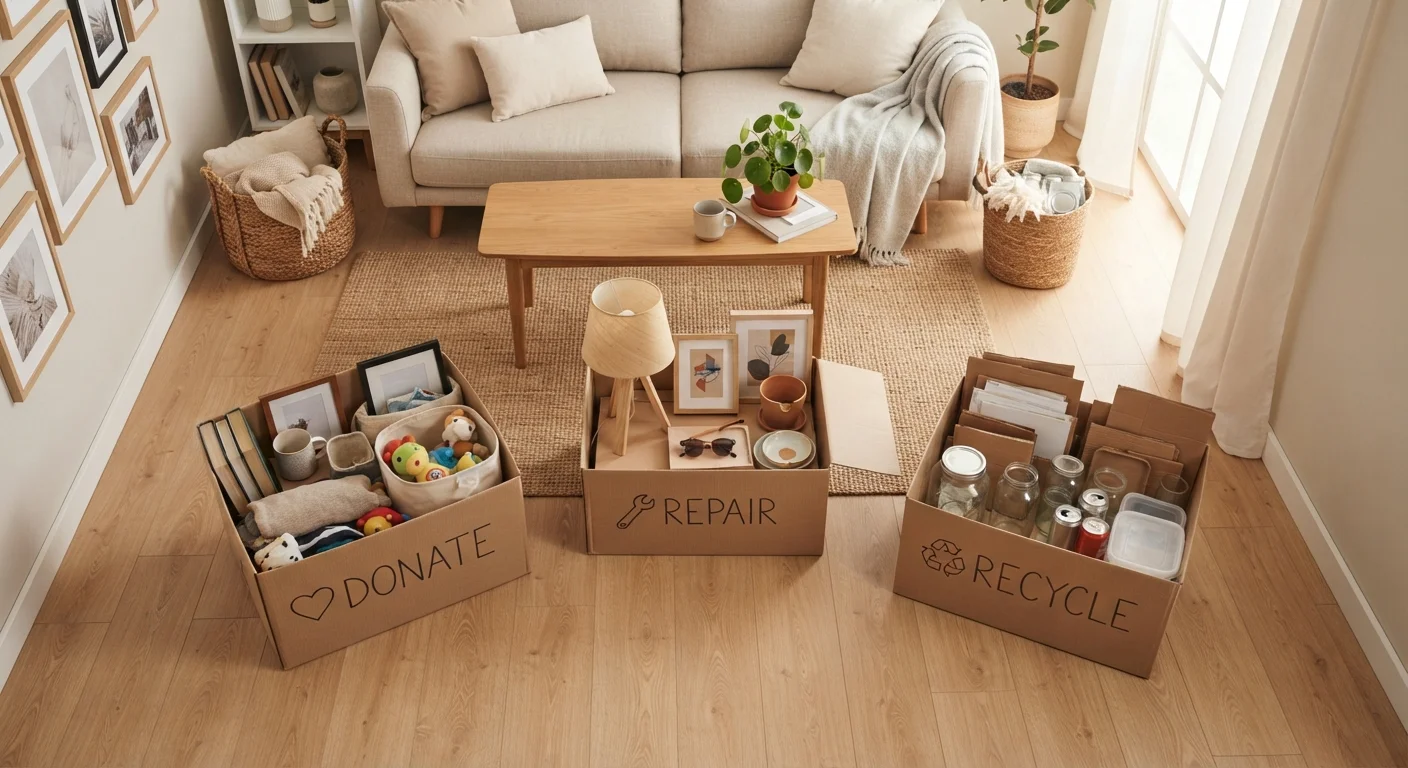
Setting up a simple sorting system before you start pulling items off shelves prevents the all-too-common outcome of a single trash bag absorbing everything. Use labeled boxes or bags for each destination and fill them as you work through a space.
Once you've sorted, act on each stream promptly. Boxes waiting in a hallway for weeks often end up consolidated into one bin anyway. Building the drop-off or pickup step into your schedule - the same day or within the same week - closes the loop.
For a broader look at how to structure your decluttering sessions, see the complete decluttering guide, which covers method selection through to long-term maintenance.
Finding the Right Home for What You're Releasing
Donation works best when items are clean, functional, and realistically usable. Thrift stores and community organizations often decline stained textiles, broken furniture, or incomplete sets - so check acceptance policies before hauling boxes across town. Many municipalities also host periodic community swap events or Buy Nothing groups where neighbors can claim items directly.
For textiles specifically - worn-out clothing, old towels, mismatched linens - look for textile recycling bins, which many retailers and municipalities operate. These redirect fabric to industrial reuse even when items aren't wearable. Electronics and appliances typically fall under e-waste programs; many local governments and some retailers offer take-back or drop-off events. Check your city or county's solid waste website for scheduled collection days.
Selling works for items with clear resale value: furniture in good condition, tools, kitchen equipment. Online local marketplaces and consignment stores move these items without shipping them across the country, which adds to their environmental footprint.
If you're decluttering collaboratively with others in the household and navigating disagreements about what goes, the guide to decluttering with different attachment styles offers practical strategies.
Repair and Repurpose Before You Release
Some items land in the discard pile not because they're unwanted but because they're broken or no longer fit their original purpose. A quick assessment can redirect these: a lamp with a frayed cord might need only a rewired plug (a task for a licensed electrician if you're unsure), while a worn dresser might work better in a garage than in a bedroom. Repair cafes - community events where volunteers help fix electronics, clothing, and furniture - exist in many cities and are worth searching for in your area.
Repurposing is especially productive with storage items. Old mason jars become desk organizers. A wooden crate gains a second life as a shelf. This keeps materials out of the waste stream and reduces the need to buy new organizers - a natural bridge to DIY organizer projects that maximize space creatively without additional expense.
Making Responsible Disposal a Habit, Not a One-Time Event
Sustainable decluttering is most effective when it becomes a recurring practice rather than a single marathon session. Smaller, more frequent passes through a space make responsible sorting easier - there's less volume to process, so each item gets real consideration rather than a split-second toss into the nearest bag.
Pairing your decluttering approach with a clear method helps. Whether you prefer to work category by category or room by room, the key is consistency. The comparison of category vs. room-based decluttering can help you identify which structure suits your household's habits and schedule.
Over time, the habit of asking "where does this go next?" before discarding anything reshapes how you make purchasing decisions too - a quieter but meaningful reduction in the volume of items that eventually need to be released.
This article provides general guidance for informational purposes only. Local donation policies, recycling programs, and take-back options vary by municipality and organization - verify current availability in your area before making drop-off trips.
The content on this site is for informational purposes only and is not a substitute for professional advice. Always consult a qualified professional for guidance specific to your situation.