

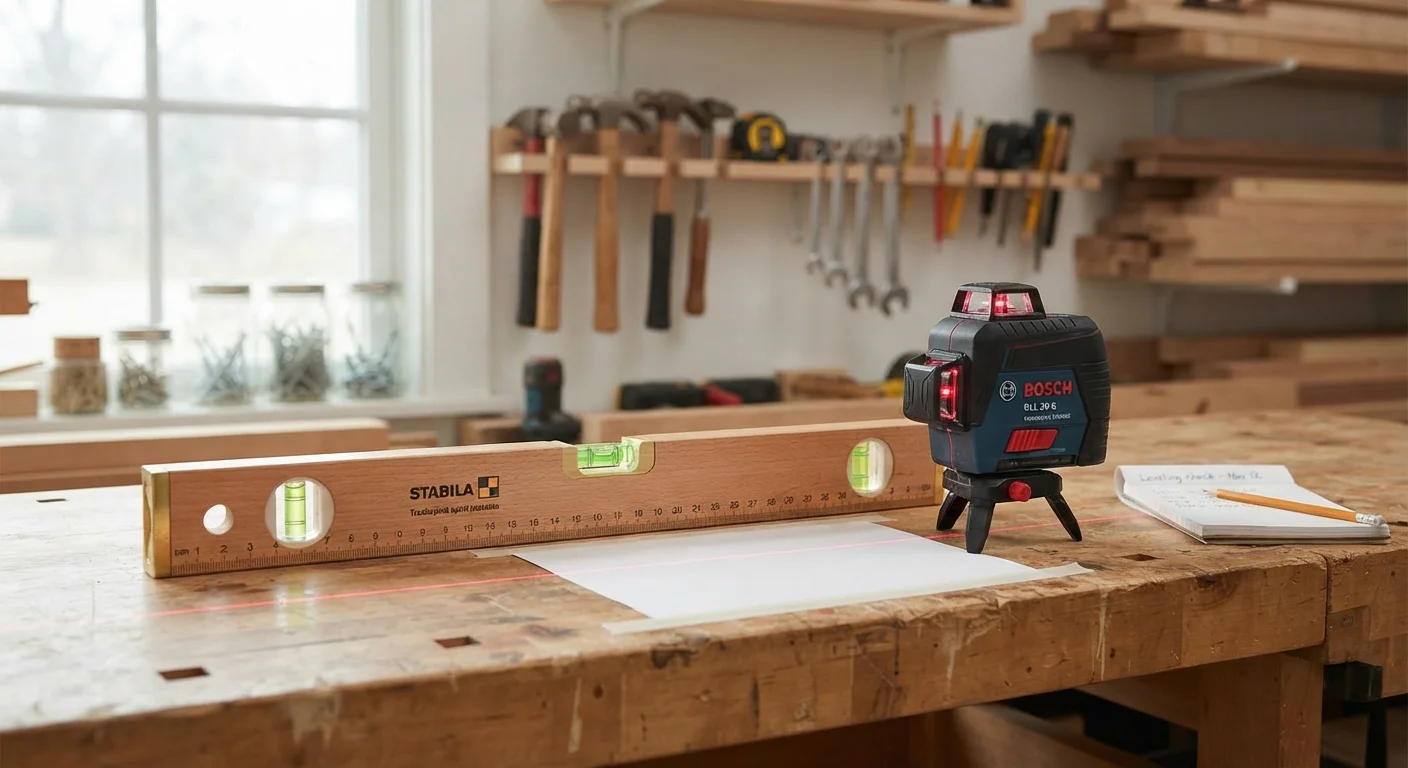
Option A
Spirit Level
The reliable, no-fuss classic every DIYer already knows.
Best for: Best for small-to-medium tasks like hanging shelves, checking door frames, and laying tile.
Option B
Laser Level
The precision workhorse for larger, more complex layout work.
Best for: Best for whole-room layout tasks, dropped ceilings, and any project requiring long reference lines.
What Each Tool Actually Does
A spirit level (also called a bubble level) is a sealed tube filled with liquid and a small air bubble. When the bubble sits between two marked lines, the surface is level or plumb. They come in lengths from 9 inches to 6 feet and are used by pressing the tool directly against the surface you're measuring.
A laser level projects a beam - or multiple beams - of laser light across a wall, floor, or ceiling to create a continuous reference line. Self-leveling models use an internal pendulum or electronic sensor to automatically establish a true horizontal or vertical line within a few seconds of placement.
Both tools answer the same fundamental question - is this straight? - but they answer it at very different scales and with different workflows. Understanding that distinction is the key to choosing wisely. As you weigh your broader tool kit, it's also worth reading about the trade-offs between hand tools and power tools to see where leveling fits into your overall approach.
Side-by-Side: How They Compare
The table below breaks down the key practical differences between a spirit level and a laser level across the factors that matter most to DIY users.
| Criterion | Spirit Level | Laser Level |
|---|---|---|
| Typical cost range | Under $20 for most sizes | $40-$150+ depending on type |
| Setup time | Instant - pick up and use | 1-3 minutes to position and level |
| Best working distance | Up to the length of the tool | Across entire rooms (15-65 ft) |
| Power required | None | Batteries or USB charging |
| Learning curve | Minimal - intuitive to read | Moderate - setup and calibration needed |
| Durability | Very high - no electronics | Moderate - sensitive to drops and dust |
| Use in bright light | Works in any light conditions | Beam can wash out in bright light |
A few numbers worth noting: entry-level spirit levels are generally available for under $20, while basic self-leveling laser levels typically start around $40-$60 and can run well over $150 for multi-line or rotary models. That cost gap matters when a tool might only be used once or twice a year.
Where Each Tool Genuinely Excels
Spirit levels shine on direct-contact tasks. Hanging a shelf bracket, checking whether a window frame is plumb, leveling a washing machine, or aligning tile - these are all jobs where placing the level against the surface and reading the bubble is faster and simpler than setting up any laser. The tool requires no power, no calibration ritual, and no manual. It simply works.
Laser levels earn their place when you need a continuous reference across a large area. Imagine tiling an entire bathroom floor, installing a row of kitchen cabinets, or running a chair rail around a room. In these situations, a spirit level requires constant repositioning and re-checking, while a laser level projects one unbroken line that every measurement can reference simultaneously. That efficiency adds up quickly on longer jobs.
48"
Most versatile spirit level length for DIY
A 48-inch level is widely recommended by trade professionals as the most useful all-around length for home improvement tasks.
~30 ft
Typical indoor range of entry-level laser levels
Most consumer-grade self-leveling laser levels project a usable beam up to 30 feet indoors under normal lighting conditions.
One common beginner mistake is buying a laser level for small-scale work, then finding it's more hassle to set up than the task warrants. Conversely, some DIYers attempt large layout jobs with only a 2-foot spirit level and spend hours chasing small cumulative errors. Matching the tool to the job scale is the real skill here.
Practical Advice for Choosing
If you're building your first DIY toolkit, start with a 48-inch spirit level. It's long enough to handle most home tasks with accuracy, sturdy enough to last years, and inexpensive enough to be a no-brainer purchase. A shorter torpedo level (9-12 inches) makes a useful companion for tight spaces like inside cabinets or behind appliances.
Consider a laser level if you regularly take on projects that involve long, continuous reference lines - or if you find yourself spending significant time re-checking alignment across multiple points. A basic self-leveling single-line model is usually sufficient for most DIY applications; you rarely need a rotary or multi-line unit unless you're doing professional-grade work.
One practical note: laser levels require a relatively dim environment to read the beam clearly. In a brightly lit room or outdoors in daylight, the line can be difficult or impossible to see without a laser detector accessory - an added cost and consideration.
Always verify your tool is accurate before relying on it for critical measurements. Spirit levels can fall out of calibration if dropped; laser levels should be checked against a known reference point periodically. Consult the manufacturer's instructions for calibration guidance specific to your model.
The content on this site is for informational purposes only and is not a substitute for professional advice. Always consult a qualified professional for guidance specific to your situation.