

Summary

22 items · 45–90 minutes

Why Planning Before Purchasing Changes Everything

The most common room makeover mistake isn't picking the wrong paint color — it's opening a browser tab before you've assessed what you're working with. Impulse purchases based on inspiration photos lead to furniture that doesn't fit, paint that clashes with fixed elements you forgot about, and a budget that evaporates before the room looks any different.

This checklist is designed to slow you down in the right places. Work through it before you spend a dollar, and you'll shop with precision instead of optimism. If you're completely new to the process, the first-timer's guide to room makeovers covers terminology and sequencing fundamentals that pair well with this checklist.

Room Assessment

Measure every wall from corner to corner and record dimensions on a simple hand-drawn floor plan. Must
Measure ceiling height — standard is 8 ft, but older homes vary, which affects lighting and curtain rod placement. Must
Note the location, size, and swing direction of every door and window. Must
Identify fixed elements you cannot change: radiators, built-ins, load-bearing walls, electrical panel access points. Must
Photograph the room in natural daylight and again in artificial evening light to see how both affect color. Should

Existing Inventory Review

List every piece of furniture in the room and decide: keep as-is, repaint or reupholster, relocate, or remove. Must
Pull out decor items from storage and assess whether any can be redeployed before buying anything new. Should
Complete a full declutter of the space before finalizing any layout — clutter disguises usable square footage. The household declutter audit is a useful companion step. Must
Check whether existing rugs, curtains, or hardware can be cleaned and reused rather than replaced. Nice to have

Function and Priority Setting

Write down the room's primary function and any secondary uses — these should drive layout and furniture choices. Must
List the three biggest problems the room currently has in order of how much they affect daily use. Must
Identify which changes will have the highest visual impact for the lowest cost (typically paint, lighting, and layout). Should
Decide which elements are cosmetic (paint, textiles, decor) versus structural (flooring, built-ins) and sequence cosmetic last. Must

Budget Framework

Set a firm total budget before any pricing research — not after — to anchor decisions rather than justify them. Must
Allocate your budget by category (paint, furniture, lighting, textiles, hardware, contingency) as percentages before shopping. Must
Build in a 10–15% contingency for unexpected prep costs such as patching walls or dealing with subfloor issues. Should
Research material costs for your top-priority changes before finalizing scope — pricing reality may shift your plan. See the pre-purchase materials checklist for detailed quantity guidance. Should

Style Direction and Color

Collect 5–10 reference images and identify the two or three specific elements they share — this defines your actual direction. Should
Identify fixed colors in the room (flooring, tile, brick) that your palette must work around rather than against. Must
Limit your palette to three colors max: a dominant, a secondary, and one accent — and confirm they read well under your room's light. Should
Browse room styling ideas for layout and accessory approaches that fit your defined direction. Nice to have

What to Bring to the Planning Session

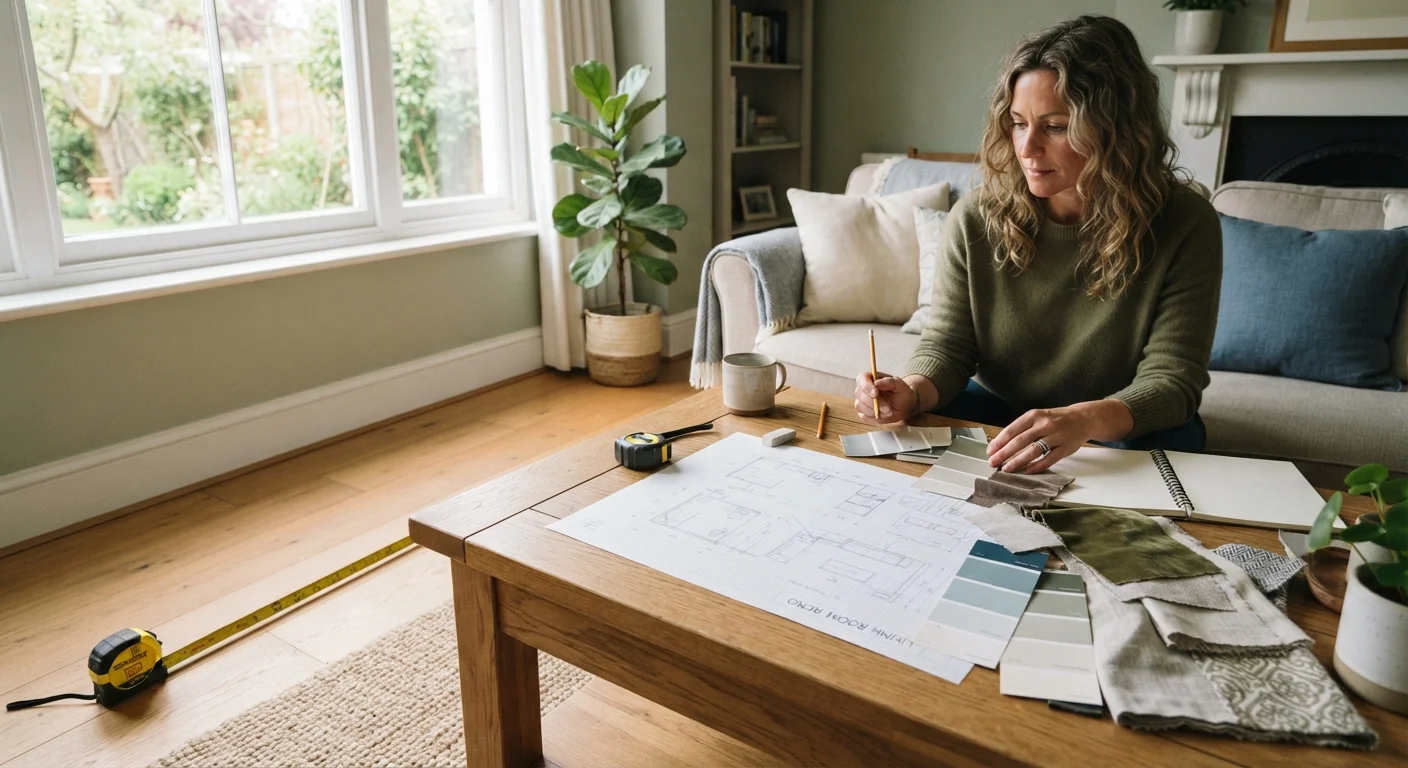
You don't need expensive software or a designer's eye — just the right tools on hand before you start assessing the space. Missing even one of these can send you back for a second session.

Required

Tape measure (25 ft)

Measure walls, windows, doorways, and furniture footprints accurately before purchasing anything.

Required

Graph paper or free floor plan app

Sketch a scaled room layout to test furniture arrangements without moving anything physically.

Required

Smartphone camera

Document the existing room in daylight and artificial light to assess color and proportion objectively.

Required

Notebook or spreadsheet

Track measurements, budget allocations, and a keep/remove/replace inventory of existing items.

Optional

Paint sample cards

Test candidate colors against fixed room elements before committing to a full can of paint.

Optional

Painter's tape

Mark furniture outlines on the floor to visualize scale and traffic flow before purchasing pieces.

Once you've gathered your tools, work through the room systematically: walls, floor, ceiling, windows, then existing furniture. Don't skip the ceiling — it's one of the most overlooked surfaces in a room refresh, and a common reason makeovers lose momentum partway through. See why room makeovers stall for more on sequencing pitfalls.

After you've completed this assessment, your next step is smarter sourcing. The Materials & Savings hub covers how to cut costs without compromising on what actually shows.

This checklist is for planning and educational purposes. Always verify local building codes and consult a licensed professional for any electrical, structural, or plumbing work before proceeding.

Share

Budget Renovations Editorial Team · Contributor

Budget Renovations Editorial Team is the collective byline for our editorial team and contributor network. Articles published under this byline or an editorial pen name are researched, written, and reviewed according to our editorial standards for clarity, consistency, and independence before publication.

The content on this site is for informational purposes only and is not a substitute for professional advice. Always consult a qualified professional for guidance specific to your situation.