

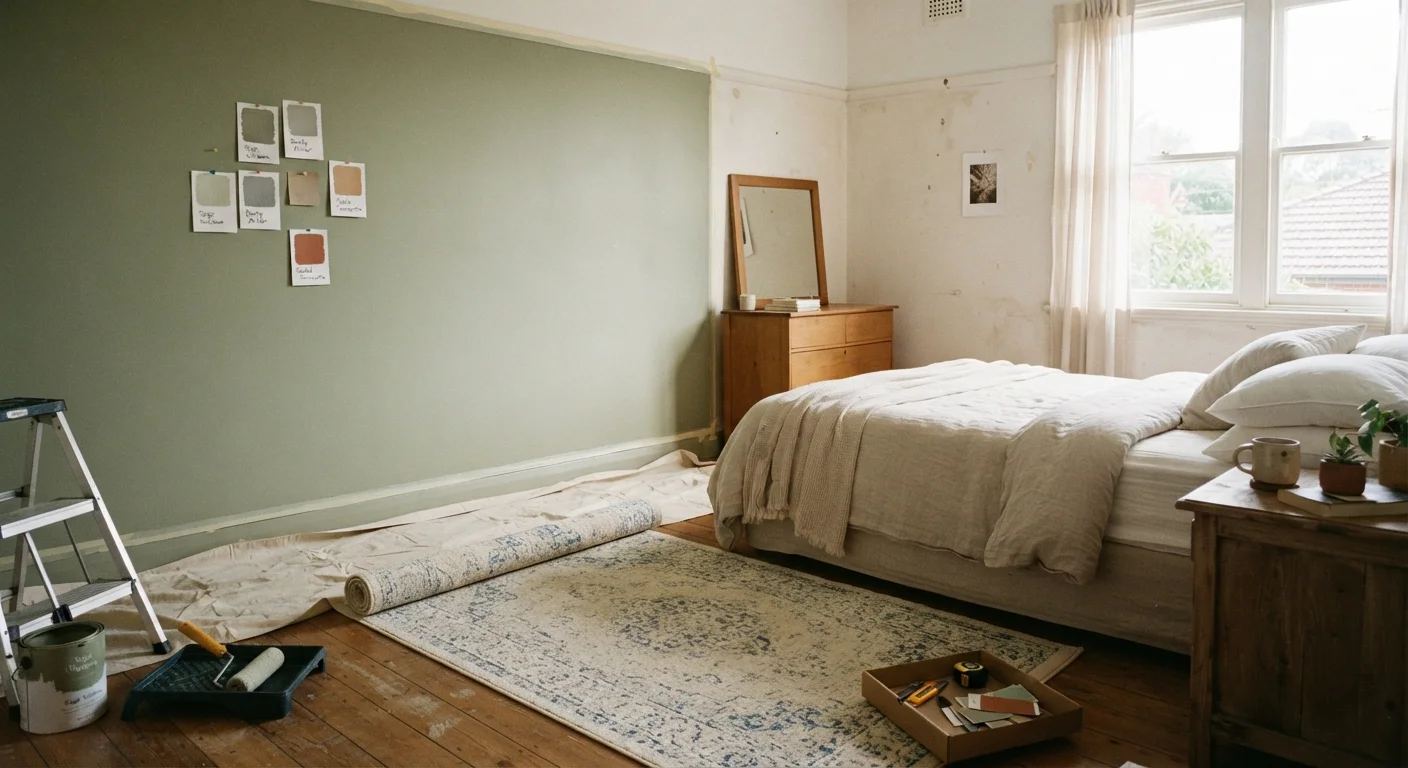
Why Bedroom Makeovers Lose Momentum
A bedroom refresh rarely fails because the idea was wrong. It stalls because the execution starts without a solid foundation - no sequencing, no spending ceiling, and no honest audit of what actually needs to change. The result is a half-painted room, a pile of returns, and a project that quietly gets abandoned.
If your bedroom makeover has lost momentum, you're not alone. The mistakes below are consistent across skill levels and budgets. More importantly, each one is recoverable. Before diving in, it's worth running through a before-and-after room audit to identify exactly what's working and what isn't - that alone can break a planning deadlock.
Starting without a written plan or spending limit.
Why it happens: Excitement drives early action. Most people assume they can figure it out as they go, especially for a single room.
Working in the wrong order - decorating before the walls and floors are done.
Why it happens: Accessories are fun to shop for. Paint and prep feel tedious, so people skip ahead and then have to undo work later.
Ignoring the ceiling entirely.
Why it happens: Ceilings are easy to overlook because they're not at eye level, but a dingy or flat-white ceiling undercuts every other improvement in the room.
Relying on overhead lighting only and wondering why the room still feels flat.
Why it happens: Most bedrooms ship with a single ceiling fixture. Homeowners paint and redecorate, but the flat, harsh overhead light erases the warmth of every other change.
Choosing colors from swatches alone, without testing on the actual wall.
Why it happens: Small paint chips look very different from a 12-inch painted patch, and they look completely different under artificial versus natural light.
Buying furniture or rugs before measuring the room properly.
Why it happens: Online shopping makes it easy to impulse-purchase. Dimensions on a product page don't translate intuitively to a real floor plan.
Getting Your Makeover Back on Track
The good news: most stalled bedroom projects are closer to the finish line than they feel. The issue is usually sequencing, not scope. Paint first, then floors or rugs, then furniture placement, then lighting, then accessories. That order matters because each layer informs the next.
If you're paralyzed by choices, go back to constraints. Fix a firm number - say, $300 - and ask what single change delivers the most visible return within it. Our ranked guide to high-impact room updates breaks this down clearly. For first-timers feeling overwhelmed by the whole process, this primer on room makeover basics covers planning and sequencing from the ground up.
Resist the urge to shop your way out of a planning problem. Measure and prioritize before purchasing anything - that single discipline keeps budgets intact and momentum alive. And if you want proof that a structured approach works fast, see how the same principles apply in a realistic weekend living room plan.
Don't Skip Permits for Electrical Changes
Adding hardwired wall sconces or ceiling fixtures involves electrical work that typically requires a permit and must be completed by a licensed electrician in most US jurisdictions. Plug-in alternatives and battery-powered fixtures are a safer, no-permit DIY route for adding secondary lighting. Always verify local code requirements before starting any electrical work.
The content on this site is for informational purposes only and is not a substitute for professional advice. Always consult a qualified professional for guidance specific to your situation.