

Our Verdict
For small repairs, patches, and typical weekend DIY projects, pre-mixed compound wins on convenience - open the bucket and go. Powdered compound earns its place on larger drywall installations, hot or humid conditions, or when you need precise control over working time and final hardness. Neither type is universally superior; matching the product to the job is what produces a flawless wall.
| Best for | Recommended |
|---|---|
| Quick patches, nail holes, and small repairs | Pre-Mixed Compound |
| Large drywall installations or multi-room projects | Powdered Compound |
| High-humidity or temperature-variable environments | Powdered Compound |
| Beginners who want minimal prep and low waste | Pre-Mixed Compound |
What Each Type Actually Is
Joint compound - sometimes called mud - is the material used to embed drywall tape, fill seams, and skim wall surfaces smooth. It comes in two primary forms that behave quite differently once you understand what's inside each one.
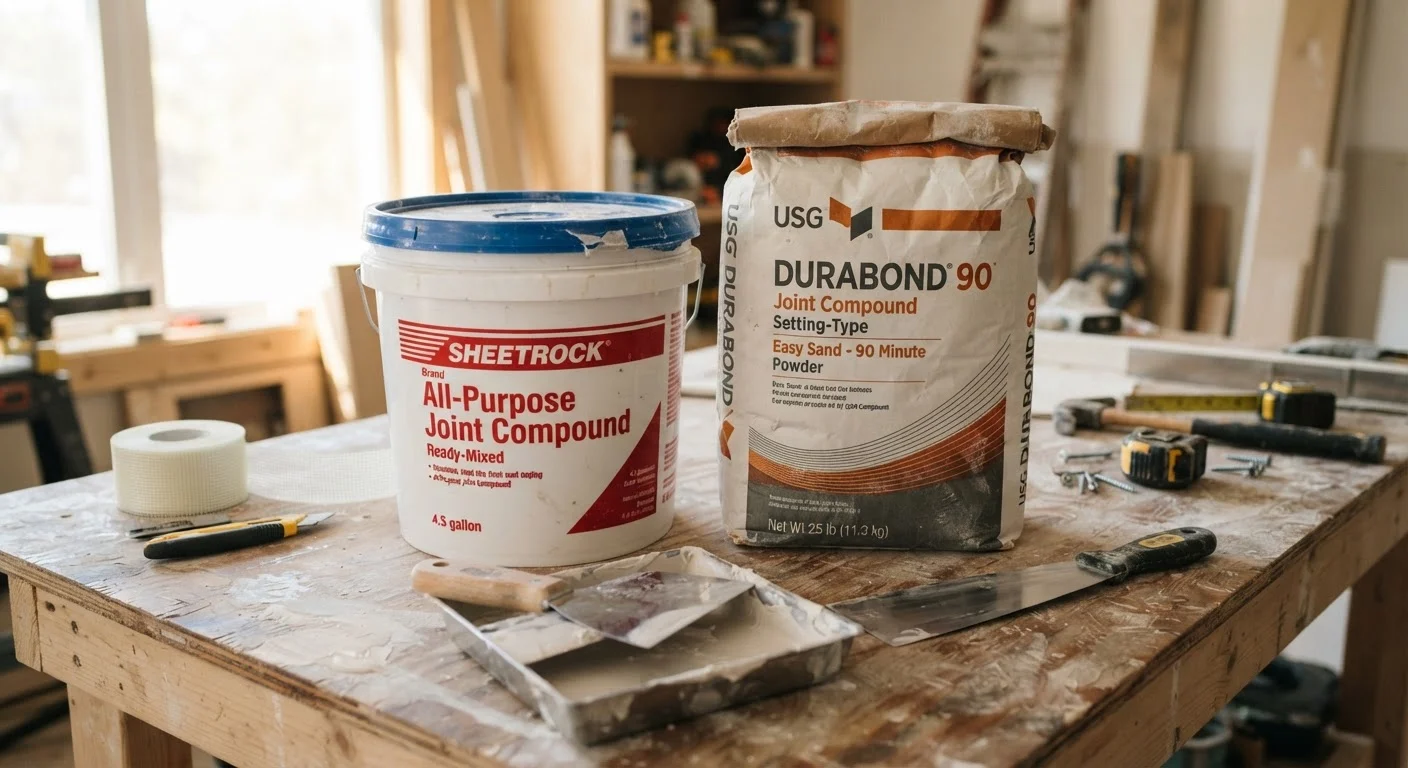
Pre-mixed compound is sold in plastic buckets or boxes ready to use. It's a water-based blend of gypsum dust, binders, and preservatives that has already been hydrated at the factory. You open the container, stir briefly, and apply - no measuring required.
Powdered compound (also called setting compound or hot mud) is sold as a dry powder that you mix with water on-site. Unlike pre-mixed, many powdered compounds set through a chemical reaction rather than simple evaporation. Common bag labels - like "20," "45," or "90" - indicate the approximate number of minutes before the material begins to harden.
If you're still deciding whether joint compound is the right filler for your repair at all, see our comparison of joint compound vs. spackling paste before continuing.
Key Differences: Drying, Shrinkage, and Strength
These four factors are where the two forms diverge most meaningfully for DIYers.
Drying and Setting Time
Pre-mixed compound dries by evaporation alone. In typical indoor conditions, each coat needs 24 hours before sanding or recoating - longer in humid rooms or cold weather. Setting compounds harden chemically, so the number on the bag gives you a reliable working window regardless of humidity. A 45-minute setting compound, for example, will be hard enough to recoat within an hour, which dramatically speeds up multi-coat work.
Shrinkage
As water evaporates from pre-mixed compound, the material shrinks - sometimes noticeably. This means a filled screw dimple or taped seam may need two or three coats to build up to flush. Powdered setting compounds shrink far less because the hardening is chemical, not evaporative, so you often need fewer coats to achieve the same result.
Hardness and Sandability
Pre-mixed compound sands easily, which is a genuine advantage for finish coats that need feathered, smooth edges. Setting compounds cure much harder - they resist sanding and are less forgiving if you overapply. This hardness is an asset for the first (tape) coat where durability matters, but it makes setting compound a poor choice for final finish layers.
| Pre-Mixed Compound | Powdered Setting Compound | |
|---|---|---|
| Preparation required | None - open and stir | Mix with water before each use |
| Drying / setting time | ~24 hrs per coat (evaporation) | 20-90 min depending on bag rating |
| Shrinkage | Moderate to high | Low |
| Sandability | Easy - ideal for finish coats | Hard - difficult to sand smooth |
| Shelf life (unopened) | ~9-12 months; freeze-sensitive | Several years in a dry space |
| Best coat | Second and finish coats | First (tape) coat |
| Skill level | Beginner-friendly | Intermediate - timing matters |
Cost, Shelf Life, and Waste
A bucket of pre-mixed compound is typically less expensive per unit of volume upfront, but it has a limited shelf life - usually around nine months to a year once opened, and it must be stored above freezing. If the surface develops mold or dries out before you use it, the remainder goes to waste.
Powdered compound in sealed bags can sit in a dry garage for years without degrading. You mix only what you need per session, which cuts waste on small repairs. The tradeoff is that you must mix accurately - too much water produces a weak, runny result; too little makes it difficult to spread and prone to cracking.
Mixing Powdered Compound Correctly
Always add powder to water - not the other way around - to prevent lumps. Mix only as much as you can apply within about two-thirds of the bag's rated working time; once it begins to set, adding water will not extend its workability and will weaken the finished result. Dispose of unused hardened material rather than washing it down a drain, as it can set inside pipes.
Choosing the Right Form for Your Project
Use this straightforward framework to guide your decision:
- Small repairs (nail holes, dings, hairline cracks): Pre-mixed all-purpose compound is the practical choice. The slower dry time is no obstacle for a single-session patch, and the easy sandability helps you blend edges invisibly.
- Taping new drywall seams: Consider a fast-setting powdered compound for your first coat to minimize shrinkage and lock the tape firmly. Switch to pre-mixed for subsequent finish coats where smooth sanding matters most.
- High-humidity spaces (bathrooms, basements): Setting compounds harden chemically and are less susceptible to humidity-related softening than pre-mixed products. Check the product label - some pre-mixed formulas are marketed as moisture-resistant, but powdered setting compounds generally offer more reliable results in damp conditions.
- Skim coating large wall areas: Pre-mixed topping compound spreads and feathers easily over large surfaces. Setting compound is harder to work at this scale unless you're experienced with its limited open time.
Whichever form you choose, always apply thin coats. Thick applications of either type are the leading cause of cracking and delayed dry times - a consistent mistake that a little patience easily prevents.
The content on this site is for informational purposes only and is not a substitute for professional advice. Always consult a qualified professional for guidance specific to your situation.