

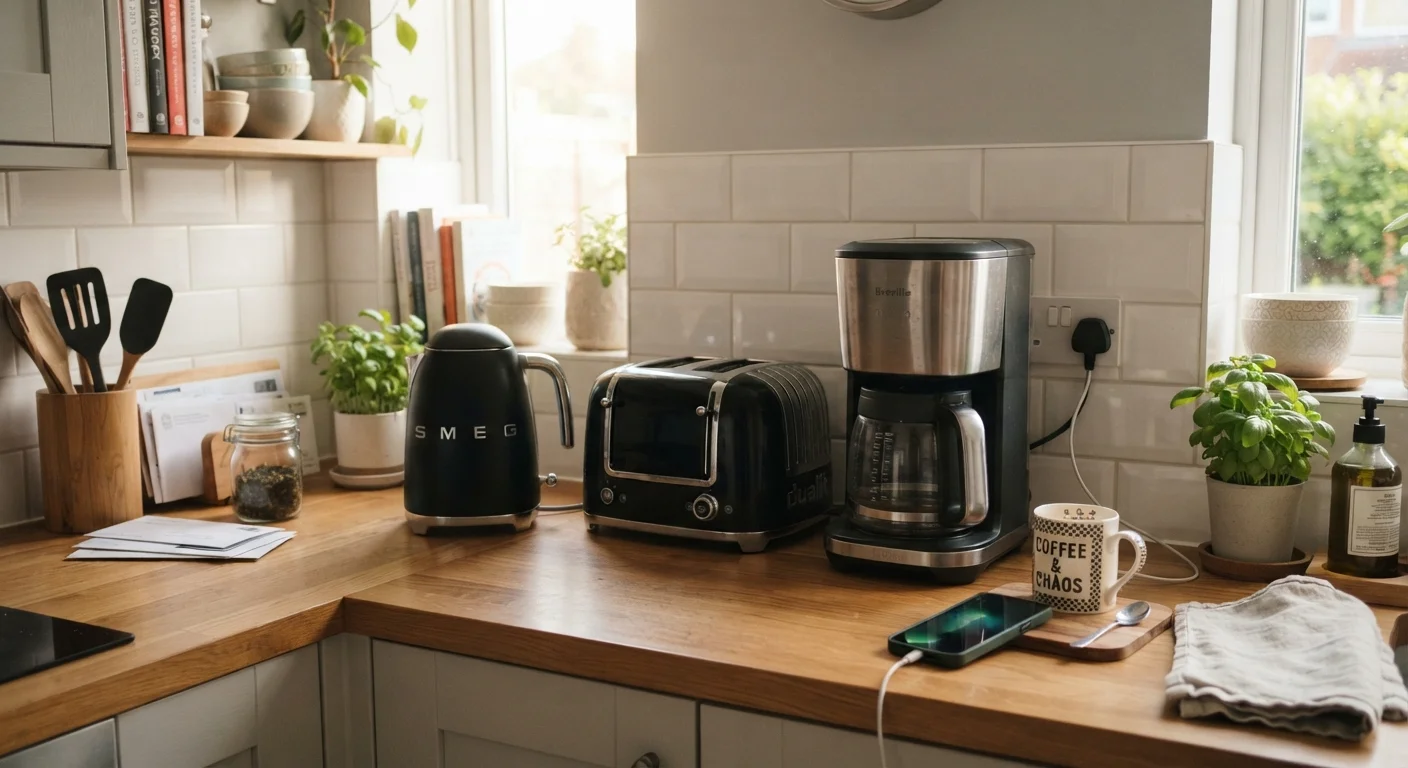
Why Small Appliances Deserve More Attention
When homeowners think about cutting electricity costs, attention usually goes to heating, cooling, and big-ticket appliances like refrigerators or water heaters. That's reasonable - those systems use a lot of energy. But the steady drip of small-appliance habits is easy to underestimate, and those costs accumulate over a full billing cycle.
Unlike your HVAC system, small appliances are used dozens of times a day, often without much thought. A kettle boiled to full capacity for one cup of tea. A phone charger left plugged in overnight after the device is fully charged. A tumble dryer running a half-empty load because it's convenient. None of these feel significant in isolation - but repeated daily across a household, they show up on your bill.
If you've ever looked at your electricity statement and felt confused about where the usage is actually coming from, you're not alone. Understanding what each charge on your bill means is a useful starting point before diving into behavior changes. Once you can read your bill clearly, the impact of small habits becomes easier to track. The list below covers the most common culprits - and what you can realistically do about each one.
Boiling More Water Than You Need
Electric kettles are one of the highest-wattage appliances in a typical kitchen - commonly between 1,500 and 3,000 watts. That means every unnecessary boil costs real energy. The habit of filling the kettle to the maximum line when you only need one or two cups is extremely common, and it means you're heating water that immediately cools without being used.
The fix is straightforward: boil only the amount of water you actually need. Many kettles have visible volume markings to help. This single change, applied consistently, can reduce the energy your kettle uses by a meaningful margin - estimates vary, but heating twice as much water as needed roughly doubles the energy consumed per boil.
Boiling a full kettle for one cup can use twice the energy necessary.
Running the Tumble Dryer When Air-Drying Is Viable
Tumble dryers are among the most energy-intensive appliances in a home, typically drawing between 2,000 and 5,000 watts per cycle. Running a dryer for every laundry load - including those that could reasonably air-dry - adds up significantly across a month.
Air-drying clothes on a rack indoors or a line outdoors costs nothing to run. It's not always practical (particularly in winter or small spaces), but identifying which loads genuinely need machine drying versus which are dried that way out of habit is a worthwhile exercise. Even substituting air-drying for half of your typical dryer loads can produce noticeable bill reductions. If you do use a dryer, running full loads rather than partial ones improves efficiency per item dried.
Substituting air-drying for even half your dryer loads can noticeably reduce your bill.
Leaving Chargers Plugged In Around the Clock
Phone chargers, laptop adapters, and similar power bricks draw a small amount of electricity even when no device is connected - a phenomenon known as standby or phantom power draw. Individually, each charger uses only a fraction of a watt in idle mode. But across multiple devices, in every room, running continuously, the cumulative draw becomes more meaningful.
For a deeper look at how standby consumption across your home adds up, phantom loads explains which devices are the worst offenders and how to identify them in your own home. The practical habit is simply to unplug chargers when not actively in use - or to use a power strip that makes it easy to cut power to a cluster of devices at once. Turning appliances off at the wall is a related habit that's worth evaluating honestly.
Multiple idle chargers running around the clock contribute to a quiet but real standby drain.
Running the Dishwasher Half-Empty
Dishwashers use roughly the same amount of water, heat, and electricity regardless of how full they are. Running a half-empty dishwasher means you're paying for a full cycle's worth of energy to clean far fewer items than the machine is designed to handle.
The efficient habit is to wait until the dishwasher is fully loaded before running it. This doesn't mean cramming items in unsafely or blocking the spray arms - it means being intentional about timing. If your household generates enough dishes for one full load per day, running it once daily rather than twice partially-full halves the number of cycles without any reduction in cleanliness. Many modern dishwashers also have an eco or half-load mode - using these appropriately can further reduce consumption.
A half-empty dishwasher uses nearly the same energy as a full one - timing your loads matters.
Using Hot Water Settings Higher Than Needed
Many washing machines default to warm or hot water settings that are higher than most everyday laundry actually requires. Heating water is the most energy-intensive part of a wash cycle - switching from a hot wash to a cold or cool wash can reduce the energy used per cycle considerably, depending on your machine and water heating setup.
Modern detergents are formulated to work effectively at lower temperatures, so for everyday clothing and lightly soiled items, cold washing is typically sufficient. Reserve warm or hot washes for heavily soiled items, bedding, or situations where hygiene is a genuine concern. This pairs well with broader hot water habits worth reviewing across the whole household.
Switching to cold wash cycles for everyday laundry can cut per-load energy use significantly.
Using Small Appliances During Peak Rate Hours
If your electricity plan uses time-of-use pricing - where rates vary by hour of the day - running energy-intensive appliances during peak hours (typically late afternoon through early evening) costs more per kilowatt-hour than running the same appliance at off-peak times.
Not all utility plans use time-of-use pricing, so the first step is to check your tariff structure. Your utility bill will usually show your rate type. If you are on a time-of-use plan, shifting dishwasher, washing machine, and dryer use to overnight or early morning hours can meaningfully reduce what you pay per cycle without changing your usage at all. Check with your utility provider to confirm your specific rate schedule.
On time-of-use plans, running appliances during off-peak hours costs less per cycle with zero behavior sacrifice.
Building Habits That Actually Stick
Changing appliance habits doesn't require a major lifestyle overhaul. The most effective approach is to adjust one or two routines at a time - overfilling the kettle less, air-drying where practical, unplugging chargers before bed - until each becomes automatic. Stack too many changes at once and most won't stick.
It's also worth noting that not every energy-saving tip you'll encounter is equally useful. Some widely repeated advice delivers minimal real-world savings. Common energy-saving myths are worth reviewing so you focus effort on changes that actually move the needle. Meanwhile, if you've already addressed appliance habits and want to reduce your heating and cooling load further, home insulation upgrades are typically the next highest-impact step a DIY homeowner can take.
This article is for general informational purposes only. Actual energy savings vary by household, usage patterns, appliance age, and local electricity rates. Always verify guidance with your utility provider or a qualified energy assessor before making significant changes.
The content on this site is for informational purposes only and is not a substitute for professional advice. Always consult a qualified professional for guidance specific to your situation.