

The Two Big Halves: Supply vs. Delivery
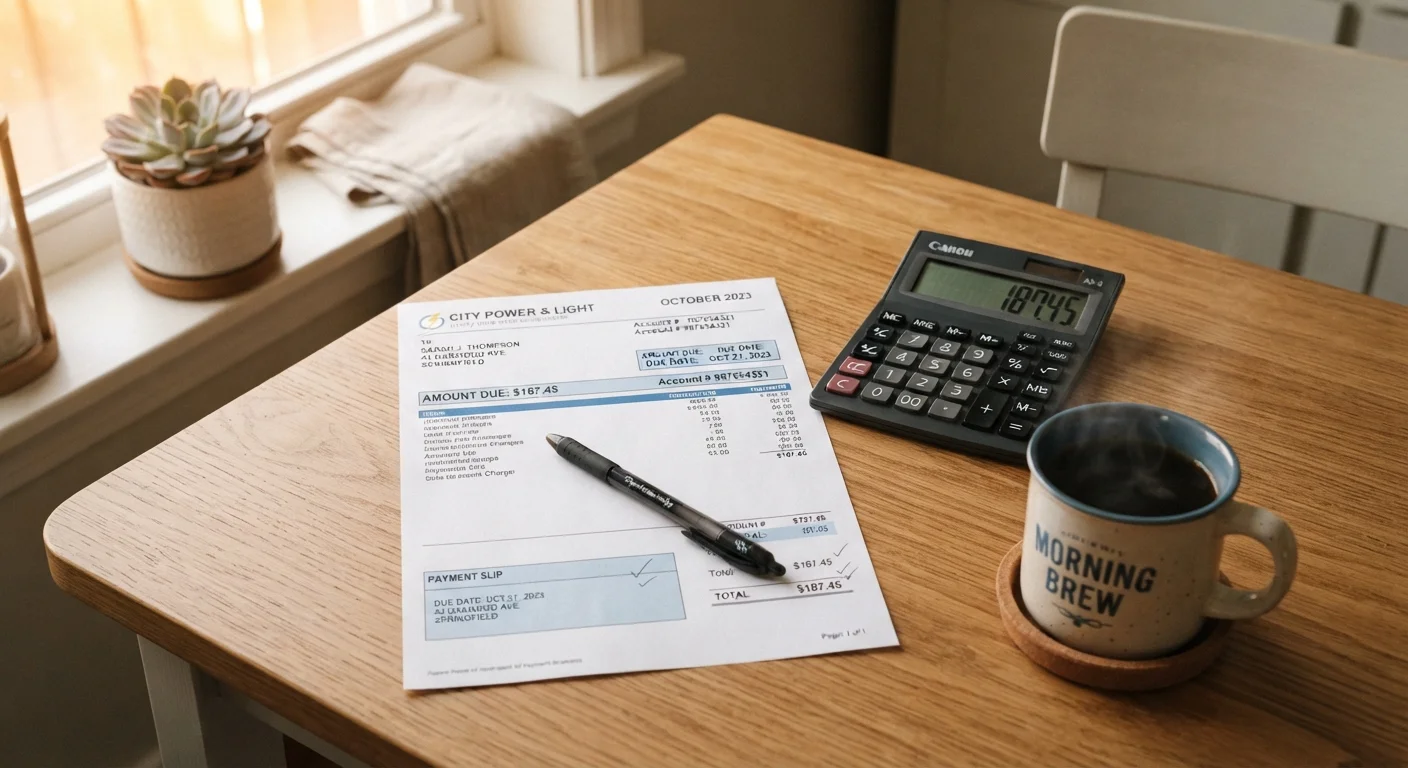
Nearly every US electricity or gas bill divides charges into two broad categories: supply and delivery. Understanding this split is the single most useful thing you can do to decode your bill.
Supply charges cover the actual cost of the energy itself - the electricity generated at a power plant or the natural gas extracted from the ground. In deregulated states, you may be able to choose your energy supplier, which affects this portion of the bill. In regulated states, your utility sets this rate.
Delivery charges - sometimes labeled distribution or transmission - cover getting that energy from the source to your home through the grid or pipeline network. This portion is almost always set by your local utility and is not subject to supplier competition. Even if you generate your own solar power, you typically still pay delivery charges to remain connected to the grid.
| Standard electricity unit | Kilowatt-hour (kWh) (US Energy Information Administration) |
| Standard gas unit (most US bills) | Therm or CCF (100 cubic feet) (US Energy Information Administration) |
| Typical US household electricity use | ~10,500 kWh per year (EIA Residential Energy Consumption Survey) |
| Bill sections on most US utility bills | Supply, delivery, taxes & fees |
| Meter read types | Actual or estimated |
| Common rate structures | Flat, tiered, and time-of-use (TOU) |
Below both of those, you'll usually find a third category: taxes and fees. These include state and local taxes, public utility fees, and various riders (small surcharges that fund specific programs like low-income assistance or renewable energy development).
Reading the Line Items: What Each Charge Actually Does
Once you understand the two-part structure, the individual line items become much easier to place. Here are the most common ones and what they mean:
- Customer charge (or service charge): A flat monthly fee - often $5-$15 - that you owe regardless of usage. It covers metering and account maintenance.
- Energy charge: Your actual consumption multiplied by the rate per kWh (electricity) or per therm/CCF (gas). This is the number most responsive to your behavior.
- Fuel adjustment charge: A variable add-on that fluctuates with wholesale fuel costs. It can increase your bill during periods of high demand or supply disruption.
- Demand charge: Based on your peak usage rate within a billing period. Rare on residential bills, but worth understanding if you see it.
- Riders or surcharges: Small, itemized fees that fund specific regulatory programs. They're typically a fraction of a cent per kWh.
Kilowatt-hour (kWh)
The standard unit used to measure electricity consumption. One kWh equals using 1,000 watts of power for one hour - for example, running a 100-watt bulb for 10 hours.
Therm
A unit used to measure natural gas usage on most US gas bills. One therm equals approximately 100,000 British Thermal Units (BTUs) of heat energy.
Distribution charge
A fee charged by the local utility to cover the cost of delivering energy through power lines or gas pipes to your home, separate from the cost of the energy itself.
Demand charge
A charge based on the highest rate of energy consumption recorded during a billing period, typically in short intervals. More common on commercial bills, but appearing increasingly on residential accounts.
Baseline allowance
A set amount of energy some utilities provide at a lower rate each month, intended to cover essential household use. Consumption above the baseline is billed at a higher tier rate.
Time-of-Use (TOU) rate
A pricing structure where the cost per kWh varies depending on the time of day or season, with higher rates during peak demand periods and lower rates during off-peak hours.
Customer charge
A flat monthly fee charged regardless of how much energy you use. It covers the utility's basic administrative and infrastructure costs for maintaining your account and meter.
Actual vs. estimated read
Utilities either read your meter directly (actual) or estimate usage based on prior history when access is unavailable. Estimated reads are reconciled on future bills once an actual reading is taken.
For a deeper look at how rate structures like tiered pricing and time-of-use plans affect what you pay per kWh, see our guide to energy tariffs.
Meter Readings and Usage History
Your bill will show two meter readings: the reading at the start of the billing period (previous read) and the reading at the end (current read). The difference between them is your usage for that cycle.
Estimated Reads Can Cause Surprises
When a utility estimates your usage instead of reading your meter directly, the following month's actual read may result in a noticeably higher or lower bill as the difference is reconciled. If you see 'EST' or 'Estimated' next to a meter reading, that month's charges are based on predicted rather than measured consumption. Checking your meter periodically and comparing it to your bill can help you spot discrepancies early.
Most bills also include a usage history chart - typically a bar graph showing the last 12-13 months of consumption. This is one of the most useful tools on your bill for spotting patterns. A spike in July likely reflects air conditioning load; a spike in January points to heating. Comparing the same month year-over-year is more meaningful than comparing month-to-month, since seasons drive most residential energy variation.
If your bill shows tiered or block pricing, you'll see your consumption divided across rate tiers. The first block of kWh (the baseline allowance) is billed at the lowest rate; usage above each threshold steps up to the next tier. Reducing consumption enough to stay within a lower tier can have an outsized impact on your total bill. See how everyday appliances contribute to crossing those thresholds in our article on small appliance habits that add up.
Understanding your usage numbers also makes your home's energy systems easier to evaluate - knowing which months cost most tells you exactly where to focus efficiency upgrades first, whether that's insulation, HVAC, or lighting. For context on how lighting choices show up in your kWh total, see our breakdown of LED vs. incandescent energy numbers.
Utility billing structures vary by state, utility, and rate plan. Always refer to your utility's rate schedule or contact your provider directly to confirm how specific charges on your bill are calculated.
The content on this site is for informational purposes only and is not a substitute for professional advice. Always consult a qualified professional for guidance specific to your situation.