

Our Verdict
Turning appliances off at the wall is a genuinely useful energy habit, but its impact depends heavily on which devices you target. For high-draw standby culprits like gaming consoles, older TVs, and desktop computers, the savings are real. For low-draw devices or appliances that need to stay on, the effort rarely justifies the disruption.
Homeowners who want a no-cost starting point for reducing electricity bills and are willing to be strategic about which outlets they switch off.
What 'Standby Power' Actually Means
Most plugged-in appliances don't fully power down when you hit the off button. Instead, they enter a low-power standby state - drawing a small but continuous stream of electricity to maintain functions like remote-control readiness, clock displays, or network connectivity. This is sometimes called phantom load or vampire power.
The U.S. Department of Energy has estimated that standby power can account for around 5-10% of residential electricity use, though the exact figure varies widely by household depending on the number and age of devices. Older electronics tend to be far less efficient in standby than modern, Energy Star-rated equipment.
Understanding which devices contribute most to that load is the first step toward making the wall-switch habit actually worthwhile. See our guide to small appliance energy habits for a breakdown of common household offenders.
The Case For Switching Off at the Wall
The strongest argument is simple: it costs nothing and requires no tools, permits, or professional help. For devices with high standby draw - gaming consoles, older plasma or LCD televisions, desktop computers with power supplies that stay warm to the touch - switching off at the socket can meaningfully reduce the trickle of wasted electricity over days and weeks.
Eliminates standby draw from high-consumption devices
Gaming consoles, older televisions, and desktop computers can each draw 10-30 watts or more in standby. Cutting that over 16-20 idle hours a day adds up across a month.
Zero upfront cost to implement
Switching a socket off requires no tools, no installation, and no investment - making it one of the most accessible energy habits available to any renter or homeowner.
Reduces fire risk from devices left powered unnecessarily
Fully de-energizing appliances that aren't in use - particularly older or heat-prone electronics - removes a potential ignition source during overnight or away periods.
Scales easily with switched power strips
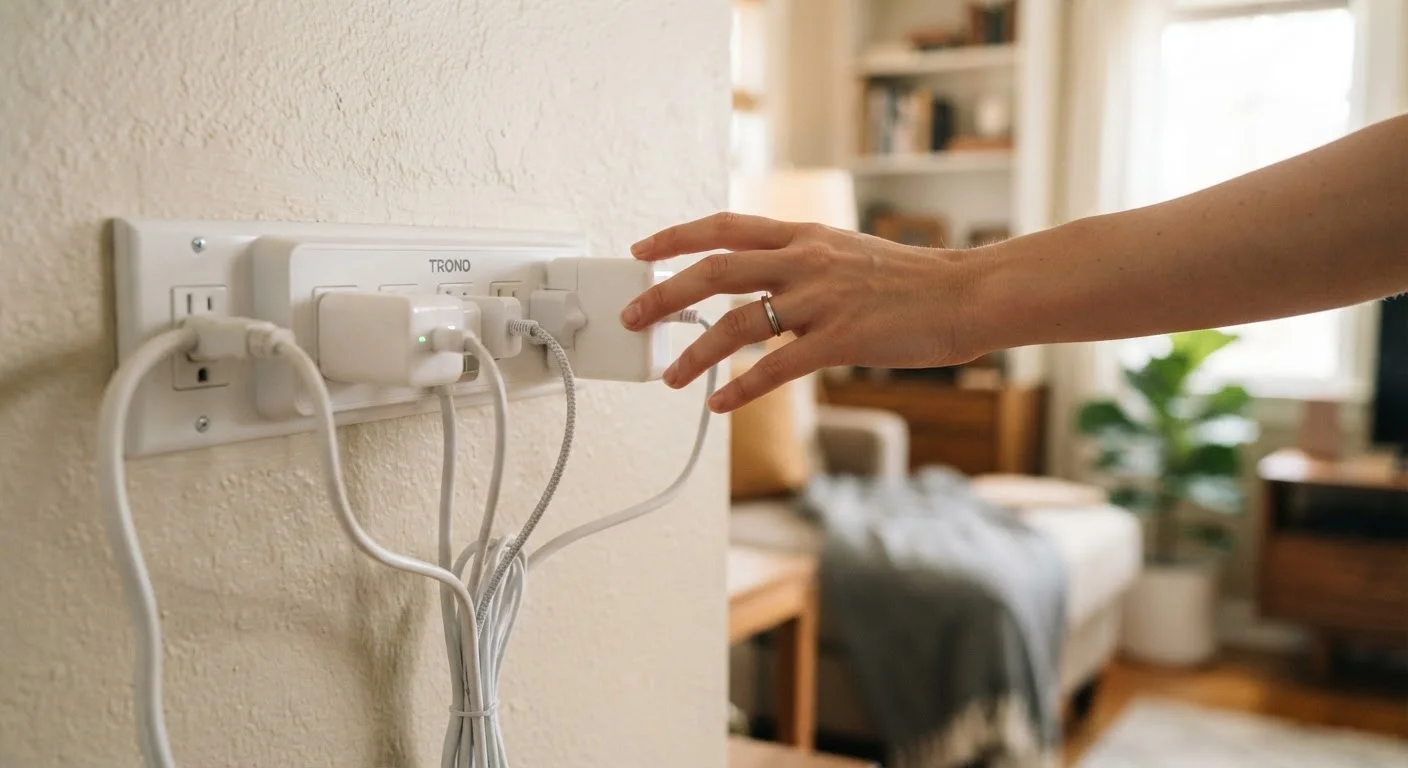
One switched strip can cut standby power to an entire entertainment center or home office in a single action, removing nearly all friction from the habit.
Supports a broader culture of mindful energy use
Households that build deliberate off-at-the-wall habits often become more attuned to other energy-wasting patterns, compounding savings over time.
There's also a cumulative benefit to the habit itself. Once you identify which outlets to prioritize and build the routine, the effort per week is minimal. Pairing high-draw outlets with a switched power strip can remove almost all friction - one click cuts power to an entire entertainment center or home office setup.
For a broader framework on where to focus, a room-by-room energy audit checklist can help you map your home's biggest standby contributors.
The Case Against - Or at Least, the Caveats
The honest counterpoint is that not every appliance justifies the habit. Modern phone chargers, for example, draw negligible power when nothing is connected - often less than 0.1 watts. Switching those off obsessively won't move the needle on your bill.
Minimal savings on low-draw devices
Modern phone chargers and many small appliances draw less than 0.5 watts in standby. Religiously switching these off delivers negligible savings and disproportionate effort.
Disrupts smart devices and scheduled functions
Cable boxes, DVRs, smart home hubs, and some routers rely on continuous power for updates, scheduled recordings, or network synchronization. Power cycling them causes functional disruption.
Habit fatigue reduces long-term follow-through
Trying to switch off every outlet in the home is difficult to sustain consistently. Without a targeted, selective approach, the habit tends to fall away quickly.
Not appropriate for all appliance types
Refrigerators, freezers, sump pumps, and medical devices must remain powered at all times. A blanket switch-everything-off policy requires careful exceptions to avoid real problems.
Some appliances also shouldn't be switched off at the wall. Refrigerators and freezers obviously need continuous power. Certain smart home hubs lose their programming or network sync when power-cycled. Cable boxes and DVRs often download updates or record scheduled content overnight - cutting power disrupts those functions.
There's also the question of wear and tear. Repeatedly power-cycling some electronics - particularly older devices with mechanical components or those that run warm-up cycles on startup - can, in theory, add stress over time, though for most modern consumer electronics this concern is minor.
Not All Standby Is Equal
Standby power draw varies enormously by device type and age. A gaming console from ten years ago may draw 20 times more in standby than a modern energy-efficient equivalent. Before assuming a device is a major culprit, consider using a plug-in energy monitor (watt meter) to measure its actual draw - many cost under $20 and can reveal surprises. This removes guesswork and helps you prioritize where switching off at the wall genuinely pays off.
It's worth being honest about the broader picture. Standby elimination is a useful habit, but it shouldn't crowd out higher-impact changes. As our article on common energy-saving myths explores, some widely believed efficiency tactics deliver far less than homeowners expect - while others are consistently underestimated.
How to Make the Habit Work Without the Hassle
The key is being selective rather than exhaustive. Focus on outlets serving entertainment systems, home office equipment, and seldom-used appliances like guest room televisions or infrequently used kitchen gadgets. These tend to combine meaningful standby draw with easy, low-disruption access.
A few practical approaches:
- Switched power strips let you cut power to a cluster of devices with a single button - ideal for TV setups or desk areas.
- Smart plugs with scheduling features can automate the off cycle overnight without any manual effort.
- Outlet labels or color-coded tags can remind household members which sockets to switch off and which to leave alone.
For a complete picture of how this habit fits into a larger energy strategy - covering heating, water use, and appliance upgrades - the home energy efficiency guide brings all the levers together in one place.
The content on this site is for informational purposes only and is not a substitute for professional advice. Always consult a qualified professional for guidance specific to your situation.