

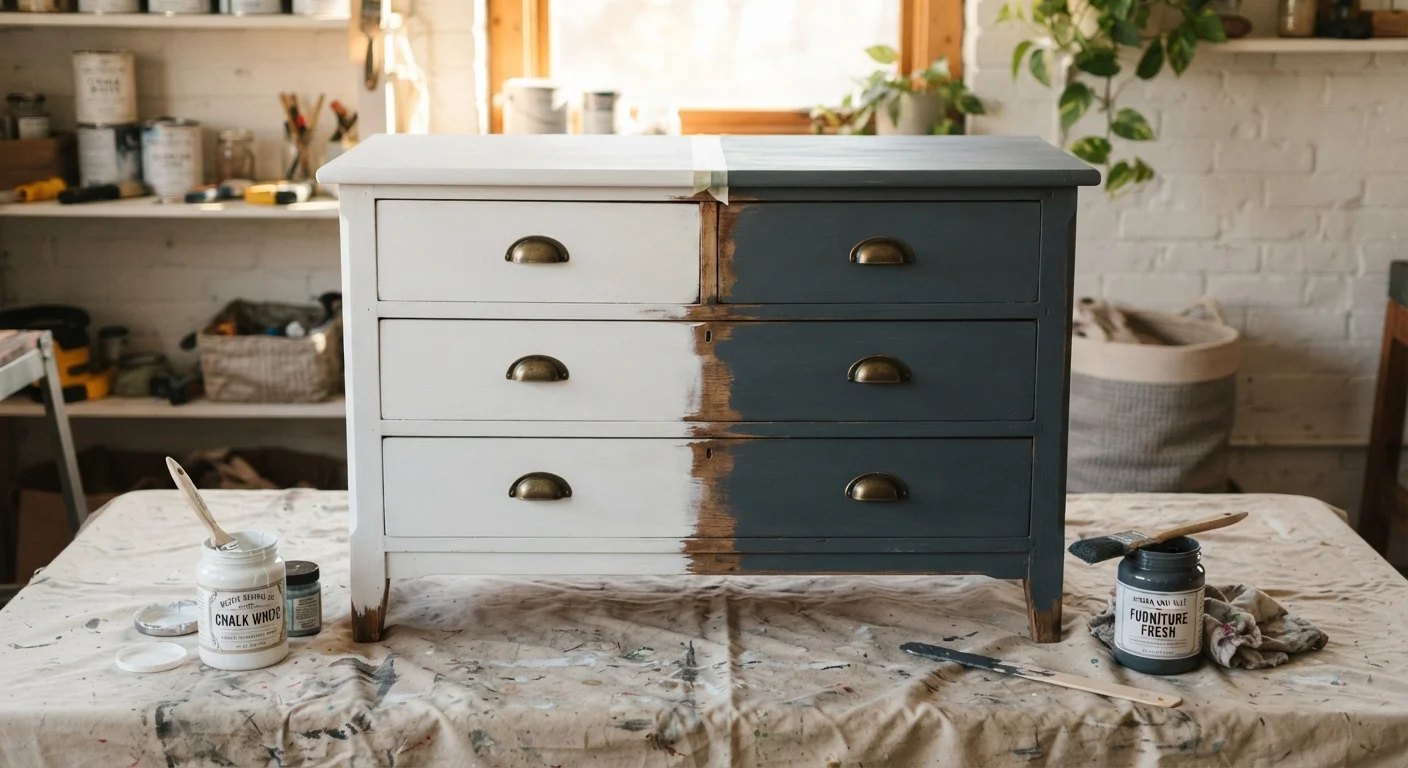
Option A
Chalk Paint
The vintage-lover's go-to for effortless, ultra-matte coverage.
Best for: Best for decorative furniture with heavy distressing, layered color effects, or an aged, chalky aesthetic.
Option B
Mineral Paint
The durable, self-sealing alternative with a refined matte finish.
Best for: Best for everyday furniture that needs a hard-wearing finish without a separate topcoat step.
What Sets These Two Paints Apart
At first glance, chalk paint and mineral paint look like close cousins: both promise skip-the-primer convenience, both dry to a matte finish, and both have won loyal followings in the furniture-flipping community. But their formulas - and the results they deliver - diverge in meaningful ways once you get into a project.
Chalk paint is a water-based paint with a high pigment load and a calcium carbonate filler that gives it that signature flat, chalky texture. That porous surface is part of the appeal: it accepts wax beautifully, sands to a soft sheen, and practically invites distressing. The tradeoff is that the finish is absorbent and soft until sealed, which means a topcoat of clear wax or furniture-grade polycrylic is essentially required, not optional.
Mineral paint (sometimes called clay-mineral paint) uses naturally occurring mineral pigments in a water-based formula. The key difference is that most mineral paints are engineered to self-seal as they fully cure - typically over a few weeks - forming a harder, more durable surface without a separate sealing step. That makes the process simpler for functional furniture that sees daily use.
Neither paint is universally superior. The right choice comes down to the look you're after, how the piece will be used, and how much finishing work you want to do. For a broader look at how paint properties affect results, common paint quality assumptions often get complicated when you examine the evidence closely.
Coverage, Prep, and Application
One of the biggest selling points for both paints is reduced prep - but "no primer needed" doesn't mean "no prep needed." Both paints require a clean, grease-free surface. Wipe down furniture with a degreaser or a diluted dish-soap solution and let it dry fully before you open a can. On previously waxed pieces, chalk paint in particular will bead and resist adhesion unless the wax is stripped first.
| Criterion | Chalk Paint | Mineral Paint |
|---|---|---|
| Finish texture | Ultra-matte, chalky, porous | Matte, slightly smoother |
| Sealing required | Yes - wax or polycrylic | Self-sealing on cure |
| Adhesion on slick surfaces | Moderate - may need light sanding | Strong bond on most surfaces |
| Distressing ease | Excellent - sands beautifully | Possible but less natural |
| Coats typically needed | 2-3 coats | 1-2 coats |
| Full cure time | Quick once waxed | 2-4 weeks to full hardness |
| Best surface types | Wood, MDF, plaster | Wood, laminate, previously painted |
| Creative layering | Excellent for blending effects | Limited blending window |
In terms of coverage, chalk paint tends to be thinner in consistency and may require two to three coats on darker or previously finished pieces. Mineral paint is generally thicker with strong hide, often achieving even coverage in fewer coats. Both can be brush-applied for a textured, handmade feel or rolled for a smoother finish - though roller application is more common with mineral paint for a sleeker result.
Drying time is broadly similar: most formulas are dry to the touch within an hour under normal humidity. Full cure time is where they diverge - chalk paint cures quickly once waxed, while mineral paint may take two to four weeks to reach maximum hardness. Avoid heavy use during that curing window.
Sealing, Durability, and Long-Term Care
Sealing chalk paint is a step you truly cannot skip on functional furniture. Clear furniture wax is the most traditional option: it buffs to a subtle sheen and deepens the color slightly. Water-based polycrylic sealers offer more durability and are available in flat or satin finishes, making them a popular alternative. Without a sealer, chalk paint will scratch, absorb water rings, and generally look tired within a few months of regular use.
Mineral paint's self-sealing chemistry changes the calculus. Once fully cured, it resists minor scuffs and water better than unsealed chalk paint - without the extra step. Some DIYers still apply a light topcoat on very high-use surfaces like kitchen tables, and that's a reasonable call. But for a side table, bookshelf, or decorative cabinet, mineral paint's cured finish typically holds up well on its own.
If chipping is already a concern with painted surfaces in your home, the principles are similar to what causes paint failure on other porous materials - understanding surface prep science applies whether you're painting terracotta or timber.
2-4 weeks
Mineral paint cure time for full hardness
Most mineral paint manufacturers indicate full cure - the point of maximum surface hardness - takes two to four weeks depending on humidity and temperature.
3 coats
Typical chalk paint coats on dark wood
Due to chalk paint's thinner consistency, covering a dark or heavily stained piece often requires two to three full coats for even, opaque coverage.
Choosing the Right Paint for Your Project
The decision between chalk paint and mineral paint really comes down to three questions: What aesthetic are you going for? How will the piece be used? And how many finishing steps are you willing to take?
If you want a rich, distressed farmhouse look - layered colors, sanded edges, or dry-brushed highlights - chalk paint is in its element. Its forgiving, workable texture gives you time to blend and manipulate before it sets. Pair it with a dark wax for an aged effect or a clear wax to protect a clean color.
If you're refinishing a dresser that gets daily use, a dining chair that takes a beating, or a kid's room accent piece, mineral paint's built-in durability earns its place. You'll appreciate the reduced finishing steps and the harder-wearing result once cured.
Before committing to either for a large piece, test on a sample board or the furniture's underside first. Finish, sheen, and color can all look different on actual furniture versus a paint chip. And if the project is part of a broader room refresh, working through a prep and color checklist before you start can save real frustration later.
Both paints reward a little patience and proper prep - and both can produce stunning, professional-looking furniture transformations at a fraction of the cost of buying new.
The content on this site is for informational purposes only and is not a substitute for professional advice. Always consult a qualified professional for guidance specific to your situation.