

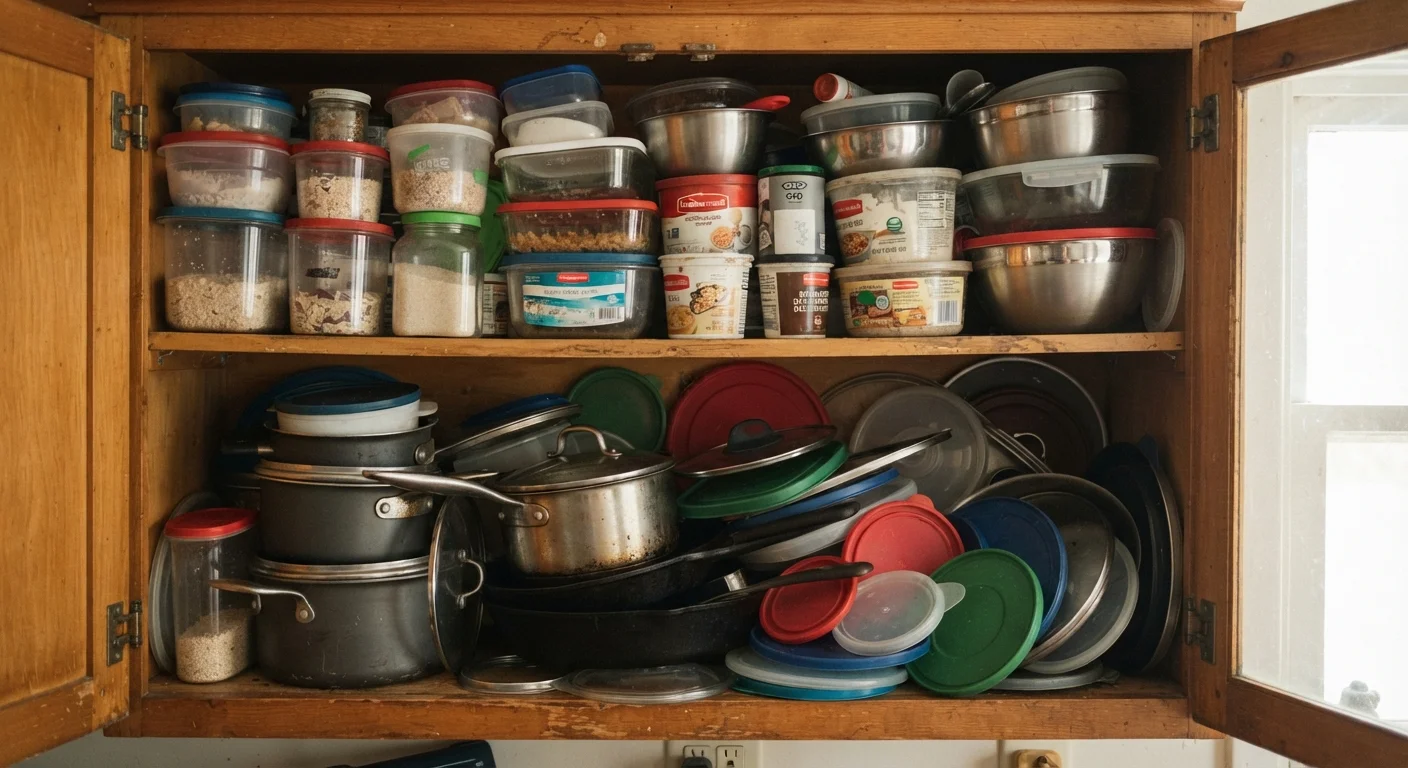
The Real Reason Cabinets Feel Stuffed
Kitchen cabinets rarely feel too full because they contain too much. More often, the problem is structural: a mismatch between how the space is configured and how it's actually being used. A cabinet loaded with pots, pans, and food storage containers can feel impossible to navigate - not because you own too many things, but because those things aren't arranged in a way that lets the space breathe.
Understanding the specific habits and layout choices that create this feeling is the first step toward fixing it. The full range of kitchen storage zones - from countertops to deep corner cabinets - each have their own logic, and cabinets are no exception.
Volume Isn't Always the Problem
Most kitchens that feel overcrowded aren't actually over-capacity - they're under-organized. Before buying more storage products, audit how your existing cabinet space is being used. Adding bins to a disorganized cabinet often just hides the disorder one layer deeper.
Mistakes That Make Cabinets Feel Overcrowded
The following errors show up in kitchens across every size and budget range. Recognizing them is more valuable than buying any single organizing product.
Ignoring vertical space inside the cabinet.
Why it happens: Cabinets come with fixed or minimally adjustable shelves, so most people simply stack items until the shelf is full - never thinking about the open air above.
Storing items you rarely use in the most accessible spots.
Why it happens: Items get placed wherever there's room at the moment they're put away - convenience wins over strategy, and rarely used pieces end up front and center.
Keeping duplicates, broken lids, or solo containers that no longer have a match.
Why it happens: Single items seem too small to justify a decluttering session, so orphaned lids and extra mugs accumulate unnoticed over months.
Grouping items by where they were purchased rather than how they're used.
Why it happens: When putting away groceries or new purchases, the path of least resistance is to group like-looking things together, not functionally related things.
Letting cabinet doors become invisible real estate.
Why it happens: The inside surface of a cabinet door is easy to overlook because it disappears the moment you close the cabinet.
Skipping the intake habit after organizing.
Why it happens: Organizing feels like a one-time fix, but cabinets return to chaos without a system that manages incoming items.
Once you've corrected these patterns, revisit the full picture of your kitchen's storage zones. The room-by-room kitchen storage primer walks through how cabinets, drawers, and pantry areas work together - and where each category of item belongs.
Keeping It From Coming Back
Organization isn't a destination - it's an ongoing practice. Even perfectly arranged cabinets drift back toward chaos when the habits that maintain them aren't in place. The one-in, one-out approach mentioned above is the single most effective behavioral fix, but it works best when paired with a regular, low-effort reset: a five-minute weekly tidy of one or two cabinets keeps disorder from compounding.
Avoid Stacking Heavy Items Too High
Placing heavy cookware or appliances on upper shelves creates a safety hazard, particularly for households with children or older adults. Store heavier items at or below eye level and ensure shelves are rated for the load. If shelving feels unstable, consult a professional before modifying or loading it further.
If you find your kitchen re-cluttering faster than you can keep up, the issue may be systemic rather than spatial. Why decluttering rarely sticks explores the behavioral patterns that cause re-clutter - and what actually interrupts the cycle for good.
Small, targeted adjustments - a riser here, a door organizer there, a reassigned shelf zone - consistently outperform full cabinet overhauls that exhaust motivation and rarely account for day-to-day behavior. Start with one cabinet, apply the principles above, and build from there.
The content on this site is for informational purposes only and is not a substitute for professional advice. Always consult a qualified professional for guidance specific to your situation.