

Our Verdict
Surplus and overstock materials offer real, sometimes substantial savings - but they reward buyers who are flexible, patient, and willing to do homework. The risks are manageable if you go in with a clear plan, inspect carefully, and buy only what your project can realistically absorb. For rigid, spec-sensitive jobs, retail or special-order materials are usually the safer call.
Best suited to DIYers with flexible project specs, adequate storage, and the patience to verify dimensions, grades, and quantities before buying.
What 'Surplus' and 'Overstock' Actually Means
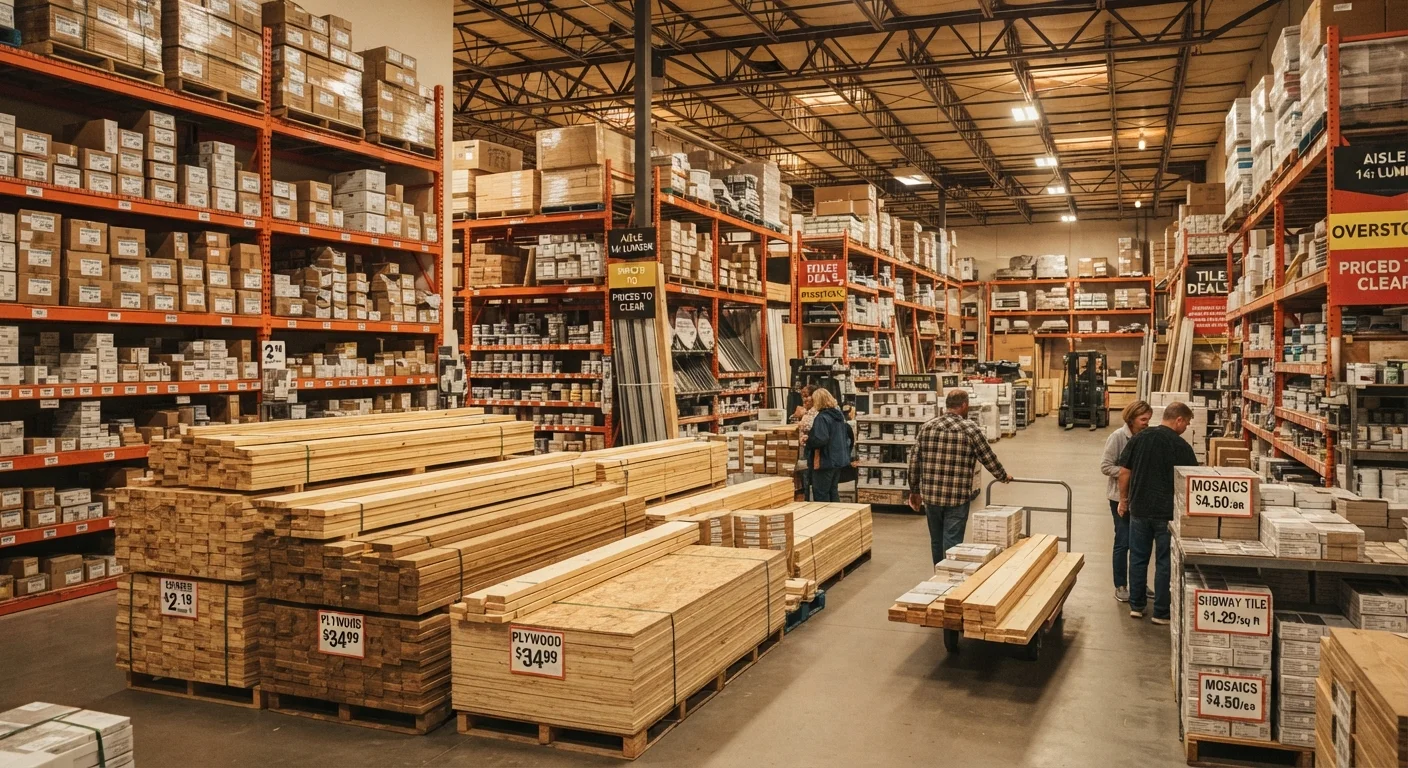
The terms are often used interchangeably, but they describe slightly different situations. Overstock refers to materials a retailer ordered in excess - typically new, first-quality goods that simply didn't sell through. Surplus is broader: it can include canceled project orders, builder liquidations, factory seconds, or discontinued lines. Both can deliver genuine value. Both carry specific risks that standard retail purchases don't.
Common categories you'll find at surplus outlets include flooring (hardwood, laminate, tile, LVP), lumber, roofing materials, cabinetry, insulation, windows, and doors. Quality varies widely between sources and even between pallets at the same source - which is why walking in blind is rarely a good idea.
For a related look at how architectural salvage and ReStore outlets compare, see what to expect at salvage yards and Habitat ReStores.
The Real Advantages
When conditions align, surplus buying is one of the most effective ways to stretch a renovation budget.
Significant cost savings versus retail pricing
Overstock and surplus materials commonly sell for 30-70% below standard retail. On a large flooring job or a full framing order, that gap can translate to hundreds or even thousands of dollars.
First-quality goods are often available
True overstock is frequently new, undamaged, and grade-stamped the same as what you'd find at a full-price retailer - just bought in excess by a supplier or canceled from a project.
Access to discontinued or hard-to-find materials
Surplus outlets occasionally carry styles, species, or profiles no longer in standard production, which can be invaluable when matching existing work in an older home.
Environmentally lower-impact than new production
Using materials that already exist in the supply chain - rather than ordering new manufacturing runs - reduces embedded energy and waste, similar to the appeal of reclaimed materials.
Good fit for flexible or experimental projects
When exact specs aren't critical, surplus lumber or tile lets you take on larger-scale projects at a fraction of the normal material cost, expanding what's feasible on a tight budget.
30-70%
Typical discount vs. retail on surplus materials
Ranges vary by material type and source, but overstock flooring and lumber commonly sell at this discount compared to full-price retail pricing.
10-15%
Recommended overage to purchase
Industry guidance consistently suggests buying this much extra when sourcing materials you cannot reorder, to cover cuts, breakage, and future repairs.
Beyond cost, surplus yards sometimes carry materials that are no longer in standard production - unique wood species, discontinued tile patterns, or older-style hardware that matches existing fixtures in an older home. That can be genuinely useful when matching an existing installation.
The Genuine Drawbacks
None of the savings matter if the materials don't work for your project. Here's where surplus buying regularly goes wrong.
Quantities are fixed and often insufficient
You're buying what's there - no reordering. If you underestimate your needs, you may not be able to source matching material, leaving a project incomplete or visually inconsistent.
Dye lot and batch mismatches are common
Tile and flooring from different production runs can differ noticeably in shade or tone, even when labeled identically. Mixing lots mid-project is one of the most frequent and visible surplus mistakes.
Quality is inconsistent and unpredictable
The same pallet can contain first-quality pieces alongside factory seconds or damaged units. Without careful inspection, you may not discover the problems until you're mid-installation.
Selection is entirely unpredictable
You shop what's available that day, not what your project needs. Finding the right material for a specific application requires multiple visits or flexibility on specs.
Limited or no return policy
Most surplus outlets sell as-is, with no returns once material leaves the lot. Mistakes you don't catch before purchase are typically your financial loss to absorb.
Storage burden falls entirely on the buyer
To capture available quantities, you often need to buy well before installation - which means storing lumber, tile, or panels in a garage or shed for weeks or months.
Discontinued and end-of-line materials present closely related challenges. If you're weighing those options too, a practical approach to discontinued materials covers the key decision points.
When Surplus Makes Sense - and When It Doesn't
Surplus buying tends to work well in specific situations:
- Large-area flooring or tile where you need volume and can be flexible on color within a range
- Structural lumber for framing, decking, or outbuildings where appearance is secondary to grade
- Storage or garage projects where custom dimensions aren't critical - for more on that, see the trade-offs of building your own storage
- Practice or prototype work where cheap material lets you test a technique before committing
It tends to be a poor fit when you need precise dye-lot matching across a future phase, when your project timeline is tight and substitutions would cause delays, or when structural-grade certification is non-negotiable. For projects requiring permitted work - any structural, electrical, or plumbing scope - verify that surplus materials meet local code requirements before purchasing.
Permits and Code Compliance Still Apply
Buying surplus doesn't exempt materials from local building code requirements. If your project requires a permit - framing, roofing, windows, or any structural work - the materials must still meet the specifications required by your jurisdiction. Always verify grade stamps and certifications before purchasing surplus for permitted work, and check with your local building department if you're uncertain.
How to Buy Surplus Without Regret
A few habits dramatically reduce the odds of a costly mistake:
- Measure twice before you go. Know your square footage, linear footage, and required thickness or grade before stepping foot in the outlet.
- Inspect in person. Examine the actual material - not just the packaging - for damage, warping, mold, inconsistent color, or missing pieces.
- Check for lot consistency. For flooring and tile, confirm all boxes share the same dye lot or shade code.
- Buy 10-15% overage. You won't be able to reorder this exact material, so account for cuts, breakage, and future repairs.
- Understand the return policy. Many surplus outlets sell as-is. Know this before loading the truck.
For a complete pre-purchase workflow, the pre-purchase materials checklist walks through dimensions, quantities, grades, and compatibility in detail.
The content on this site is for informational purposes only and is not a substitute for professional advice. Always consult a qualified professional for guidance specific to your situation.