

Why End-of-Line Materials Deserve a Second Look
When a tile line gets discontinued or a flooring SKU is marked down to clear, it's easy to assume something is wrong with it. In most cases, nothing is. Manufacturers retire product lines for business reasons - updated styling preferences, supplier changes, factory retooling - not because the material itself is flawed. That gap between perceived and actual quality is where genuine savings live.
The catch is that the same conditions that make these materials affordable also introduce real risks if you don't approach the purchase methodically. Unlike buying from current stock, you can't go back for more. You can't expect manufacturer support for matching pieces. And in some cases, the material has been warehoused long enough that storage conditions have affected it. Understanding those risks doesn't mean avoiding end-of-line materials - it means knowing exactly what to verify before you load the truck.
For context on sourcing beyond retail clearance, the practical guide to salvage yards and ReStores covers how quality varies across resale channels and when those sources are worth the trip.
Best Practices for Buying End-of-Line and Discontinued Materials
These aren't rules that guarantee success - renovation projects have too many variables for that. They're the checks and habits that consistently help DIYers avoid the most expensive mistakes.
Calculate your full quantity requirement - including waste - before buying anything.
With discontinued stock, there is no second shipment. Running short mid-project means either visible inconsistency from a mismatched substitute or an expensive workaround. A 10-15% overage buffer for cuts, breakage, and future repairs is a reasonable baseline for most tile and flooring installations.
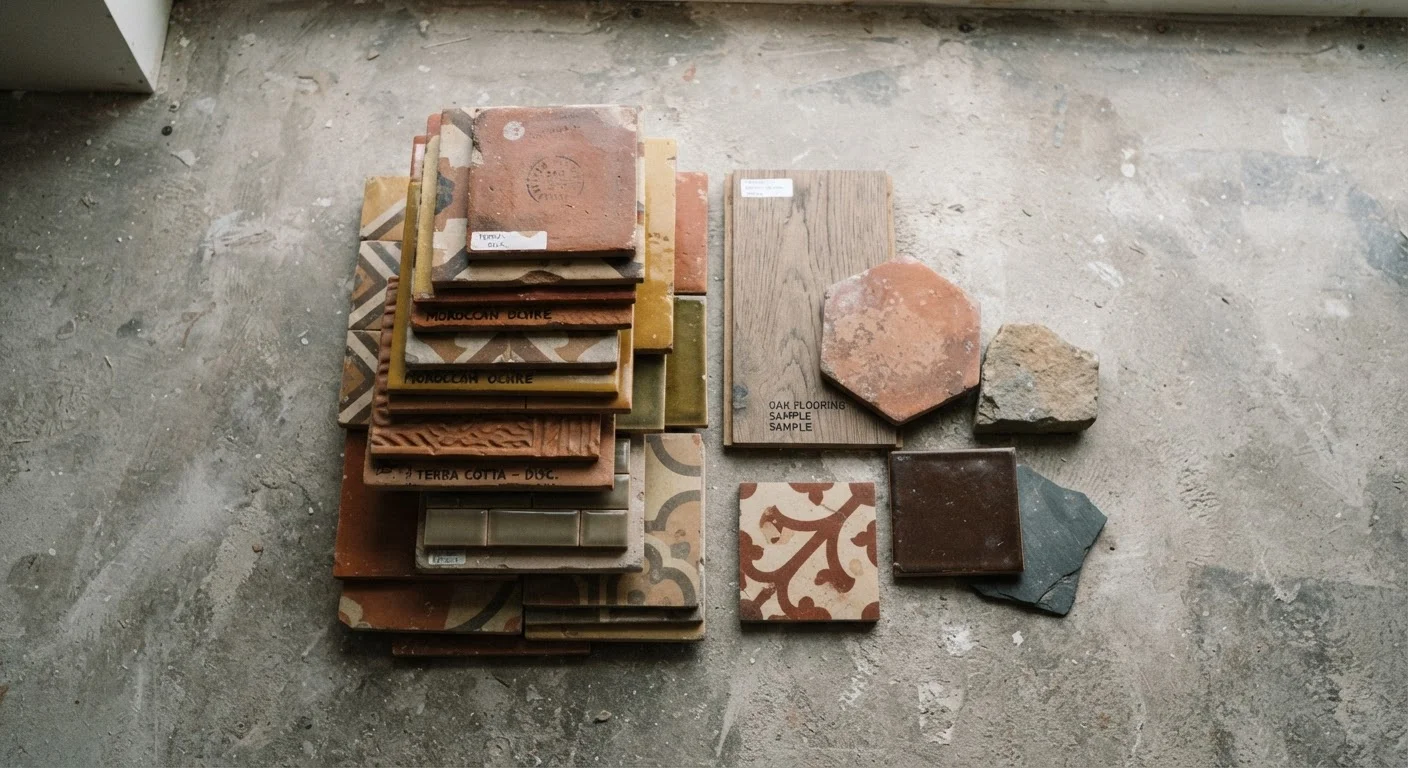
Inspect physical samples in person before finalizing the purchase.
Photos and digital swatches rarely capture the true color, finish sheen, or texture of a material. Dye-lot variation between boxes - even from the same production run - can be visible once installed under consistent light. Seeing the actual material in your hands eliminates the most common source of buyer regret.
Verify the condition of the full stock, not just the display piece.
End-of-line materials have often been moved multiple times and may have sat in warehouse conditions that weren't ideal. Edge chips, moisture absorption, warping, and finish crazing are more common in clearance stock than in freshly produced material. Spotting these issues before purchase protects your budget and your installation timeline.
Use discontinued materials in contained, self-contained spaces where future matching isn't required.
The biggest long-term risk with discontinued material is the inability to match it later. A bathroom, a laundry room, or a basement recreation area is a bounded space - if a tile cracks in five years, you can replace a small section from your reserves rather than needing to match across a continuous open-plan floor.
Confirm the material meets the technical requirements of your installation.
Price and availability don't override suitability. A beautiful discontinued floor tile rated for wall use only will crack under foot traffic. Discontinued laminate without waterproof core construction isn't appropriate for bathrooms regardless of how attractive the price is. Matching the material's specs to the installation context is non-negotiable.
Negotiate the price based on the full quantity you're committing to take.
Retailers and distributors clearing discontinued stock often have flexibility on price, particularly when a buyer is willing to take the entire remaining quantity. A single bulk commitment relieves them of ongoing storage and reduces administrative overhead - that has real value worth asking about.
When to Walk Away
Not every clearance deal is worth taking. Some situations make end-of-line materials a poor fit regardless of the price:
- You need an exact match to existing material. If you're patching into an existing tile floor or extending a wood floor run, a discontinued SKU almost never matches closely enough. Dye lots, finish sheens, and dimensional tolerances vary even within the same product family.
- The project area is large and the available quantity is short. Running out mid-installation forces expensive workarounds. Factor in at least a 10-15% waste allowance for cuts and breakage before confirming the quantity is sufficient.
- You can't inspect before purchasing. Buying unseen online is riskier with discontinued stock than with current production runs. If inspection isn't possible, the savings need to be significant enough to absorb potential write-offs.
- Storage before installation isn't feasible. Some materials - particularly certain laminates and moisture-sensitive products - degrade in uncontrolled storage environments. If you're buying months ahead of your install date, confirm the material's storage requirements first.
The honest breakdown of surplus material trade-offs covers parallel decision points for overstock purchases, which share many of the same risks.
Ask About Dye Lot Before You Commit
Even within a single clearance SKU, boxes may have been produced in different manufacturing runs - meaning subtle color or texture differences exist between batches. Always ask whether the available stock is from a single dye lot, and request to cross-check box labels yourself. Mixing dye lots unknowingly is one of the most common and frustrating sources of visible inconsistency after installation.
Making the Most of What You Buy
Once you've committed to a discontinued material and verified the quantity is right, a few habits make the difference between a smooth install and a project that runs into problems late.
Open and inspect every box or bundle before the installation crew arrives - or before you start yourself. Defects that seem minor before installation become permanent once the material is set. Shuffle pieces from multiple boxes to distribute any subtle color variation evenly across the field. For tile especially, this blending technique reduces visible banding from dye-lot differences.
Keep a small reserve. Even after installation, hold back 5-10% of the material in clearly labeled storage. Cracked tiles, damaged planks, and worn sections will eventually need spot replacement, and having matching material on hand avoids a frantic and usually unsuccessful search years later.
Document what you bought. Photograph the product label, write down the manufacturer name, SKU, and dye lot number, and keep the purchase receipt. That information is useful for warranty inquiries, insurance documentation, and any future contractor who works on the space. For broader guidance on avoiding material waste habits that drain renovation budgets, see where renovation budgets leak.
Finally, if you have more material left over than you can store, consider listing the surplus. Other DIYers actively search for discontinued tiles and flooring to complete repairs - what you can't use may be exactly what someone else needs.
The content on this site is for informational purposes only and is not a substitute for professional advice. Always consult a qualified professional for guidance specific to your situation.