

Three Sources, Three Very Different Experiences
Not all salvage shopping is alike. The term gets used loosely to describe everything from Habitat for Humanity ReStores to sprawling industrial salvage yards to curated architectural salvage dealers. Understanding what each source actually stocks - and how it operates - saves you wasted trips and sets realistic expectations before you haul a tape measure across town.
For a broader look at how salvage fits into a full sourcing strategy, see Renovation Material Sourcing from Start to Finish.
Habitat for Humanity ReStores: The Most Predictable Option
ReStores are nonprofit home improvement resale shops operated by local Habitat for Humanity affiliates. Inventory comes primarily from contractor overstock, manufacturer donations, and homeowner cleanouts. Prices are typically set at 50-80% below retail, though this varies by location and donation quality.
What you're likely to find:
- Cabinets and vanities - often full sets in mixed conditions; inspect hinges, drawer slides, and box corners for damage
- Doors and windows - interior hollow-core and solid doors are common; exterior and double-pane windows turn up less frequently and move fast
- Lighting and plumbing fixtures - ceiling fans, vanity lights, faucets, and toilets in variable condition
- Flooring - tile, laminate, and occasionally hardwood in partial quantities; matching dye lots is rarely possible
- Appliances - tested before sale at most locations, but verify the store's return policy
What to watch for: Inventory rotates constantly and isn't cataloged online at most locations. If you need a specific quantity or spec, don't plan your project around finding it here - treat ReStores as an opportunistic stop, not a reliable supply chain.
General Salvage Yards: Volume Over Curation
Salvage yards typically source from demolition contractors, estate cleanouts, and building teardowns. The inventory is broader and rawer than a ReStore - you're more likely to find structural and exterior materials here, but condition varies widely and you'll need to dig.
Common finds at salvage yards:
- Dimensional lumber - reclaimed framing lumber, often with nails still embedded; inspect for checking, splits, and pest damage before buying
- Brick and concrete block - useful for landscaping, raised beds, and non-load-bearing accent walls
- Roofing materials - slate and clay tile occasionally appear; structural suitability must be verified by a qualified professional
- Plumbing pipe and fittings - cast iron, copper, and galvanized sections useful for specific repair or fabrication work
- Hardware in bulk - bolts, hinges, door knobs, switch plates, and outlet covers by the bin
Before bringing reclaimed lumber indoors, read Sourcing Reclaimed Wood: What to Inspect Before It Enters Your Home. Lead paint and moisture damage are genuine concerns, not remote risks.
Architectural Salvage Dealers: Curated, Priced Accordingly
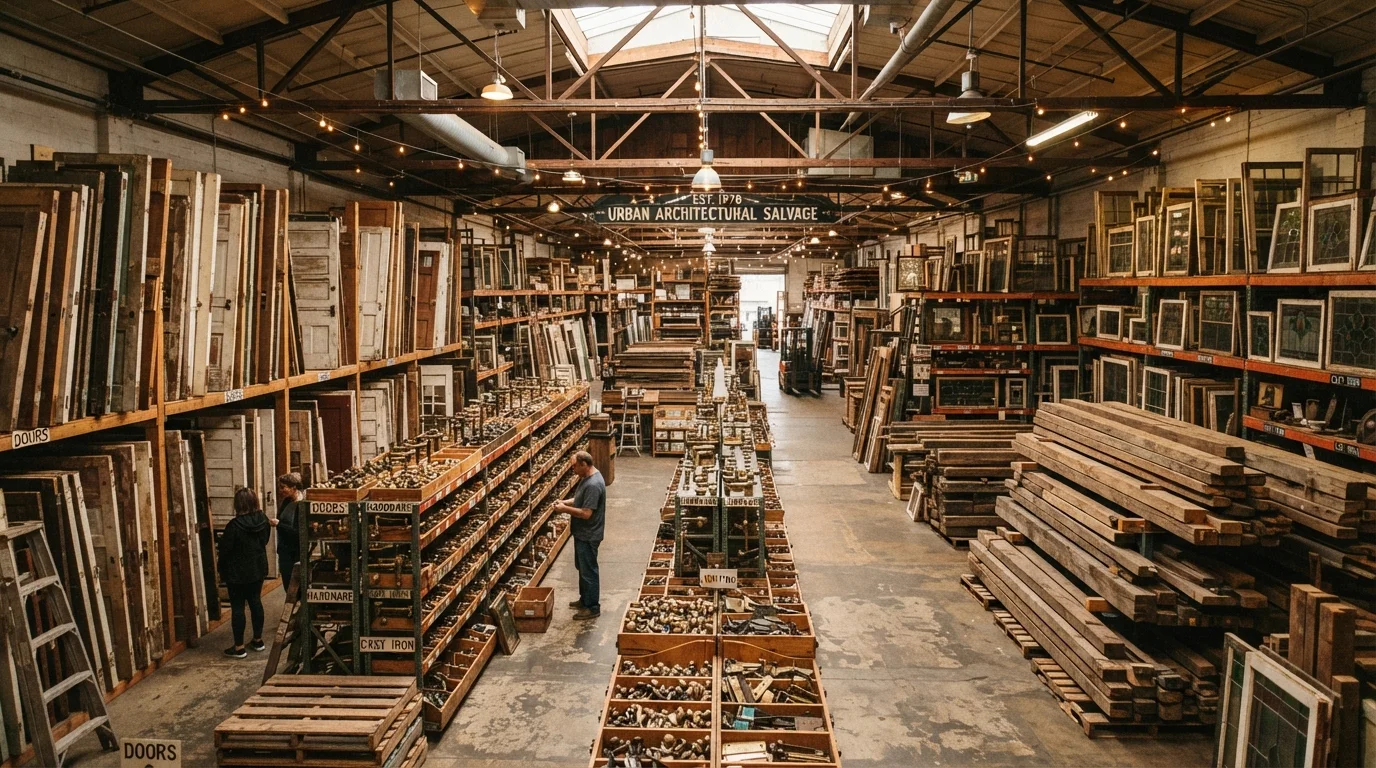
Architectural salvage shops are in a different category. They source selectively - period millwork, antique hardware, vintage doors, decorative ironwork, stained glass, clawfoot tubs - and price for their effort. You will not save money the way you might at a ReStore, but you will find things that don't exist at any big-box retailer.
These dealers are most useful when:
- You're restoring or remodeling a historic home and need period-appropriate materials
- The specific profile, dimension, or design you need is no longer manufactured
- You want a focal-point element - a fireplace surround, a bank of original windows, an ornate newel post - that would cost far more reproduced
Inspect everything carefully before buying. Asking dealers about provenance, prior paint layers, and any known repairs is reasonable and expected. If a piece looks too good to be true for the price, ask why.
For context on where salvage sourcing sits relative to other budget-conscious material strategies, compare surplus and overstock sourcing - the trade-offs are different but the decision logic overlaps.
Making the Trip Worth It
Across all three source types, a few habits consistently separate productive salvage runs from wasted afternoons:
- Bring measurements. Know your rough opening dimensions, ceiling heights, and required quantities before you arrive. You cannot guess your way to a good fit.
- Inspect in good light. Bring a flashlight. Look for water stains, warping, soft spots, insect damage, and missing hardware. Assume nothing works until you test it or are told it does.
- Account for prep time in your budget. Salvaged material often requires cleaning, stripping, or minor repair. Factor that labor into your cost comparison against new materials.
- Visit repeatedly. Inventory turns over. Leaving your contact information for a specific item - at ReStores especially - is a legitimate strategy some locations support.
If your project depends on matched quantities or consistent specs, discontinued and end-of-line materials from standard retailers may be a more reliable alternative. Salvage rewards flexibility and patience; it punishes tight schedules.
For help avoiding the over-buying habits that make salvage purchases risky, see Where Renovation Budgets Leak.
This article is for general informational purposes only. Material conditions, pricing, and inventory vary significantly by location and source. Always verify that salvaged materials meet applicable building codes, and consult a licensed professional for any structural, electrical, or plumbing applications.
The content on this site is for informational purposes only and is not a substitute for professional advice. Always consult a qualified professional for guidance specific to your situation.