

Our Verdict
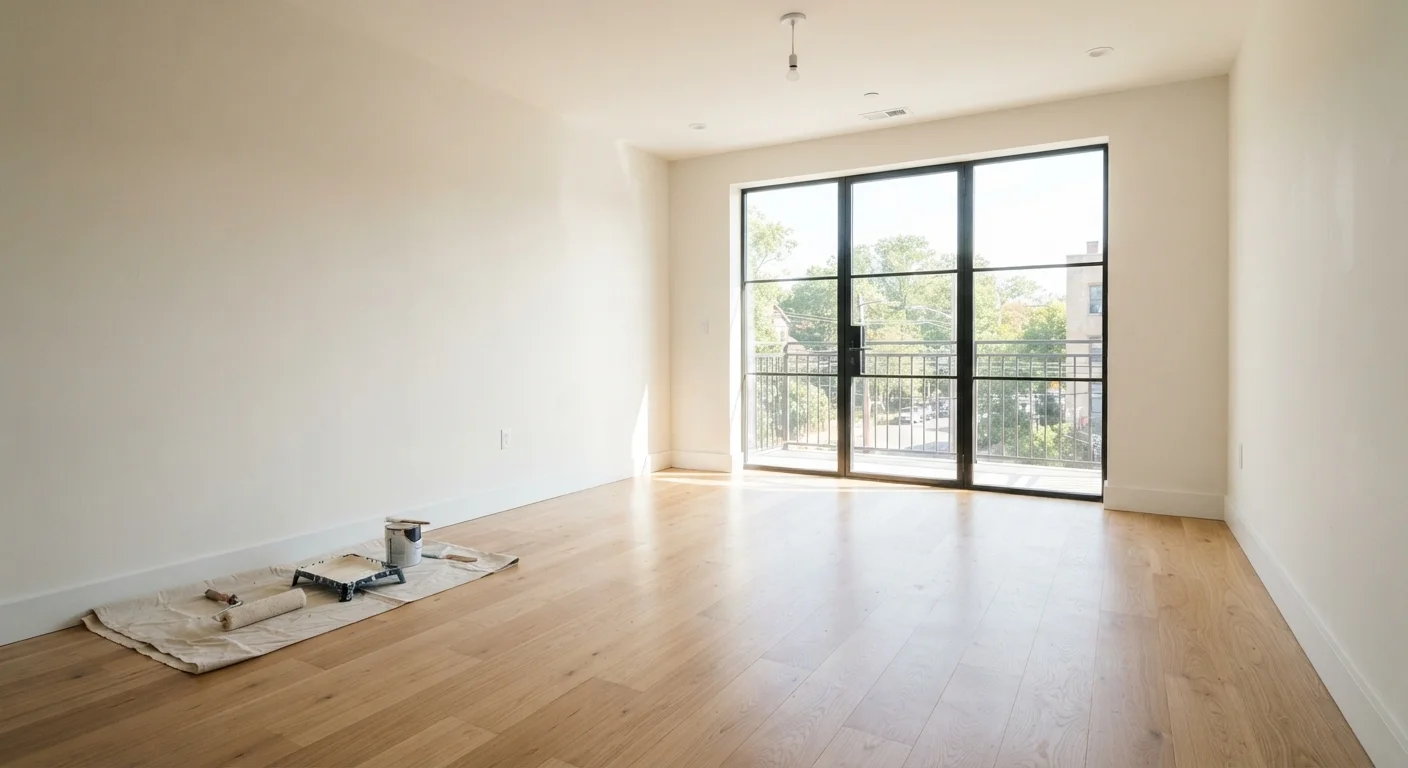
Whether to clear a room completely before redecorating depends entirely on the scope of your project. For full paint jobs, floor work, or a genuine layout reset, clearing the space is usually worth the effort. For lighter refreshes - new textiles, accent updates, or a single accent wall - working around existing furniture is often faster and safer.
Best for DIYers tackling a full room repaint, flooring update, or complete furniture layout rethink who can arrange temporary storage and have help for heavy lifting.
Why the Question Matters More Than You'd Think
Most people default to one extreme: either hauling everything into the hallway before picking up a brush, or pushing pieces to the middle of the room and painting around them. Neither is automatically right. The choice affects your prep time, the quality of the finished result, and - if something goes wrong - your floors, furniture, and joints.
Before you commit, it helps to think through what you're actually trying to accomplish. A before-and-after room audit can clarify whether you need full access or whether targeted changes will deliver the impact you're after. Once you know the scope, the furniture question answers itself more logically.
The Case For Removing Everything
There are genuine, practical reasons to start with a blank room - and they go beyond tidiness.
Unobstructed access for painting and floor work
You can cut in cleanly along all baseboards and reach every wall section without improvising around furniture, which reduces prep time and produces a more consistent finish.
Furniture and upholstery are fully protected
Paint splatter, sanding dust, and adhesive residue can permanently damage upholstery and wood finishes. Removing pieces eliminates that risk entirely rather than managing it with drop cloths.
Forces a genuine layout rethink
An empty floor reveals the room's true dimensions and often exposes layout assumptions that have gone unquestioned for years, creating a natural opportunity to rearrange more intentionally.
Easier to assess the finished result
Seeing freshly painted or refinished surfaces in a clear room before anything returns lets you spot missed patches, uneven coverage, or color issues without furniture blocking the view.
Reduces accidental damage during the project
Ladders, rollers, and tool bags are harder to navigate around large furniture; a clear room lowers the chance of knocking into pieces or causing secondary damage during the work.
Full wall-to-wall access is the biggest argument. When you can run a roller from corner to corner without stopping, cut in along baseboards without shuffling a sofa, and reach behind radiators without contorting, the job takes less time and produces cleaner results. The same logic applies to floor refinishing: sanding equipment cannot reach under furniture, and finishing an occupied room in sections leads to visible lap marks.
An empty room also forces a genuine layout rethink. Once the floor is bare, you can see its full dimensions and reconsider whether your existing arrangement was ever optimal. If you've been meaning to try something new, this is the practical moment to do it - rather than redecorating around a layout that isn't working. For ideas on what's worth changing, the furniture arrangement principles that work for any space are worth reviewing before you move anything back in.
The Case Against Removing Everything
A fully stripped room sounds appealing in theory. In practice, it creates its own set of problems.
Heavy lifting creates real injury and damage risk
Moving large sofas, bed frames, and wardrobes without adequate help or proper technique can cause back injuries and floor scratches - particularly on hardwood or LVP that's already in good condition.
Requires adequate staging space you may not have
In smaller homes or apartments, displaced furniture from one room makes adjacent rooms unusable for days, compounding the disruption well beyond the project itself.
Loses visual context for color and scale decisions
Paint colors and rug sizes read differently against an empty room than they do with your actual furniture present; decisions made in a bare space can produce surprises once everything returns.
Overkill for minor or cosmetic updates
Updating textiles, swapping out accessories, or painting a single accent wall rarely justify a full clear - the effort-to-impact ratio tilts sharply against it for smaller projects.
Adds significant time before visible progress
For weekend DIY projects where motivation matters, spending Saturday moving furniture before a single wall is touched can drain momentum before the real work begins.
The logistics alone can stall a project before it starts. If you live in an apartment or a house without a large staging area, furniture displaced from one room colonizes another, making your home functionally difficult to use for days. Large sofas and bed frames require at least two people to move safely; attempting it solo risks injury and almost guarantees scratched floors.
There's also a creative risk. An empty room can be disorienting - stripped of context, it's harder to judge whether a paint color reads right against your actual furniture, or whether a new rug size works with the pieces you're keeping. Some decorating decisions are better made with reference points in the room.
For lighter refreshes - swapping soft furnishings, adding a statement wall, or updating lighting - moving everything out creates far more disruption than the project warrants. In those cases, a partial clear (center-stacking larger pieces, removing only what's near the work area) delivers most of the access benefit without the full upheaval. See how rearranging before redecorating can make the process more manageable without going to extremes.
The 'Center Stack' Middle Ground
If full removal isn't practical, try center-stacking: move all furniture to the middle of the room and cover it with drop cloths. This gives you full perimeter access for painting baseboards, corners, and walls while keeping the project contained to one space. It won't work for floor refinishing, but for most paint projects it's a reasonable compromise that cuts move time roughly in half.
Making the Call: A Simple Decision Framework
Run through these questions before deciding how much to move:
- Are you painting all four walls and the ceiling? Clear the room - the access and protection benefits are significant.
- Are you refinishing or replacing flooring? Clear completely. No exception.
- Is this an accent wall or a partial paint job? Move only what's directly in the work zone.
- Are you updating soft furnishings and accessories only? Keep furniture in place; you need the visual context.
- Do you have help and adequate staging space? If not, a full clear may introduce more risk than it eliminates.
If you're unsure where your project falls on this spectrum, the room styling tips hub covers a range of project scales, from low-disruption refreshes to more involved makeovers, and can help you calibrate the effort to the outcome you want.
The content on this site is for informational purposes only and is not a substitute for professional advice. Always consult a qualified professional for guidance specific to your situation.