

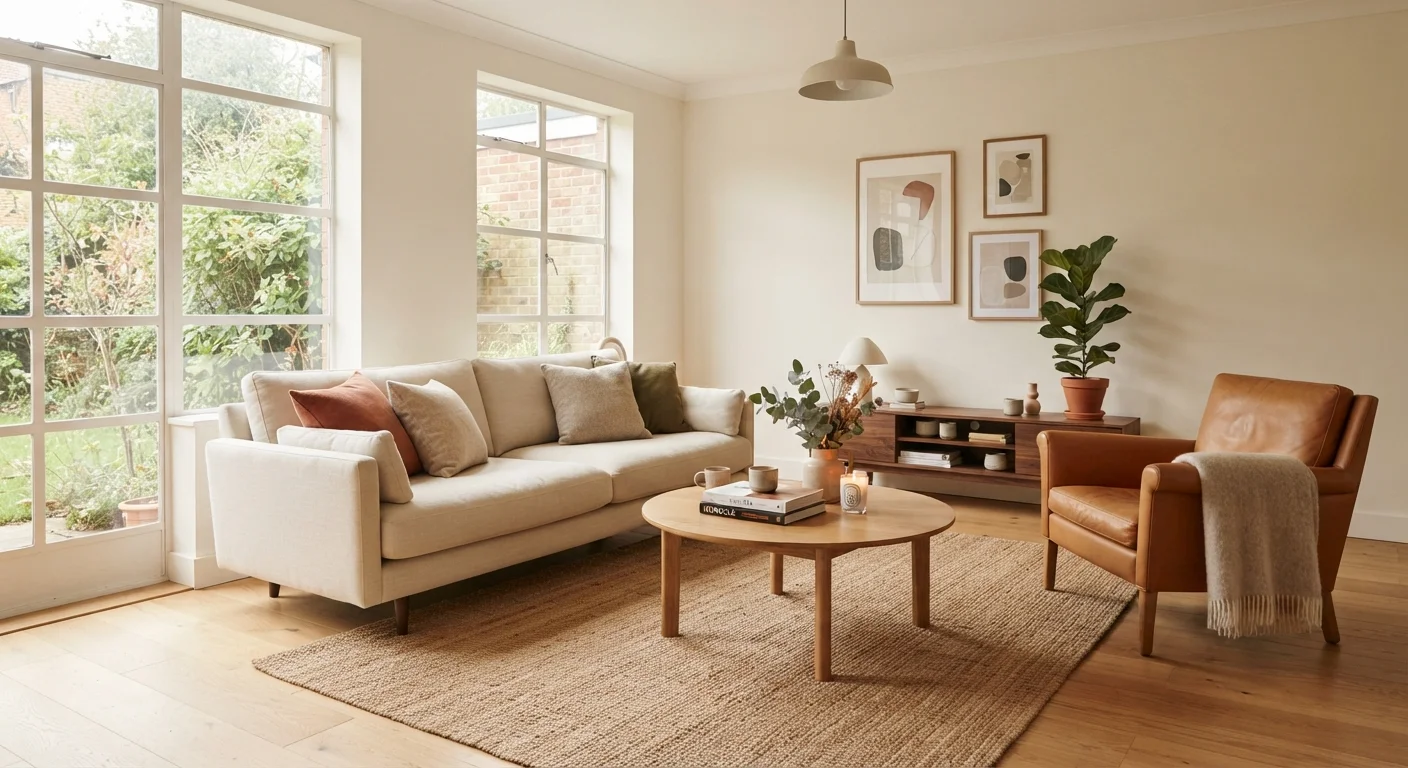
Why Arrangement Is the First Lever to Pull
Before buying paint, new throw pillows, or a replacement rug, consider what rearranging costs: nothing. Furniture placement directly controls how large a room feels, how well it functions, and whether it reads as intentional or accidental. Most rooms fail not because the furniture is wrong but because it's sitting in its original delivery position - pushed against walls, blocking light, or facing away from natural conversation.
The spatial principles that guide good arrangement are learnable and repeatable. Once you understand them, you can apply them in any room you'll ever live in. For a structured audit of what's currently working (or not) in your space, run through this room styling checklist before you move a single piece.
Core Practices for Rearranging Effectively
These principles apply broadly - to living rooms, bedrooms, and open-plan spaces alike. Work through them in sequence for the most coherent result.
Pull furniture away from the walls to create a grounded, intentional grouping.
Furniture lined up against every wall creates a perimeter effect that makes a room feel smaller and more formal than it needs to be. Floating pieces inward defines zones, improves sightlines, and allows the eye to rest on a coherent arrangement rather than an empty center.
Identify and orient furniture toward a single focal point.
Every room benefits from one dominant visual anchor - a fireplace, a large window, or a media unit. Arranging seating to face or acknowledge that focal point gives the room a clear purpose and prevents the scattered feeling that comes from pieces pointing in competing directions.
Plan clear traffic lanes before finalizing any piece's position.
A beautiful arrangement that forces people to squeeze past chair arms or navigate around a coffee table will feel frustrating to live in. Standard guidance suggests at least 30-36 inches for main walkways and 18 inches between a sofa and coffee table for comfortable reach.
Match furniture scale to the room, not to each other.
A matched three-piece suite that's too large for its room will overwhelm even a well-planned arrangement. Proportion - the relationship between furniture height, width, and room dimensions - determines whether a space feels balanced. Taller ceilings can support taller pieces; lower ceilings benefit from lower-profile furniture.
Use rugs to define zones rather than fill space.
A rug that's too small floats like an island in the middle of a room and makes furniture look disconnected. The standard recommendation is for all front legs - or ideally all four legs - of main seating to sit on the rug. This visually locks the grouping together.
Rotate statement pieces to shift the room's visual emphasis.
An armchair, a bookcase, or an accent table placed in a fresh corner can redirect attention and make familiar furniture feel new. This technique is especially useful when a room has one underused corner that could anchor a reading nook or secondary seating area.
If you're working with a particularly compact space, small-room styling strategies can help you adapt these principles to tighter constraints.
Quick Wins You Can Do Today
Not every improvement requires moving every piece. These targeted actions take under an hour each and often produce visible results immediately.
What to Do Before You Move Anything
Impulse rearranging - grabbing one end of a sofa and dragging - leads to scratched floors, strained backs, and layouts that don't actually fit. A few minutes of prep makes the whole process faster and more effective.
Start by measuring the room and sketching a rough floor plan on paper or using a free room-planning tool. Note where doors swing, where outlets sit, and where natural light enters. These fixed constraints should inform every decision. Move sliders (felt pads available at hardware stores for a few dollars) under heavy legs before lifting anything. If you're working alone, furniture-moving straps distribute weight and reduce injury risk significantly.
For a deeper look at the logic behind layout decisions - including when rearranging alone isn't enough - this guide to layout before redecorating covers the full process. And if you're weighing whether arrangement changes are enough or whether physical updates would move the needle more, this ranking of impactful room updates offers useful perspective.
When Arrangement Alone Isn't Enough
Rearranging works best when the room's fundamental proportions and furniture scale are reasonably matched. If pieces are significantly too large or too small for the space, layout changes will help but won't fully resolve the issue. In those cases, spatial illusion techniques - such as mirror placement and vertical line emphasis - can extend what arrangement alone achieves.
This article provides general design guidance for informational purposes. Results vary based on room dimensions, existing furniture, and personal preference. Always verify weight-bearing capacity and floor conditions before moving heavy furniture pieces.
The content on this site is for informational purposes only and is not a substitute for professional advice. Always consult a qualified professional for guidance specific to your situation.