

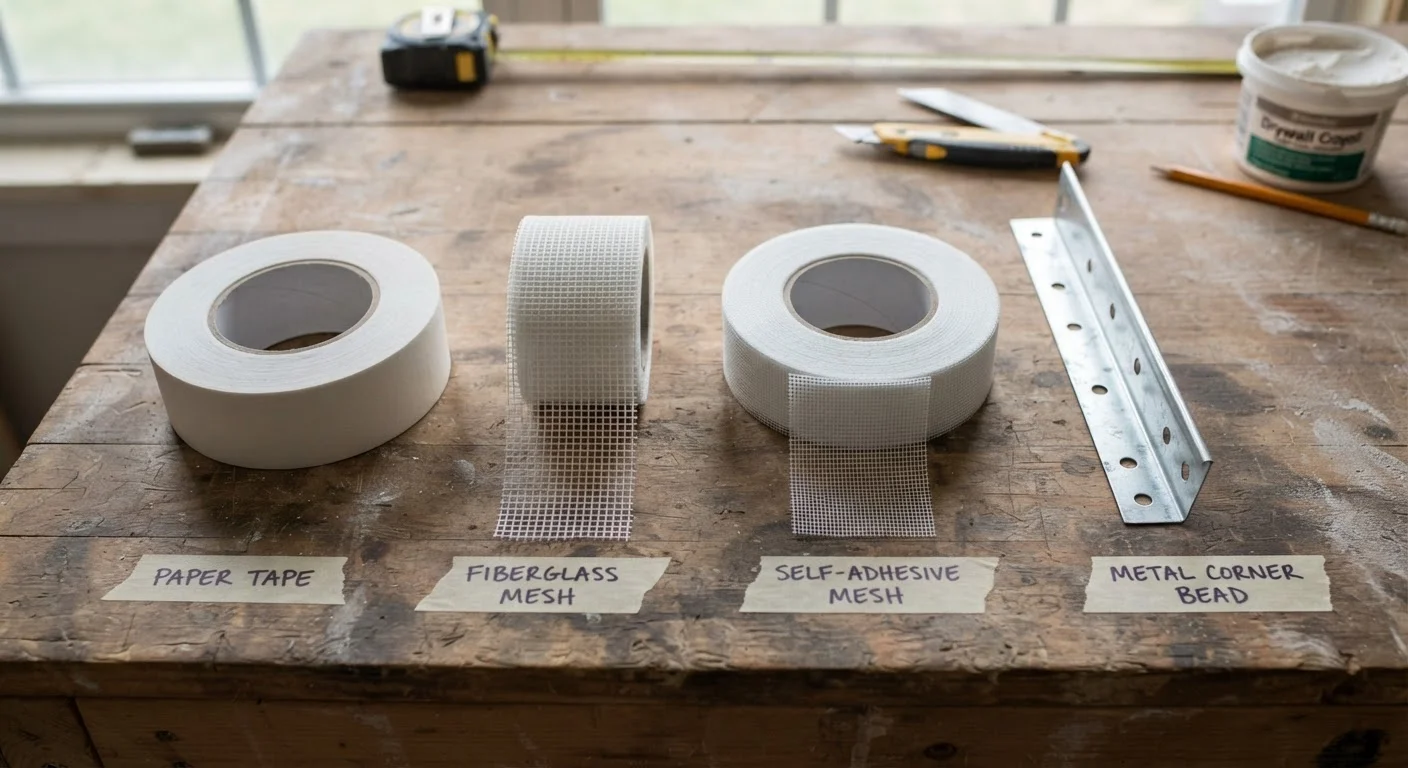
Why Tape Type Matters in Drywall Repair
Selecting the wrong drywall tape doesn't just create extra work - it can lead to cracking, bubbling, and joints that fail within months. Each tape variety is engineered for specific conditions, and matching the right type to the right location is what separates repairs that last from ones that need redoing. This reference covers all the main tape types, their defining characteristics, and exactly where each one belongs. For a broader introduction to drywall fundamentals, see this first-timer's guide to working with drywall.
| Most versatile tape type | Paper tape |
| Easiest to position for beginners | Self-adhesive fiberglass mesh |
| Best for outside corners | Metal or paper-faced corner bead |
| Best compound for mesh tape | Setting-type (hot mud) compound |
| Tape width (standard) | 2 inches |
| Best for curved angles | Flexible corner tape |
Paper Tape
What it is: A thin, slightly creased paper strip, typically about 2 inches wide, sold in rolls. It has no adhesive backing.
Best for: Standard flat seams and butt joints between drywall panels, inside corners, and most general-purpose finishing work.
How it works: Paper tape is embedded into a wet layer of joint compound (called the "bed coat"). The compound acts as the adhesive. Once dry, paper tape forms an exceptionally strong mechanical bond and resists cracking under normal seasonal movement.
Key advantage: Paper tape is the professional standard for flat joints. It doesn't add much thickness to the wall surface, which makes feathering compound over it easier and reduces the chance of visible ridges in the finished wall.
Common mistake to avoid: Applying paper tape dry or without enough compound beneath it will cause bubbling and peeling - a problem detailed in our article on common drywall repair mistakes and why they happen.
Fiberglass Mesh Tape
What it is: An open-weave tape made from fiberglass strands, available in self-adhesive rolls. It has a visible grid pattern and is slightly thicker than paper tape.
Best for: Repairing cracks, patching small holes, and covering butt joints in areas that won't experience much structural flex.
How it works: The self-adhesive backing holds mesh tape in place before compound is applied, which makes positioning easier - particularly helpful for beginners. Joint compound fills the open weave and locks the tape in place as it dries.
Important limitation: Mesh tape is more susceptible to cracking than paper tape when used over flat seams in walls or ceilings that experience seasonal movement. For this reason, many experienced finishers reserve mesh tape for patches and repairs rather than primary seam finishing. Always use setting-type (hot mud) compound with mesh tape when possible, as it bonds more strongly through the weave than ready-mixed compound.
Self-Adhesive Paper Tape
What it is: Paper tape with a factory-applied adhesive backing, combining the strength of paper with the positioning ease of mesh.
Best for: DIYers handling flat seams who want easier positioning without the fragility risk of dry-applying standard paper tape.
How it works: Press the tape directly to the dry drywall surface, then apply joint compound over it. The adhesive holds it in place, but a proper skim coat still needs to be worked over and into the tape for a lasting finish.
Note: Self-adhesive paper tape performs similarly to traditional paper tape on flat seams but may not conform as cleanly around inside corners. For corner applications, consider pre-creased paper tape designed specifically for that purpose.
Joint Compound
A plaster-like material (also called "mud") used to bed tape, fill gaps, and create a smooth finish over drywall seams. It comes in ready-mixed and setting (powder) varieties.
Bed Coat
The first, thin layer of joint compound applied to a seam, into which tape is pressed and embedded before additional coats are added.
Feathering
The technique of blending the edges of applied compound into the surrounding wall surface so no ridge or hard line is visible after sanding.
Setting-Type Compound
A powder compound mixed with water that hardens through a chemical reaction rather than drying. It sets faster and stronger than ready-mixed compound, making it preferred for use with mesh tape.
Corner Bead
A metal, vinyl, or composite strip fastened to outside drywall corners to create a straight, durable edge that can be finished with compound.
Butt Joint
The joint formed where two non-tapered (flat) drywall edges meet. These are harder to finish invisibly and typically require careful feathering over a wider area.
Corner Bead and Corner Tape
Outside corners - such as the edges of a doorway or a protruding wall - need more than tape alone. The main options are:
- Metal corner bead: An L-shaped metal strip fastened with screws or crimps before compound is applied over it. Provides a very hard, durable corner but can dent if struck.
- Paper-faced metal corner bead: Combines a thin metal spine with paper flanges on each side. Embedded in compound similarly to tape, it's more flexible than solid metal bead and less likely to crack at the edges.
- Vinyl corner bead: Lightweight and moisture-resistant; a practical choice in humid areas such as mudrooms or bathrooms where slight movement is expected.
- Flexible corner tape: A fabric or paper strip without a rigid spine, designed for curved or non-standard angles where rigid bead can't conform.
The right choice depends on the corner's location, expected traffic impact, and whether the angle is a standard 90-degree outside corner or something more complex.
Choosing the Right Tape at a Glance
Use this simple decision logic before starting any taping job:
- Flat seams between panels: Standard paper tape, embedded in compound.
- Small cracks and patches: Fiberglass mesh tape with setting compound.
- Inside corners: Pre-creased paper tape or self-adhesive paper tape.
- Outside corners on standard walls: Metal or paper-faced metal corner bead.
- Curved outside corners or unusual angles: Flexible corner tape.
- Humid locations: Vinyl bead or fiberglass mesh, paired with moisture-resistant compound.
Getting this selection right before you open a can of compound saves significant time and rework. Once you're comfortable identifying tape types, it becomes one of the easier decisions in any drywall project.
The content on this site is for informational purposes only and is not a substitute for professional advice. Always consult a qualified professional for guidance specific to your situation.