

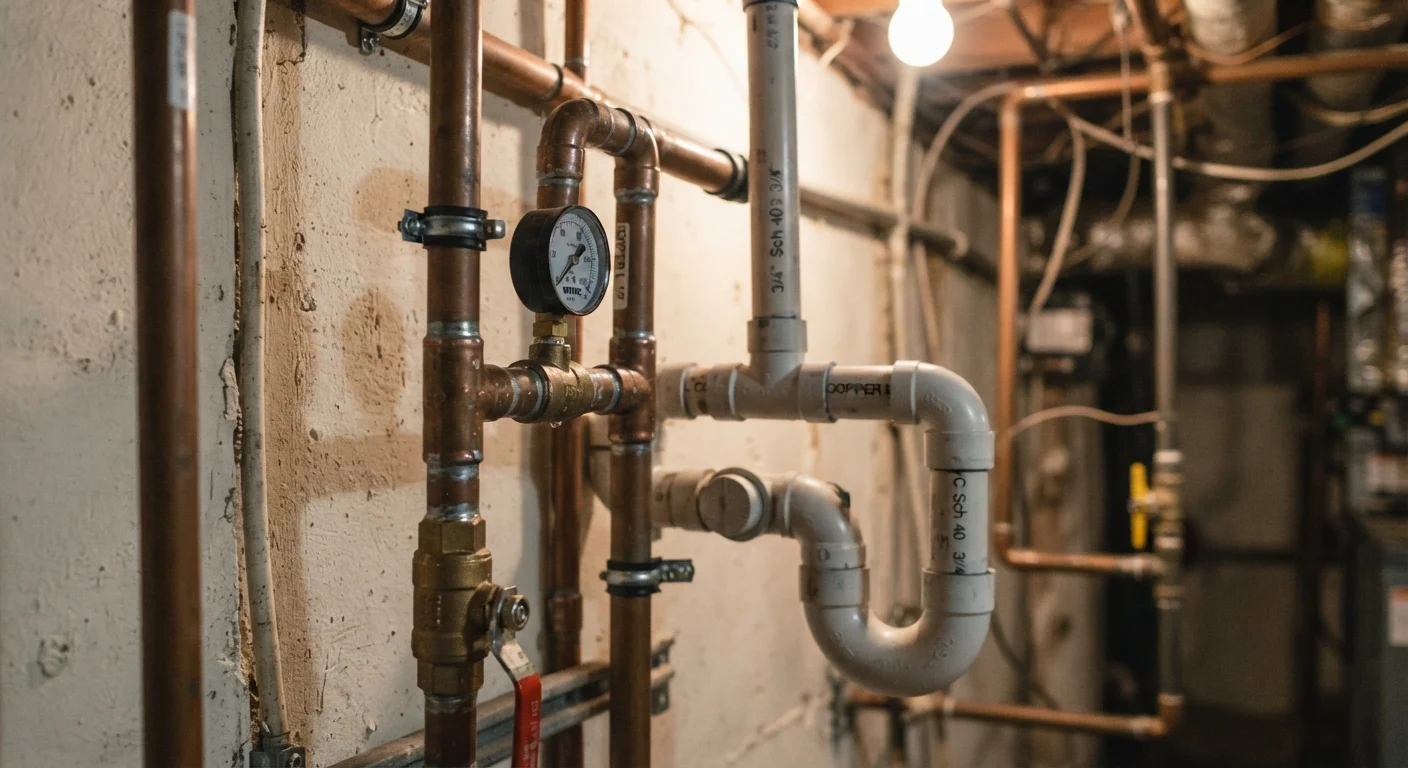
The Bang: Understanding Water Hammer
That sudden, jarring thud you hear after a washing machine valve closes or a dishwasher cycle ends has a name: water hammer. It occurs when fast-moving water inside a supply line is stopped abruptly, generating a pressure shockwave that slams into the pipe wall, fittings, or a closed valve.
Older homes were often built with air chambers - short vertical pipe sections near fixtures designed to cushion that shock. Over time, water slowly fills these chambers and they lose effectiveness. The modern replacement is a water hammer arrestor, a small device containing a sealed air bladder that permanently absorbs the pressure spike. Arrestors are screwed onto standard hose-thread connections and require no special tools for accessible locations like washing machine hookups.
Loose pipe straps are a related but separate cause of banging. When pipes aren't firmly secured to joists or framing, the shockwave physically moves the pipe, which then strikes the surrounding structure. Adding cushioned pipe hangers at the point of movement resolves this without any changes to the plumbing itself.
Test Your Water Pressure First
Before attempting any fix for pipe noise, spend a few minutes checking your home's supply pressure with a simple pressure gauge - available at most hardware stores - threaded onto an outdoor hose bib. A reading above 80 PSI means high pressure is likely contributing to your noise issues regardless of their specific type. Addressing pressure first often reduces or eliminates multiple symptoms at once.
If water hammer is severe or affects many locations throughout the house, also check your water pressure. Pressure consistently above 80 PSI amplifies the shockwave significantly. A whole-house pressure-reducing valve (PRV) is the right long-term solution in that case - installation typically requires a licensed plumber.
The Whistle: Restricted Flow and Pressure Problems
A high-pitched whistle coming from a faucet, toilet fill valve, or pipe run almost always signals that water is being forced through a narrowed opening. Think of it like blowing air through a nearly closed fist - the tighter the gap, the higher the pitch.
Common culprits include:
- Worn or deteriorated washers inside compression faucets, which vibrate as water passes over them
- A partially closed shutoff valve under a sink or behind a toilet - sometimes inadvertently bumped during cleaning or maintenance
- A failing toilet fill valve that struggles to control inflow at the end of refill
- High system water pressure forcing water through fixtures faster than they're rated for
Start diagnostics by isolating the sound to a specific fixture or area. Open all shutoff valves fully, since they're designed to operate fully open or fully closed - partial positions accelerate wear. Replacing a faucet washer or toilet fill valve are both accessible DIY repairs for most homeowners. For a deeper look at how pressure affects your whole system, see what plumbers mean by water pressure and PSI.
The Gurgle: Drain Venting and What It Means
Gurgling is fundamentally different from banging or whistling because it originates in the drain system, not the pressurized supply lines. When water drains from a sink, tub, or toilet, it must displace air in the drain pipe. Your home's vent stack - a vertical pipe running up through the roof - allows that air exchange to happen freely and quietly.
When a vent is blocked (by debris, a bird nest, or ice in cold climates), the draining water creates negative pressure, pulling air up through the water sitting in nearby fixture traps. That pulled air is the gurgle you hear. In effect, the drain is siphoning its own trap, which also allows sewer gases to enter the living space - a health concern worth taking seriously.
Key diagnostic signals:
- Single fixture gurgles - likely a localized partial clog or a failed individual air admittance valve (AAV)
- Multiple fixtures gurgle simultaneously - points to a shared vent stack problem or a main line obstruction
- Gurgling after a toilet flush that affects the nearby sink - classic shared-vent negative pressure
Clearing a roof vent opening with a garden hose is a manageable task for a confident DIYer. However, diagnosing vent stack layout, identifying hidden blockages, or dealing with main line issues generally warrants professional help. Use the room-by-room plumbing audit checklist to document which fixtures are affected before reaching out to a plumber.
Note: Work on roof vents involves working at height. Always follow appropriate ladder safety practices, and consider hiring a professional if roof access is unsafe.
Putting It Together: Matching Sound to Action
Pipe noises aren't random - they're your plumbing system communicating a specific mechanical condition. The table below summarizes the core diagnostic framework:
| Sound | Likely Origin | Common Cause | Typical Fix |
|---|---|---|---|
| Banging / thud | Supply lines | Water hammer; loose pipes | Hammer arrestor; pipe straps |
| Whistling / squealing | Supply lines / fixtures | Restricted flow; high pressure; worn parts | Replace washer or fill valve; check PRV |
| Gurgling | Drain lines | Blocked or inadequate vent | Clear roof vent; check for AAV failure |
| Humming / vibration | Supply lines | Very high pressure; unsecured pipes | Pressure check; add pipe hangers |
When noises are intermittent, try to note exactly when they occur - immediately after valve closure, during active flow, or after all water use has stopped. That timing is the single most useful piece of information you can give a plumber if DIY fixes don't resolve the issue. Learn more about recognizing when professional help is the right call in our guide on eight signs your plumbing needs a professional.
Frequently Asked Questions
This is classic water hammer - a pressure surge created when fast-moving water is abruptly halted by a closing valve. The energy has nowhere to go, so it slams into the pipe wall. Installing water hammer arrestors near washing machines, dishwashers, and quick-closing valves is the standard fix.
Whistling itself isn't immediately dangerous, but it often signals restricted flow or high pressure - both of which add stress to your pipes over time. A worn washer inside a faucet or a partially closed shutoff valve are common culprits. Address it sooner rather than later to prevent escalation.
Gurgling usually means a drain vent is blocked or undersized, causing negative pressure that sucks air through the water trap. It can also indicate a partial clog further down the drain line. If multiple fixtures gurgle simultaneously, the issue is likely in a shared vent stack rather than a single drain.
Yes. Pressure above 80 PSI accelerates water so forcefully that it can cause vibration, whistling, and heightened water hammer. A pressure-reducing valve (PRV) installed on your main line can bring pressure into the recommended 40-60 PSI range. See our article on <a href="/diy-home-repairs/plumbing-fixes/what-plumbers-actually-mean-by-water-pressure-flow-rate-and-psi">what PSI means for your pipes</a> for more detail.
Call a licensed plumber if sounds are getting louder or more frequent, if you see water damage near pipe runs, or if you've attempted basic fixes without success. Our guide on <a href="/diy-home-repairs/plumbing-fixes/eight-signs-your-homes-plumbing-needs-professional-attention">signs your plumbing needs professional attention</a> covers the clearest red flags.
They can. Pipes that aren't properly secured to framing will rattle and knock against studs or joists when water moves through them. This is a separate issue from water hammer and is usually fixed by adding pipe straps or cushioned hangers where the movement occurs.
The content on this site is for informational purposes only and is not a substitute for professional advice. Always consult a qualified professional for guidance specific to your situation.