

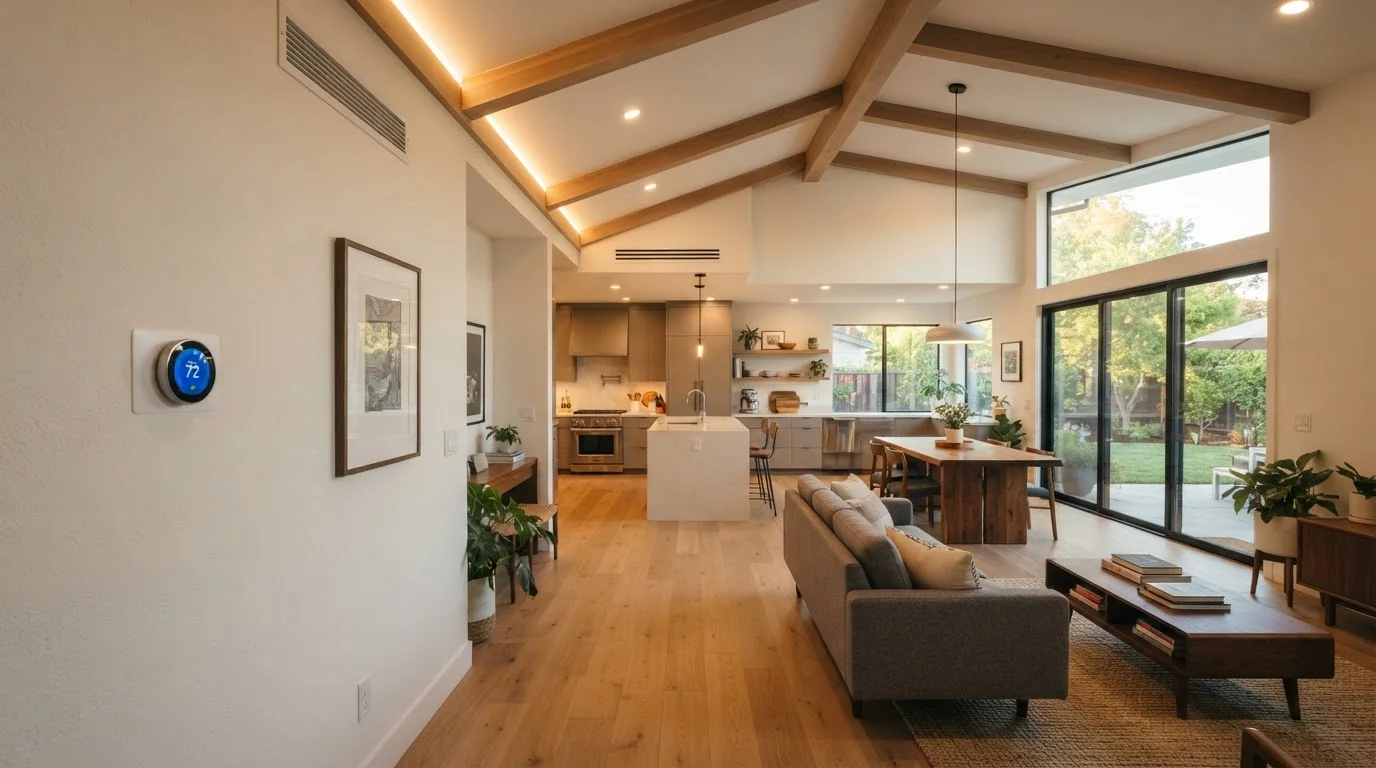
Why a System-by-System Approach Works
Chasing individual energy tips - unplugging chargers, shortening showers - produces modest results in isolation. What moves the needle is understanding how your home's major systems interact and tackling them in a logical order. Each system has its own efficiency drivers, maintenance requirements, and upgrade pathways, and improvements in one area often amplify gains in another.
For example, sealing air leaks reduces the load on your HVAC system, which in turn allows a smaller or older unit to perform more effectively. That interconnectedness is why a walkthrough approach - assessing each system, identifying the highest-leverage actions, and sequencing changes - consistently outperforms a piecemeal one. If you're starting from scratch, this beginner's guide to managing home energy provides a useful foundation before diving into system-level detail.
HVAC: Your Largest Energy Consumer
Heating, ventilation, and air conditioning (HVAC) typically represents 40-50% of a home's total energy consumption, making it the highest-priority system to optimize. The good news: many of the most impactful improvements are maintenance tasks, not equipment replacements.
Maintenance first
- Replace air filters every 1-3 months (or per manufacturer guidance). A clogged filter forces the system to work harder and degrades indoor air quality.
- Schedule annual professional tune-ups. A technician can verify refrigerant levels, clean coils, and catch small problems before they become costly failures.
- Clear supply and return vents of furniture, rugs, and debris to maintain balanced airflow throughout the home.
Controls and behavior
A programmable or smart thermostat allows you to automatically set back temperatures when the home is empty or during sleeping hours. The U.S. Department of Energy has noted that setting back your thermostat by 7-10°F for 8 hours a day can noticeably reduce heating and cooling costs over a year.
When to consider equipment upgrades
If your system is more than 15 years old and requires frequent repairs, a replacement may be worth evaluating - particularly newer units with higher efficiency ratings. Always consult a licensed HVAC contractor for sizing and installation; an improperly sized unit wastes energy even if it's highly rated. For a broader look at how this system fits your home's overall energy picture, see how HVAC, water heating, and lighting work together.
Before upgrading your HVAC equipment, have a contractor perform a load calculation (called a Manual J). Oversized equipment short-cycles - turning on and off too quickly - which wastes energy and fails to properly dehumidify the home.
Properly sized equipment runs longer, steadier cycles that are more efficient and more comfortable, regardless of the unit's energy rating.
When air sealing the attic, prioritize the top plates of interior walls - these are gaps that run the entire length of the house and are among the largest sources of air leakage in older homes.
Interior wall top plates are frequently overlooked because they're hidden under insulation, but they connect directly to the conditioned living space below.
Water Heating: The Overlooked Drain
Water heating accounts for roughly 14-18% of home energy use in the US - second only to space conditioning. Yet most homeowners rarely think about their water heater until it fails. A few targeted actions can reduce that share meaningfully.
Low-effort wins
- Set the water heater thermostat to 120°F. Many units ship at 140°F, which is hotter than needed for most uses and accelerates standby heat loss.
- Insulate the first few feet of hot water pipes leaving the unit. Pre-slit foam pipe insulation is inexpensive and available at hardware stores.
- Install low-flow showerheads and faucet aerators. These reduce hot water consumption without noticeably affecting pressure or comfort.
Upgrade considerations
If your tank-style heater is more than 10 years old, it may be losing significant energy to standby losses - heat that radiates through the tank walls even when no hot water is being used. Heat pump water heaters (which move heat from surrounding air rather than generating it directly) tend to use substantially less electricity than conventional electric resistance models, though they require adequate surrounding space and a suitable climate. Gas-to-electric or other fuel-switching decisions should factor in your local utility rates and available incentives.
Lighting and Appliances: The Cumulative Effect
Individually, a single lightbulb or refrigerator doesn't define your energy bill. Collectively, lighting and plug loads can account for 20-30% of total household energy use. The strategy here is straightforward: identify what runs the most hours per day and address those items first.
Lighting
LED bulbs use roughly 75% less energy than incandescent equivalents and last significantly longer. Replacing the bulbs in your most-used fixtures - typically kitchen, living room, and outdoor security lights - offers a fast, low-cost return. Dimmer switches compatible with LEDs extend bulb life and add flexibility.
Major appliances
- Refrigerators run 24/7. Ensure door seals are tight and condenser coils are clean. Keep it stocked (thermal mass helps maintain temperature) but not overpacked (air needs to circulate).
- Clothes washers and dryers: Washing in cold water and cleaning the dryer lint trap after every load are simple habits with real impact. Consider air-drying when practical.
- Dishwashers: Run full loads and use the air-dry or low-heat setting where available.
For a structured way to spot appliance waste room by room, the seasonal energy audit checklist is a practical next step.
Building Envelope: Locking In Your Gains
The building envelope refers to the physical barrier between conditioned interior space and the outdoors - walls, roof, windows, doors, and foundation. No matter how efficient your HVAC system is, a leaky or poorly insulated envelope will bleed that conditioned air and force the system to compensate constantly.
Air sealing before insulation
Air sealing - filling gaps around electrical outlets, pipe penetrations, attic hatches, and recessed lights - is typically the most cost-effective envelope improvement. Caulk and weatherstripping are inexpensive materials, and the work requires no special skills for most locations. Focus first on the boundary between conditioned and unconditioned spaces: the attic floor, basement rim joists, and crawlspace walls. For a deep dive into insulation options, the home insulation hub covers materials, R-values, and when to call a professional.
Windows and doors
Full window replacement is expensive and often has a long payback period. Before replacing, check whether adding weatherstripping, window film, or interior window insulation kits addresses the problem adequately. If replacement is warranted - especially for single-pane windows in cold climates - look for double-pane units with low-emissivity (low-e) coatings.
Permits May Be Required for Envelope Work
Air sealing and insulation in attics, crawlspaces, and walls may require a building permit in some US jurisdictions, particularly when paired with electrical or structural work. Check with your local building department before starting any project that alters your home's thermal boundary.
Note: Any work involving structural modifications, electrical penetrations, or gas lines requires permits and licensed professionals in most US jurisdictions. Always verify local building codes before beginning work.
Prioritizing Upgrades on Any Budget
No household has unlimited resources, and not every efficiency upgrade delivers equal value. A useful framework: sort potential improvements by upfront cost, estimated savings impact, and how soon you'll see a return. Maintenance tasks and behavioral changes almost always rank at the top - low or no cost, immediate effect. Air sealing typically follows. Insulation, equipment upgrades, and major appliance replacements come later, when budgets allow and existing equipment is reaching end of life.
This guide to upgrading on a tight budget walks through that prioritization in detail. For a broader perspective on the behavioral and low-cost levers available across all systems, the complete home energy efficiency overview is a valuable companion resource. The smart energy habits hub also provides ongoing guidance as you build momentum.
The goal isn't perfection - it's progress. Each system optimized reduces your monthly costs, improves comfort, and makes the next upgrade more financially accessible. Start with what you can do today, document your baseline utility costs, and revisit your priorities each season.
The content on this site is for informational purposes only and is not a substitute for professional advice. Always consult a qualified professional for guidance specific to your situation.