

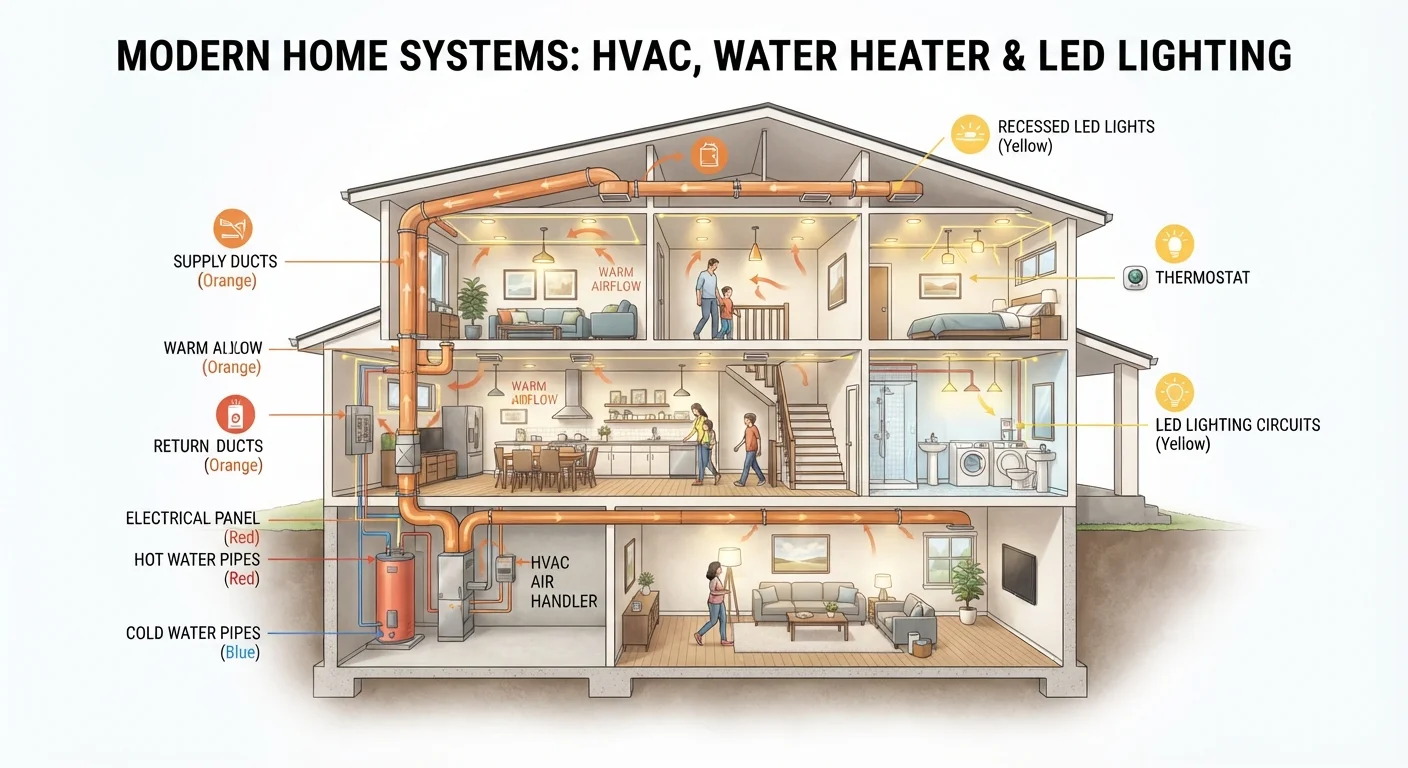
HVAC: Your Home's Biggest Energy Draw
Heating, ventilation, and air conditioning - collectively called HVAC - is responsible for more energy consumption than any other system in a typical American home. According to the U.S. Department of Energy, space heating and cooling can represent 40-50% of total home energy use, though this varies significantly by climate and home size.
An HVAC system works by moving heat - either pulling it into your home in winter or expelling it in summer. Central systems rely on a furnace or heat pump, an air handler, and a network of ducts to distribute conditioned air. The efficiency of a cooling system is measured by its SEER rating; heating efficiency is rated by AFUE for furnaces or HSPF for heat pumps. Higher numbers mean more useful output per unit of energy consumed.
The most impactful maintenance steps homeowners can take include:
- Replacing or cleaning air filters every 1-3 months
- Keeping outdoor condenser units clear of debris
- Scheduling professional tune-ups annually
- Sealing and insulating ductwork where accessible
If your system is more than 15 years old, it may be operating well below modern efficiency standards. A licensed HVAC technician can assess whether repair or replacement makes more sense for your situation. For broader context on how insulation interacts with your HVAC load, see the home insulation hub.
40-50%
Share of home energy used by HVAC
According to the U.S. Department of Energy, heating and cooling combined represent the largest single energy expense in most American homes.
14-18%
Home energy used for water heating
The U.S. Department of Energy estimates water heating as the second-largest home energy expense after space conditioning.
75%
Less electricity used by LED vs. incandescent bulbs
The U.S. Department of Energy notes that LED lighting uses up to 75% less energy and lasts significantly longer than traditional incandescent bulbs.
Water Heating: The Quiet Energy Consumer
Water heating is easy to overlook because it operates invisibly in a utility room - but it typically accounts for 14-18% of a home's energy use. Every time you shower, run the dishwasher, or do laundry in warm water, your water heater cycles on to replenish the tank.
The most common type - a storage tank water heater - keeps a large reservoir of water hot at all times, which means it uses energy even when no hot water is being drawn. This is called standby heat loss. Tankless (on-demand) water heaters eliminate standby loss by heating water only when needed, which can reduce water heating energy use substantially in the right household. Heat pump water heaters are another high-efficiency option; they move heat from surrounding air rather than generating it directly, making them significantly more efficient than standard electric resistance models.
Before considering replacement, several low-cost measures can reduce water heating costs from an existing unit:
- Lower the thermostat to 120°F - hotter settings waste energy and increase scalding risk
- Insulate the first few feet of hot water pipes leaving the heater
- Install low-flow showerheads and faucet aerators to reduce hot water demand
- Drain a quart of water from the tank annually to clear sediment buildup
Water heater replacement involves gas or electrical connections and, in some jurisdictions, requires a permit and inspection. Always consult a licensed plumber for installation work.
Lighting: Small Changes, Real Savings
Lighting accounts for a smaller share of home energy use than HVAC or water heating - roughly 9-15% - but it's the system where homeowners can make the fastest, lowest-effort improvements. The shift from incandescent bulbs to LED (light-emitting diode) technology is the single most impactful change available.
LED bulbs use approximately 75% less electricity than incandescent bulbs for equivalent brightness (measured in lumens, not watts). They also last significantly longer - often 15,000 to 25,000 hours compared to roughly 1,000 hours for a standard incandescent. This means lower energy bills and fewer replacement purchases over time.
Beyond bulb type, how and when you use lighting matters. Practical habits that support efficiency include:
- Turning off lights when leaving a room - a simple behavior with cumulative impact
- Using dimmer switches where compatible to reduce energy draw
- Maximizing natural daylight through window placement and light-colored interior surfaces
- Installing occupancy sensors in low-traffic areas like hallways and utility rooms
Lighting also interacts with your HVAC system: incandescent and halogen bulbs generate substantial heat, adding to your cooling load in summer. Switching to LEDs reduces that secondary heat gain - a compounding benefit worth noting.
For a complete picture of how these systems work together and where to focus first, see our budget-focused upgrade guide. If you're just beginning to think about home energy, starting with energy habits is a practical first step before tackling system-level changes.
Thinking About Your Home as a System
HVAC, water heating, and lighting don't operate in isolation. Heat from inefficient lighting raises cooling demand. Poor insulation undermines an otherwise capable HVAC system. High hot water usage inflates water heating costs regardless of the heater's efficiency rating.
The most effective approach is to understand each system's role, then look for the maintenance and behavior changes that reduce waste before investing in new equipment. When upgrades do make sense, efficiency ratings, payback periods, and your local climate all factor into which investment delivers the best return.
For a deeper walkthrough of all three systems together, the complete home efficiency walkthrough covers optimization strategies in more detail. You may also find it useful to explore how time-of-use energy tariffs work - because running high-demand systems like dishwashers or EV chargers at off-peak hours can further reduce what you pay, regardless of how efficient your equipment is.
This article provides general educational information about home energy systems. Always consult qualified, licensed professionals before undertaking repairs or replacements involving electrical, gas, or plumbing systems, and verify local permit requirements before any major work.
Frequently Asked Questions
In most U.S. homes, the HVAC system - heating and cooling combined - is the single largest energy consumer, often representing 40-50% of total energy use. The exact share depends on climate, home size, and system age.
Water heating generally accounts for around 14-18% of a home's energy consumption according to the U.S. Department of Energy. Storage tank water heaters run more frequently than on-demand (tankless) models because they must maintain a set water temperature around the clock.
Yes. LED bulbs use roughly 75% less electricity than incandescent bulbs for the same light output. In homes that still have older bulbs throughout, the cumulative savings across many fixtures can be meaningful on an annual basis.
Most HVAC professionals recommend a tune-up at least once per year - ideally in spring before cooling season and in fall before heating season. At minimum, replacing or cleaning air filters every one to three months is essential for maintaining efficiency.
Absolutely. Maintenance, behavior changes, and low-cost measures - like sealing air leaks, insulating pipes, and using programmable thermostats - can meaningfully reduce energy use from existing systems before any replacement is necessary.
Yes, indirectly. Poor home insulation forces the HVAC system to work harder. Inefficient lighting generates excess heat, which adds to cooling loads in summer. Addressing one system in isolation gives partial results; a whole-home perspective yields the best outcomes.
The content on this site is for informational purposes only and is not a substitute for professional advice. Always consult a qualified professional for guidance specific to your situation.