

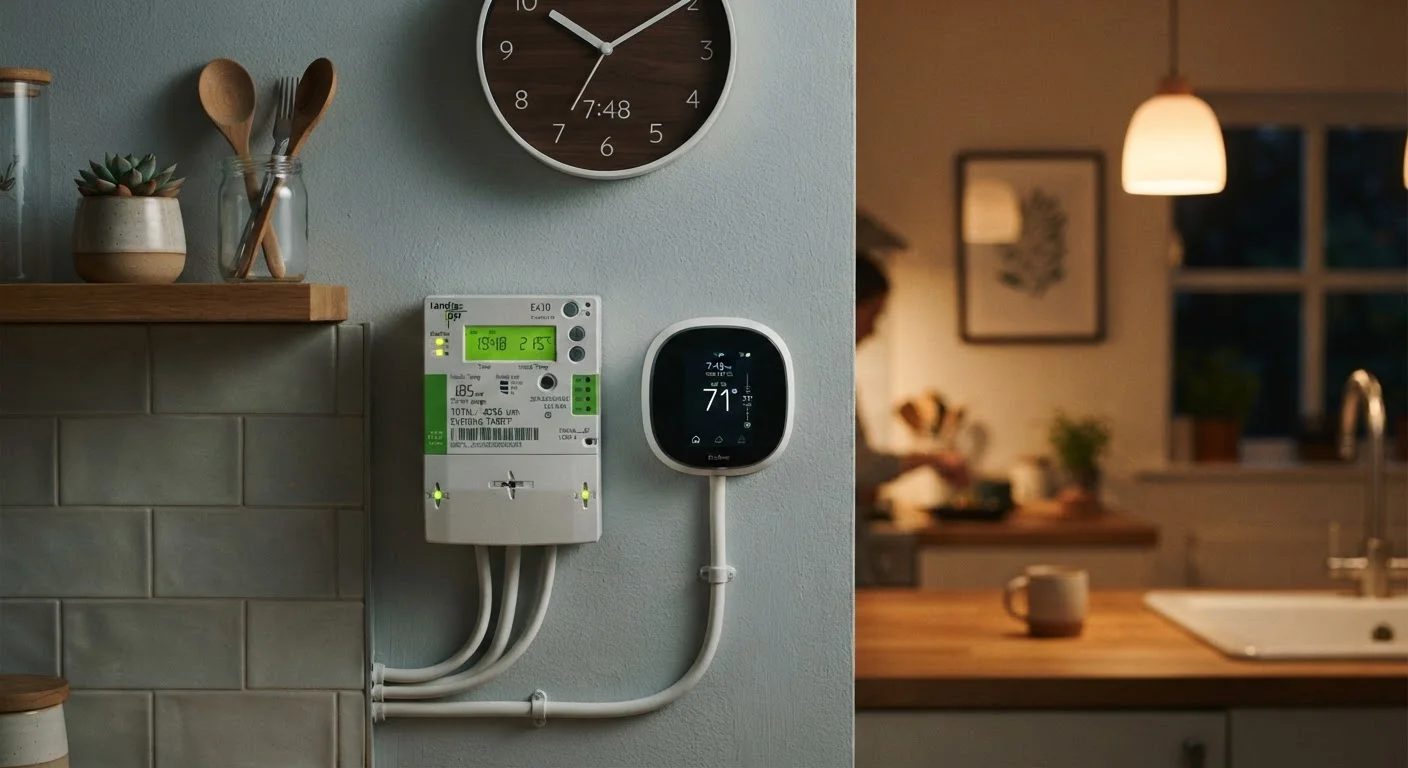
How Energy Tariffs Are Structured
Most US households are on a flat-rate tariff - every kWh of electricity costs the same regardless of when you use it. That simplicity is convenient, but it doesn't reflect how electricity is actually produced and priced on the grid. Generating and delivering power is significantly more expensive during the hours when millions of households are simultaneously running HVAC systems, cooking dinner, and charging devices.
Time-of-use tariffs pass some of that real-time cost variation on to consumers. Instead of one price, you see at least two: a peak rate (higher) and an off-peak rate (lower). Some utilities offer a third tier called a super off-peak or shoulder rate for transitional periods between the two. To understand which of your home's major systems drive the most consumption, see Your Home's Three Biggest Energy Systems Explained.
Peak vs. Off-Peak: What the Windows Typically Look Like
While exact windows vary by utility, a common pattern in the US looks roughly like this:
- Peak hours: Weekdays, approximately 4 p.m. - 9 p.m.
- Off-peak hours: Overnight (typically 9 p.m. - 6 a.m.) and sometimes all day on weekends
- Shoulder/mid-peak hours: Morning and midday weekdays, at an intermediate rate
Some utilities also define critical peak pricing events - short, high-demand periods (often on very hot summer days) when rates spike sharply. These events are usually limited to a set number of hours per year and announced in advance.
Your utility's rate schedule - available on their website - lists exact hours and prices. Reading it once gives you a practical map of when to run energy-hungry appliances.
~30%
Potential bill reduction from peak shifting
The U.S. Department of Energy has estimated that time-of-use pricing, combined with behavioral changes, can reduce electricity costs for participating households by up to roughly 30%, depending on the utility and usage pattern.
4-9 p.m.
Typical weekday peak window
This late-afternoon to evening window represents the most common peak pricing period across US utilities, reflecting highest grid demand from residential and commercial loads coinciding.
70M+
Smart meters installed in the US
According to the U.S. Energy Information Administration, more than 70 million advanced (smart) meters had been installed across the country, enabling time-of-use billing for a growing share of households.
Which Households Benefit Most
TOU plans reward flexibility. If your household can shift even a few high-consumption tasks out of peak windows, the savings can be meaningful. Good candidates include households with:
- An electric vehicle that can charge overnight
- A dishwasher or washing machine with a delay-start feature
- A programmable or smart thermostat that can pre-cool or pre-heat before peak hours begin
- Flexible work-from-home schedules that reduce evening-concentrated usage
Households with limited schedule flexibility - such as those with caregiving demands in the evening, or renters with no control over appliance timing - may find that a flat-rate plan is less risky. Asking your utility for a bill comparison analysis before switching is a straightforward way to test the math against your real usage history. Small appliance habits also play a larger role than many homeowners expect - see how everyday appliance patterns affect your bill.
Making the Switch: What to Check First
Before enrolling in a TOU plan, run through these practical checkpoints:
- Confirm smart meter availability. TOU billing requires interval metering. Your utility can tell you whether your home already has one or how to get one installed.
- Pull 3-6 months of usage data. Many utility portals show hourly or daily consumption. Look for patterns: when does your household use the most electricity?
- Identify your shiftable loads. Laundry, dishwashing, pool pumps, and EV charging are the easiest to move. HVAC pre-conditioning (cooling your home before 4 p.m.) is another high-impact tactic.
- Check for opt-out periods. Some utilities allow a trial period during which you can revert to your previous plan if TOU ends up costing more.
For a broader starting framework, Smart Energy Habits from Scratch covers how to establish the routines that make TOU plans work well day-to-day. And if you want a comprehensive view of every lever available to you, Home Energy Efficiency: Everything in One Place is a useful companion.
This article is for general informational purposes only. Electricity rates, tariff structures, and eligibility rules vary significantly by utility and location. Always verify current plan details directly with your energy provider before making changes to your tariff.
Frequently Asked Questions
Peak hours are the periods of highest electricity demand on the grid, typically weekday afternoons and evenings - often 4 p.m. to 9 p.m. During these windows, utilities charge a higher rate per kWh to reflect the higher cost of supplying electricity. Exact windows vary by utility and region.
TOU plans tend to benefit households that can reliably shift energy-intensive tasks - laundry, dishwashing, EV charging - to off-peak hours. If your daily schedule is fixed and you can't avoid peak usage windows, a flat-rate plan may cost less. Reviewing several months of your utility bills helps estimate which structure suits you.
In most cases, yes. Smart meters record your usage in 15- or 30-minute intervals and transmit that data to your utility, which is how TOU billing is calculated. Many utilities offer free smart meter installation when you enroll in a TOU plan.
Off-peak rates are the lower per-kWh prices charged during periods of low grid demand, such as overnight hours, early mornings, and often weekends. Running appliances during these windows is how households realize savings on a TOU plan.
It can, if most of your energy use is concentrated in peak windows and you don't adjust your habits. Before switching, ask your utility if they offer a bill comparison tool or a shadow-billing period that shows what you would have paid under TOU rates.
The content on this site is for informational purposes only and is not a substitute for professional advice. Always consult a qualified professional for guidance specific to your situation.