

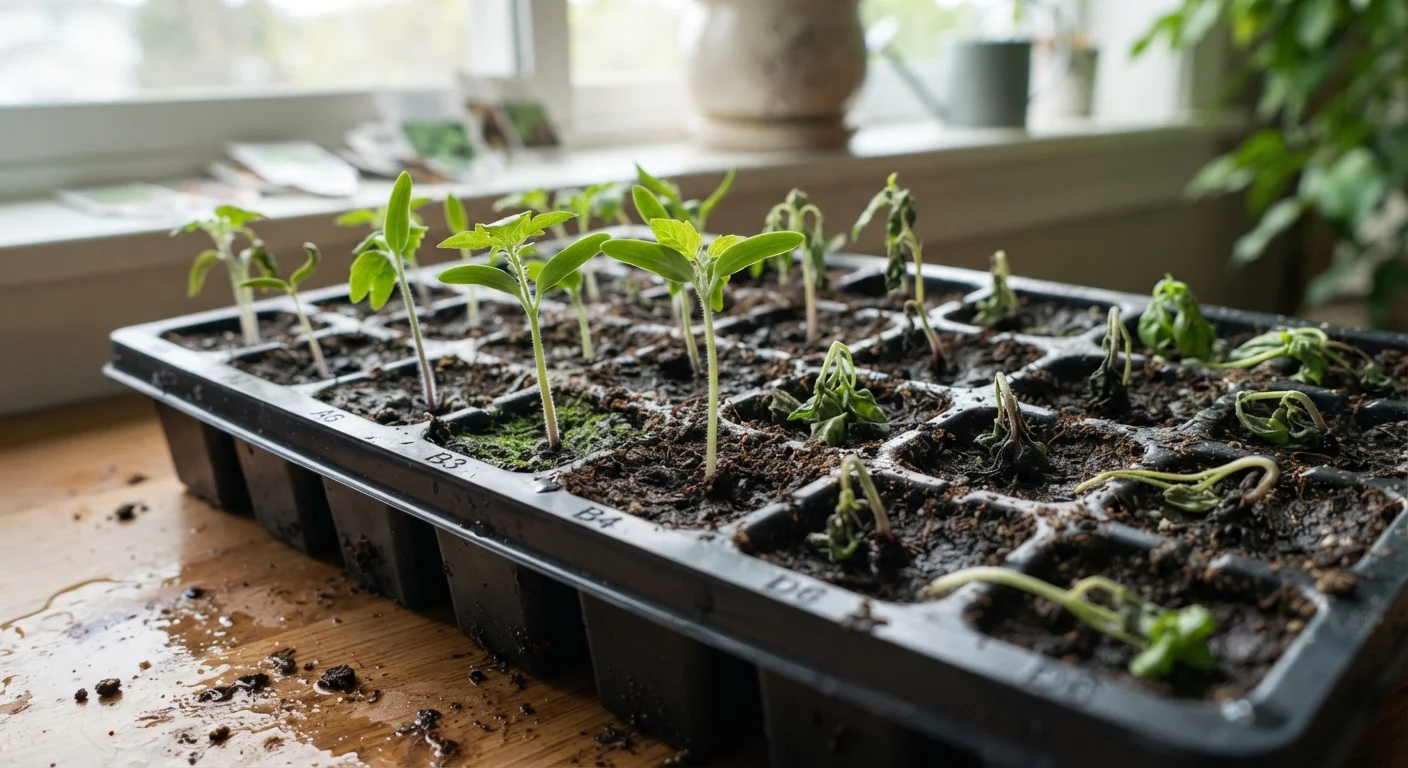
Why Seedlings Are So Fragile
Growing from seed is one of the most rewarding and cost-effective ways to fill a garden - but the gap between germination and a healthy transplant is where most beginners lose their plants. Seedlings are physiologically vulnerable: their root systems are tiny, their stems haven't yet developed lignin for structural strength, and their immune defenses against pathogens are minimal.
The good news is that the overwhelming majority of seedling failures trace back to a handful of very fixable mistakes. Understanding why each failure mode happens is the first step toward preventing it. If you've ever watched a tray of healthy-looking seedlings suddenly collapse overnight, this guide is for you.
For a broader look at how plants signal stress before things get critical, see signs your plants are telling you something is wrong.
The Most Common Mistakes - and How to Fix Them
Work through these five mistakes honestly. Many struggling gardeners are making more than one simultaneously, which compounds the damage and makes the root cause harder to identify.
Overwatering seedlings, keeping the growing medium constantly saturated.
Why it happens: New gardeners equate more water with better care, and seedling trays can look dry on top while staying wet underneath.
Providing inadequate light, causing seedlings to become tall, spindly, and structurally weak.
Why it happens: A sunny windowsill feels bright to us but delivers far less light intensity than seedlings need, especially in late winter and early spring when day length is short.
Filling seed trays with garden soil or heavy potting mix instead of a sterile seed-starting medium.
Why it happens: Garden soil seems like the natural choice, and many gardeners already have potting mix on hand from container plants.
Ignoring temperature requirements during germination and early growth.
Why it happens: Indoor temperatures feel comfortable to us, but many seeds germinate best in warmer conditions - often 65-75°F at the root zone - which a cool room or drafty windowsill doesn't reliably provide.
Transplanting seedlings before they have developed enough roots and hardened off to outdoor conditions.
Why it happens: Eager gardeners transplant as soon as seedlings look large enough, without accounting for root maturity or the shock of moving from a controlled indoor environment to variable outdoor conditions.
Getting watering right for seedlings is its own skill. The principles of moisture management for mature plants are covered in depth in our guide to watering deep vs. watering often, which helps put seedling needs in context as plants develop.
Damping Off Cannot Be Reversed
Damping off is a catch-all term for several soilborne fungal diseases that cause seedlings to suddenly collapse and rot at the stem base. Once it takes hold, affected seedlings cannot be saved. Prevention is the only strategy: use sterile growing medium, avoid overwatering, ensure good air circulation, and never reuse last year's trays without sanitizing them first.
Building Better Habits From the First Sow
Most seedling problems are systemic, not random - they repeat season after season because the underlying setup hasn't changed. Before you sow your next batch, do a honest audit of your growing environment: Is your light source genuinely strong enough, or are you relying on a north-facing window? Are your trays draining freely, or sitting in standing water? Is the room temperature stable, or does it drop sharply at night?
~70%
Seedling failures linked to moisture mismanagement
Extension horticulturalists consistently cite overwatering and poor drainage as the dominant cause of indoor seedling loss among home gardeners.
2-4 inches
Ideal grow-light distance above seedlings
University cooperative extension guidelines recommend keeping fluorescent or LED grow lights within this range to prevent both stretching and light burn.
Small environmental improvements - a proper grow light, clean trays, the right growing medium - make a far larger difference than any product or additive. Give your seedlings the fundamentals, and they'll do most of the work themselves.
The content on this site is for informational purposes only and is not a substitute for professional advice. Always consult a qualified professional for guidance specific to your situation.