

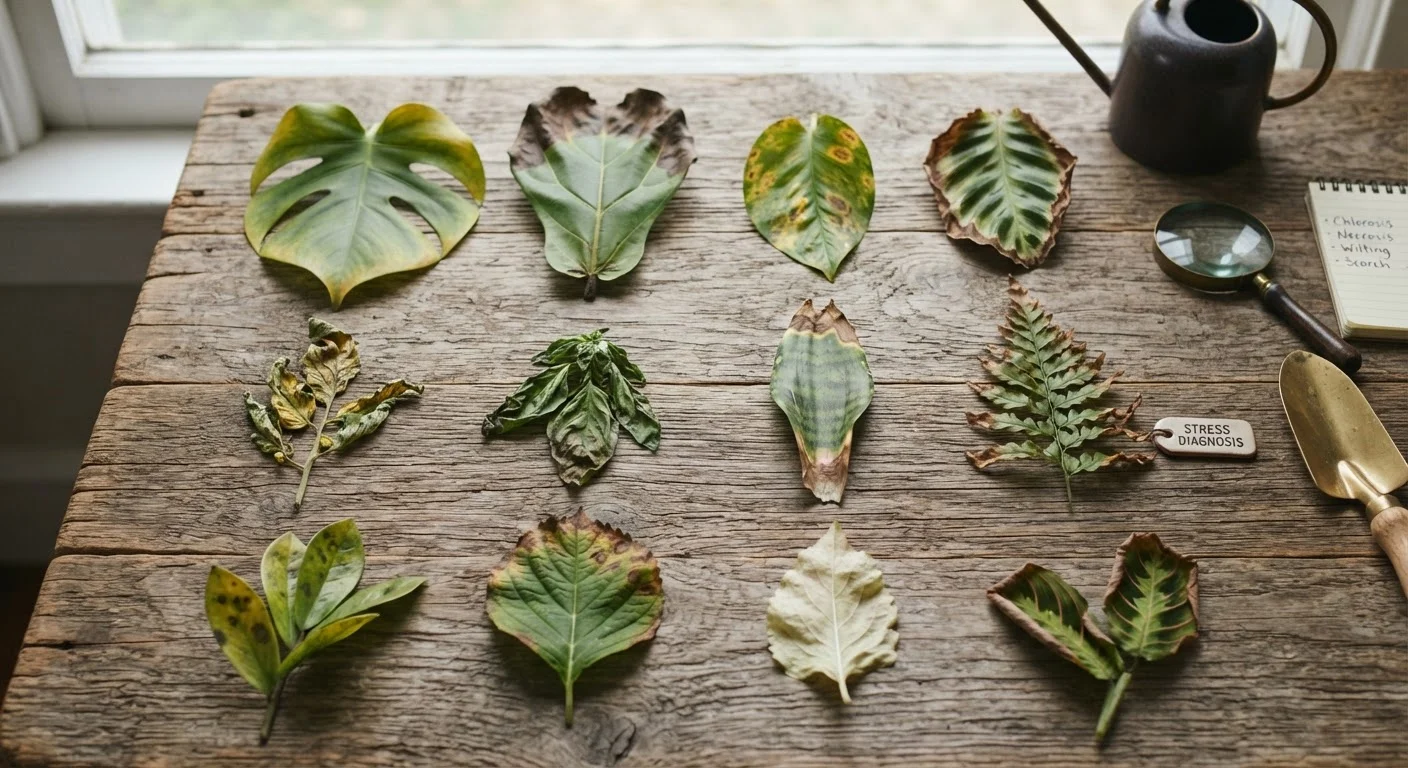
How Plants Signal Stress
Plants can't speak, but they do communicate - through color, texture, posture, and growth patterns. Learning to read these signals is one of the most practical skills a gardener can develop. Most symptoms fall into a handful of categories: nutrient imbalances, watering issues, light problems, pests, and disease. A single symptom rarely gives you the full picture, so context matters: consider your plant's location, recent weather, watering schedule, and soil type before drawing conclusions.
This guide works as a quick reference - use it alongside reading your plant label to understand what conditions your specific plant actually needs before diagnosing what's going wrong.
Chlorosis
A condition in which leaves produce insufficient chlorophyll, causing them to turn yellow or pale. It can result from nutrient deficiencies, waterlogged roots, or pH imbalances that prevent nutrient uptake.
Interveinal Chlorosis
Yellowing of leaf tissue between the veins while the veins themselves remain green. This pattern typically indicates a deficiency of iron, manganese, or magnesium, often linked to high soil pH.
Etiolation
Abnormal, stretched growth produced when a plant receives insufficient light. Etiolated plants develop long, weak stems, small leaves, and pale coloration as they reach toward a light source.
Root Rot
Decay of plant roots caused by prolonged exposure to waterlogged, oxygen-depleted soil or soil-borne fungal pathogens. Affected roots turn brown or black and lose their ability to absorb water and nutrients.
Fertilizer Burn
Leaf scorch or browning caused by excessive fertilizer salts drawing moisture out of plant tissue. Symptoms typically appear as brown leaf tips and edges and can be worsened by applying fertilizer to dry soil.
Powdery Mildew
A common fungal disease that coats leaf surfaces with a white, powdery layer of spores. It thrives in conditions with warm days, cool nights, and high humidity, and spreads rapidly in poor-ventilation environments.
Common Symptoms and What They Typically Mean
Yellowing Leaves (Chlorosis)
Yellowing is the most common plant complaint, but the pattern matters enormously. Older, lower leaves yellowing first usually points to a nitrogen deficiency - nitrogen is mobile in the plant, so it gets pulled from older tissue to feed new growth. Yellowing between leaf veins while veins stay green (called interveinal chlorosis) is a classic sign of iron or manganese deficiency, often triggered by soil pH that's too high rather than a true lack of minerals. Uniform yellowing across the whole plant frequently signals overwatering or waterlogged roots - soggy soil drives out oxygen and suffocates the root system.
Wilting
Wilting mid-morning on a hot day that recovers by evening usually means the plant is losing water faster than roots can supply it - a normal response to heat stress. If wilting persists even after watering, or if the soil feels moist, suspect root rot or a vascular disease blocking water uptake. Wilting in cool, overcast conditions is a red flag for root problems rather than heat.
Brown Leaf Tips and Edges
Crispy brown tips typically indicate low humidity or inconsistent watering - the plant is losing moisture from leaf edges faster than it's being replaced. Brown edges that appear scorched often point to fertilizer burn (excess salts in the soil) or direct sun on plants adapted to shade. If browning progresses inward from edges and the leaf feels dry and papery, drought stress is the likely cause.
Pale, Washed-Out, or Leggy Growth
New growth that looks pale or etiolated (stretched and weak) is a clear light-deficiency signal. Plants reach toward available light, producing long internodes and small leaves. This is common with indoor plants placed too far from windows. Moving the plant to a brighter spot - or supplementing with a grow light - typically resolves the problem within a few weeks.
Spots, Lesions, and Powdery Coatings
Dark or water-soaked spots suggest a fungal or bacterial disease, often worsened by overhead watering or poor air circulation. White powdery patches on leaf surfaces are the hallmark of powdery mildew, a fungal condition that thrives in warm days with cool, humid nights. Sticky residue on leaves - sometimes accompanied by tiny moving dots or clusters - usually indicates insect pests such as aphids, scale, or spider mites.
For yellowing that affects your lawn rather than garden beds, grass discoloration follows its own diagnostic path and deserves separate attention.
Putting It All Together
Accurate diagnosis requires looking at the whole plant and its environment. Ask: Where on the plant does the symptom appear? When did it start - after a weather change, a repotting, or a new fertilizer application? Is it spreading or staying in one place? Most problems become much clearer when you treat diagnosis as a process of elimination rather than a quick guess.
If seedlings are the issue rather than established plants, the causes often differ from mature plant problems - seedling failure has its own set of common culprits worth reviewing separately. And for broader lawn diagnosis, a lawn troubleshooting guide can help you work through bare patches, moss, and weed pressure systematically.
| Lower-leaf yellowing usually signals | Nitrogen deficiency or natural leaf senescence |
| Interveinal yellowing points to | Iron or manganese deficiency, often pH-related |
| Wilting despite moist soil suggests | Root rot or vascular disease |
| Crispy brown leaf tips typically mean | Low humidity, inconsistent watering, or fertilizer burn |
| Leggy, pale new growth indicates | Insufficient light reaching the plant |
| White powdery coating on leaves signals | Powdery mildew (fungal disease) |
The content on this site is for informational purposes only and is not a substitute for professional advice. Always consult a qualified professional for guidance specific to your situation.