

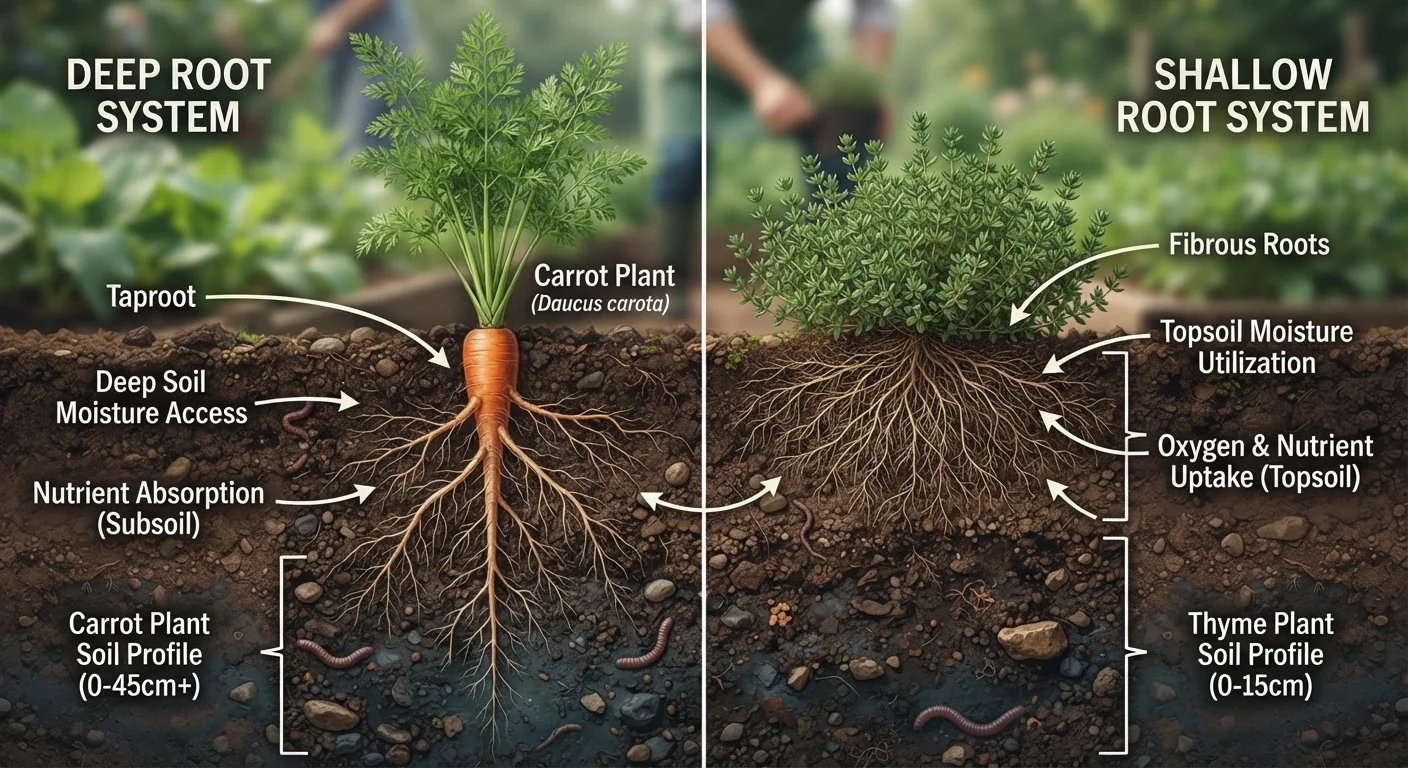
Option A
Deep, Infrequent Watering
The slow-and-steady approach that builds drought-resilient roots.
Best for: Established trees, shrubs, perennials, lawn grass, and most vegetable crops once rooted.
Option B
Frequent, Shallow Watering
The surface-level approach suited to very specific plant stages.
Best for: Newly sown seeds, fresh transplants, and container plants with limited soil volume.
Why Watering Depth Changes Everything
Most gardening advice tells you to water regularly, but it rarely explains how water moves through soil - and that's where many home gardeners go wrong. When you water, moisture moves downward through the soil profile. Shallow watering wets only the top few inches. Deep watering saturates the root zone, which for most established plants sits 6-18 inches below the surface.
Roots are opportunistic: they grow toward water. A plant watered lightly every day will concentrate roots near the surface, where soil dries out fastest. That plant becomes reliant on you for survival during any dry stretch. A plant watered deeply but less often has to reach downward to find moisture - building a robust root system that buffers against heat and short dry periods.
Understanding this principle is foundational whether you're planting a vegetable garden, managing a lawn, or establishing perennials. For a deeper look at how plant type affects care decisions, see our guide to annual, biennial, and perennial plants.
| Criterion | Deep, Infrequent Watering | Frequent, Shallow Watering |
|---|---|---|
| Root depth encouraged | Deep (6-18+ inches) | Shallow (top 1-3 inches) |
| Drought resilience | High - roots access stored moisture | Low - roots dependent on surface supply |
| Best plant stage | Established plants | Seeds and fresh transplants |
| Water efficiency | More efficient over time | Higher evaporation loss |
| Fungal disease risk | Lower (if watered in morning) | Higher with evening watering |
| Typical frequency | 1-2 times per week | Daily or near-daily |
| Suits containers? | Yes - still water until drainage | Yes - containers dry faster |
When Frequent Watering Is Actually the Right Call
Frequent shallow watering isn't inherently bad - it's just the wrong tool for the wrong job when applied to established plants. There are genuine situations where it's exactly what's needed.
Seed germination: Seeds must stay consistently moist to germinate. A single deep watering followed by days of drying out will kill germinating seeds before they establish. Light, daily misting or sprinkling keeps the top inch of soil moist - the zone where seeds are doing their work. Once seedlings push their first true leaves, you can begin transitioning to deeper, less frequent watering.
New transplants: A freshly transplanted seedling or division has a limited, damaged root system. Until new roots extend into surrounding soil, the plant can only access moisture in its immediate rootball. Frequent watering bridges that critical window. Overwatering is still a risk, however - waterlogged soil deprives roots of oxygen and promotes fungal disease.
Containers and raised beds: These systems drain faster than in-ground soil. Even with deep watering technique (water until it flows from drainage holes), containers may need checking daily in midsummer heat. The goal is still to water thoroughly rather than shallowly - just more often. Raised beds and in-ground planting have different drainage dynamics worth understanding before you design your system.
How to Water Deeply in Practice
Deep watering doesn't require special equipment - it requires patience and timing. The core principle is applying water slowly enough that it soaks in rather than runs off, and applying enough volume to wet soil to the full root depth.
A simple test: water your bed, wait 30 minutes, then push a screwdriver or wooden dowel into the soil. It should slide easily to a depth of 6 inches or more. If it stops at 2-3 inches, you haven't watered deeply enough. For vegetable gardens, aim to wet soil to at least 8-10 inches. For large shrubs and trees, 12-18 inches is the target.
Timing matters too. Watering in the early morning gives plants access to moisture during the hottest part of the day, while foliage dries before evening - reducing conditions that favor fungal disease. Avoid watering in the heat of midday, when evaporation rates are highest. For lawns specifically, timing and depth habits are equally important for building a healthy turf root system.
Clay soils absorb water slowly - applying it in cycles (water, pause, water again) helps prevent runoff. Sandy soils drain fast and may need slightly more frequent deep watering than heavy soils to maintain adequate root-zone moisture.
6-18"
Target root-zone depth for most garden plants
University extension guidelines generally recommend watering to this depth for established vegetable crops and perennials.
~50%
Estimated water lost to evaporation from midday irrigation
Watering during cooler morning hours significantly reduces evaporative loss compared with midday application in summer conditions.
2-3x
Frequency reduction possible with deep watering
Established plants watered deeply typically need irrigation far less often than those receiving frequent shallow applications.
The content on this site is for informational purposes only and is not a substitute for professional advice. Always consult a qualified professional for guidance specific to your situation.