

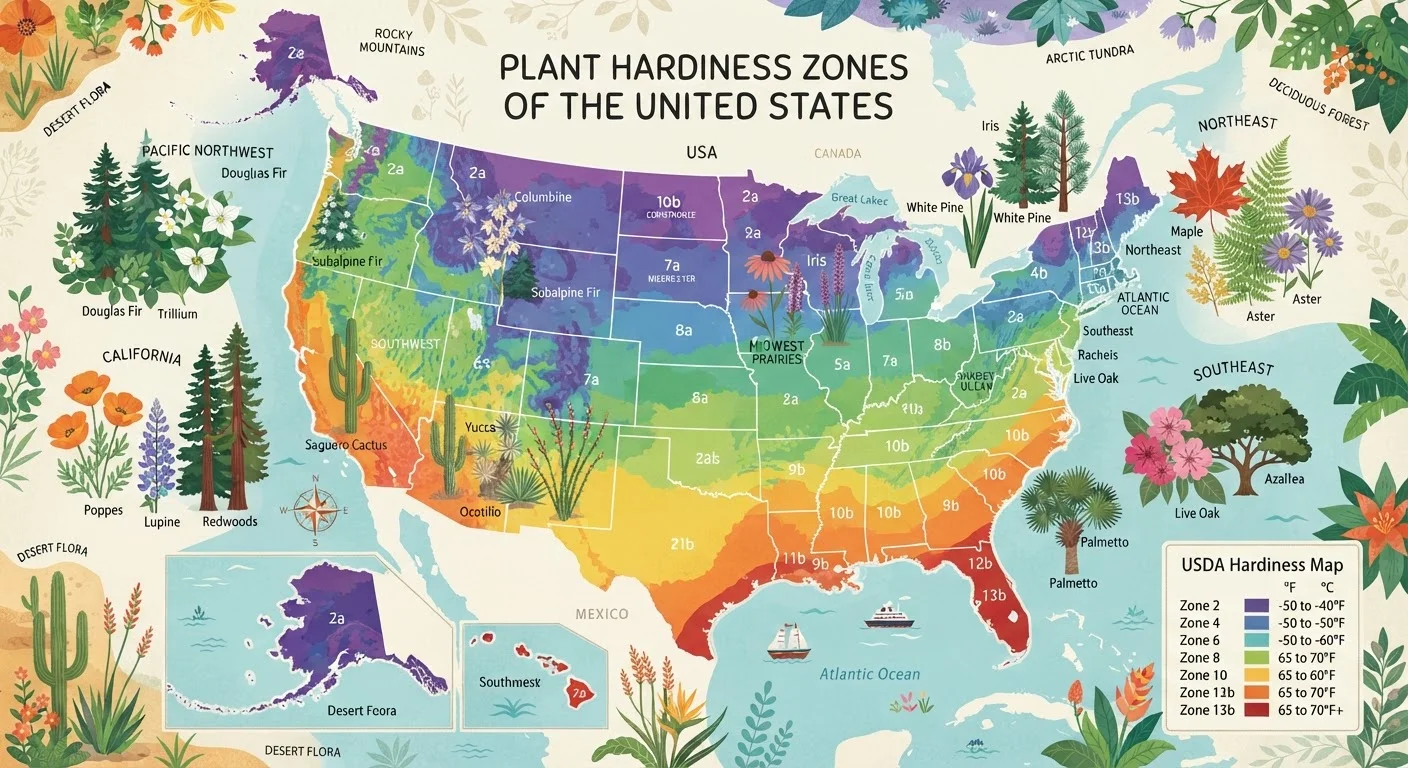
What the Zone Numbers Actually Mean
When you pick up a plant at the nursery, the tag often lists something like "Zones 5-9." That range comes directly from the USDA Plant Hardiness Zone Map, which assigns every part of the country a number based on the average annual minimum winter temperature recorded over a 30-year period.
Zone 1 covers the coldest regions - think interior Alaska, with lows below -50°F. Zone 13 covers frost-free tropical areas near the southern tip of Florida and Hawaii. Most of the contiguous US falls between Zones 4 and 9. Each full zone represents a 10°F band, and each is split into an "a" (colder) and "b" (warmer) subzone for finer detail.
The zone number tells you one specific thing: whether a plant's root system and crown can survive the coldest temperatures your area typically experiences. It says nothing about summer heat, rainfall, humidity, or soil. For that broader picture, you'd need to consult additional resources - much like how R-value ratings describe just one dimension of a home's thermal performance.
How to Use Zone Information When Choosing Plants
The hardiness zone is the first filter, not the final answer. When you're evaluating a plant, confirm that your zone falls within the plant's listed range. A perennial rated for Zones 6-9 planted in Zone 4 will almost certainly die over winter without significant protection.
Plant tags and seed packets are where zone information shows up most often in practice. Learning to read that information alongside sun exposure, spacing, and soil requirements makes you a far more confident plant buyer. For a full walkthrough of decoding what's printed on those small tags, see reading a plant label without the confusion.
Buy One Zone Colder for Long-Lived Plants
When shopping for shrubs and trees - plants you expect to last decades - prioritize species rated for at least one zone colder than yours. This buffer helps protect them from unusual cold snaps that fall outside the average minimum range. For herbaceous perennials, matching your zone closely is generally sufficient.
When shopping for shrubs and trees - plants you expect to last decades - prioritize species rated for at least one zone colder than yours. This buffer helps protect them from unusual cold snaps that fall outside the average minimum range.
Microclimates: Why Your Yard May Not Match Your Zone
Your official zone is an average across a wide area, but your individual yard has its own microclimates - small pockets where conditions differ meaningfully from the surrounding region. A south-facing brick wall retains daytime heat and can create a zone-warmer microclimate directly in front of it. A low-lying area where cold air settles on still nights can run a half-zone colder than the rest of your property.
Common microclimate factors to observe in your garden include:
- Slope and drainage: Cold air drains downhill and pools in frost pockets at the base of slopes.
- Proximity to structures: Buildings block wind and radiate stored heat, often protecting nearby plants.
- Pavement and hardscape: Absorbs heat during the day and releases it at night, warming adjacent beds.
- Overhead canopy: Trees slow radiative heat loss, keeping ground-level temperatures several degrees warmer on clear winter nights.
Mapping these microclimates over a season or two gives you real information to work with when placing borderline-hardy plants.
What Hardiness Zones Don't Tell You
Relying solely on zone ratings leads to surprises. Several important growing factors fall completely outside the zone system:
13
USDA hardiness zones across the US
The USDA Plant Hardiness Zone Map divides North America into 13 primary zones, each representing a 10°F range in average annual minimum temperature.
30 years
Temperature data period behind zone ratings
USDA zone designations are calculated from temperature records collected over 30-year periods, making them long-term averages rather than single-year snapshots.
5°F
Temperature difference between subzones (a and b)
Each full hardiness zone is divided into two half-zones - 'a' and 'b' - each representing a 5°F temperature band for more precise plant selection.
- Summer heat accumulation: Some plants need a certain number of hot days to fruit or flower - something minimum winter temperatures don't capture at all.
- Soil moisture in winter: Many plants that tolerate cold air temperatures will rot in wet, poorly drained soil during dormancy.
- Wind exposure: Wind accelerates moisture loss from evergreen foliage in winter, a condition called desiccation, which can kill plants even within their rated zone.
- Late and early frosts: A Zone 6 spring frost arriving weeks after the average last frost date can damage new growth on otherwise hardy plants.
Understanding the zone system as one useful tool - rather than a guarantee - sets realistic expectations and helps you become a more observant, adaptive gardener.
Frequently Asked Questions
You can look up your zone using the USDA Plant Hardiness Zone Map online by entering your zip code. Your local cooperative extension office is another reliable resource that may also account for regional nuances.
Yes. Zone 1 represents the coldest areas with minimum temperatures below -50°F, while Zone 13 covers the warmest tropical regions. Higher numbers indicate milder winters.
You can sometimes push zone limits by choosing sheltered planting spots, using mulch for insulation, or growing tender plants in containers that are brought indoors for winter. However, there's no guarantee of survival beyond the rated zone.
No. Hardiness zones specifically measure minimum winter cold. Other systems, like the Sunset Climate Zones used in the western US, factor in summer heat, humidity, and rainfall to give a fuller climate picture.
Yes. The USDA updates the map periodically as temperature data is collected over longer periods. Some areas have shifted to warmer half-zones over recent decades as climate patterns change.
Zone ratings reflect average minimums, not record cold events. Factors like wet soil, wind exposure, late frosts, or an unusually severe winter can kill even zone-appropriate plants. Microclimate conditions in your specific yard also play a role.
The content on this site is for informational purposes only and is not a substitute for professional advice. Always consult a qualified professional for guidance specific to your situation.