

Why Mowing Habits Matter More Than Most People Think
Mowing looks straightforward - start the engine, walk in lines, repeat. But the decisions made each time the mower comes out accumulate quietly over a growing season. Grass that is cut too short, cut too infrequently, or cut with a poorly maintained machine does not bounce back cleanly. Instead, it gradually thins, browns at the tips, and becomes more vulnerable to weeds, moss, and drought. Understanding where routine mowing goes wrong is the first step toward a healthier, lower-maintenance lawn.
If you're just getting started with lawn care, the ground-level introduction for new homeowners covers the broader picture of what a lawn needs throughout the year.
The Most Damaging Mowing Mistakes - and How to Fix Them
The errors below are among the most common causes of gradual lawn decline. Each one is easy to overlook precisely because the damage builds slowly rather than appearing overnight.
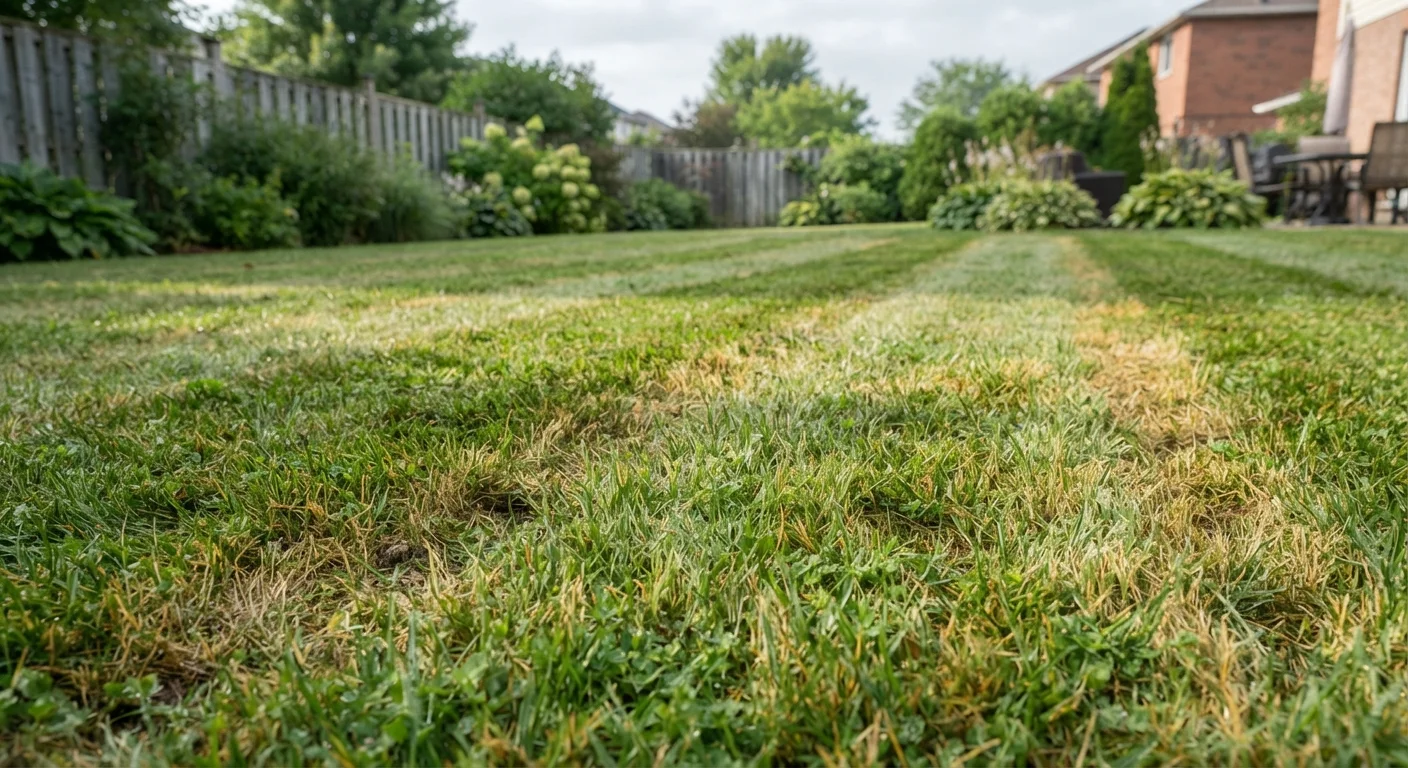
Cutting the grass too short (scalping). Setting the mower deck very low to extend the time between cuts removes too much of the leaf blade at once.
Why it happens: Many homeowners assume shorter cuts mean less frequent mowing, saving time. The logic seems sound but ignores how grass plants actually function.
Mowing with a blunt blade. A dull blade tears and shreds the grass tip rather than making a clean cut.
Why it happens: Blade sharpening is easy to overlook - the mower still runs, and the difference in cut quality is subtle at first. By mid-season, the damage is visible but the cause is already forgotten.
Mowing wet grass. Cutting when the lawn is still damp after rain or irrigation causes clumping, uneven cuts, and soil compaction from mower weight.
Why it happens: Schedules are tight, and a rainy week can throw off a mowing routine. It's tempting to mow as soon as there's a dry hour, even if the grass itself is still wet.
Always mowing in the same direction. Repeating the exact same pattern every cut causes grass to lean permanently in one direction and creates compacted wheel tracks.
Why it happens: A fixed route is efficient and requires no thought. Most people establish a pattern on the first mow of the season and never vary it.
Mowing too infrequently during peak growing season. Letting grass grow tall then cutting it back hard in one pass shocks the plant and exposes the pale lower stems.
Why it happens: Life gets busy, and skipping a weekend of mowing feels harmless. By the time the lawn is mowed again, it's substantially overgrown.
Once damage is already visible - bare patches, unusual discolouration, spreading moss - the lawn troubleshooting guide can help you diagnose what's gone wrong and what to do about it.
Building Better Mowing Habits for the Long Term
Most lawn damage from mowing is entirely preventable with a few consistent adjustments. Raise the cutting height by at least one notch on the mower deck - most cool-season grasses do best when kept between 2.5 and 4 inches tall. Sharpen or replace the blade at least once per season, or whenever the cut tips look ragged and brown. Vary your mowing route regularly to prevent ruts, and wait until the lawn has dried after rain before mowing.
Mowing is only one part of a healthy lawn routine. Watering practices interact directly with how grass recovers from each cut - the guide to watering a lawn well explains how timing and depth affect root strength. And if you're curious which popular shortcuts are actually safe to take, the truth about common lawn myths separates fact from persistent fiction.
Don't Ignore Moss - It's a Symptom
If moss is spreading across your lawn despite regular mowing, it is usually a sign of underlying compaction, poor drainage, or low soil fertility - not just a cosmetic issue. Mowing more frequently will not resolve it. See the guide to moss causes and control to address the root conditions driving its spread.
The content on this site is for informational purposes only and is not a substitute for professional advice. Always consult a qualified professional for guidance specific to your situation.