

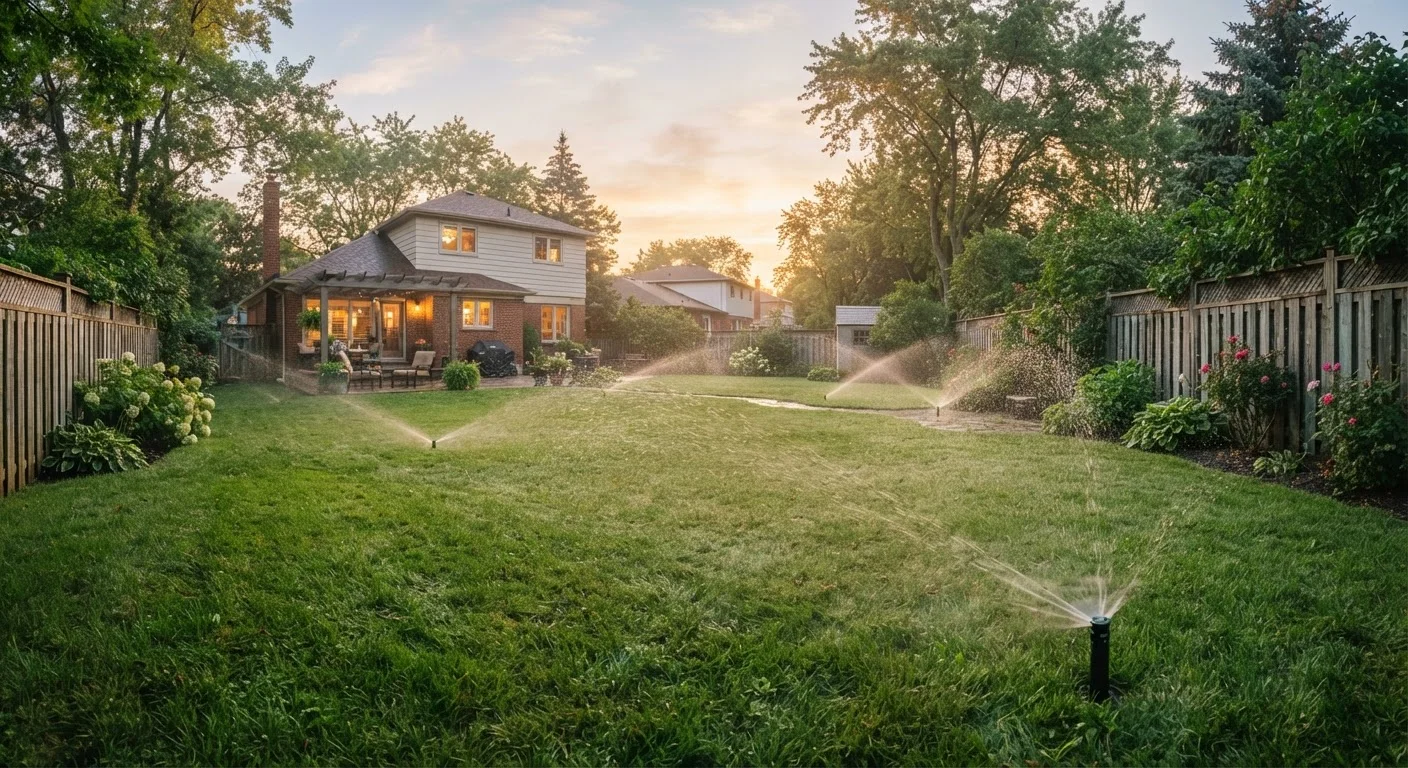
Why Watering Habits Matter More Than Volume
Homeowners often focus on how much water their lawn receives, but the pattern of watering shapes root depth, drought tolerance, and overall turf health far more than total volume alone. Shallow, frequent watering keeps moisture near the soil surface, which trains grass roots to stay shallow. Shallow roots make turf brittle during dry spells and more vulnerable to heat stress.
Deep, infrequent watering - typically every two to three days rather than daily - pulls roots downward in search of moisture. A deeper root system taps into subsoil reserves, making the lawn genuinely more resilient. For a fuller explanation of how this principle applies across your entire garden, see watering deep vs. watering often.
The goal of good watering isn't a perfect schedule - it's building a lawn that can handle variation. Pair smart watering with regular aeration and you give water a clear path to the root zone rather than letting it pool or run off.
Timing, Depth, and Frequency: The Core Principles
Water in the early morning, between 5 and 9 a.m.
Morning watering takes advantage of cooler temperatures and lower wind, reducing evaporation loss. Grass blades dry quickly as the day warms, significantly lowering the risk of fungal diseases that thrive in prolonged moisture.
Apply roughly one inch of water per week, accounting for rainfall.
One inch per week is a widely used benchmark for most cool- and warm-season turfgrasses under average conditions. Tracking rainfall with a simple rain gauge prevents overwatering after storms and helps you make up the deficit during dry stretches.
Water deeply enough to moisten the soil to six inches of depth.
Most turfgrass root systems develop in the top six inches of soil. Delivering water to that full depth encourages roots to follow moisture downward. Shallow wetting - just the top inch or two - keeps roots near the surface and reduces drought resilience.
Water every two to three days rather than daily.
Allowing the soil surface to dry slightly between sessions encourages deeper root exploration and reduces the anaerobic (oxygen-starved) conditions that invite root rot and shallow fungal activity.
Adjust watering frequency based on soil type, not just the calendar.
Sandy soils drain fast and may need watering more frequently with shorter run times, while clay soils hold water longer and need longer intervals to avoid waterlogging. A one-size schedule ignores these important differences.
Reading Your Lawn's Signals
A calendar alone is an unreliable guide. Lawns communicate water stress clearly if you know what to look for. When grass blades fold lengthwise or take on a blue-grey tint, moisture levels are dropping. A simple field test: walk across the lawn. If your footprints remain visible for more than 30 seconds, the grass lacks the turgor to spring back - a reliable sign it's time to water.
Overwatering produces its own signals. Persistently soggy patches, fungal patches, or an unusual spike in moss growth often point to too much moisture sitting in the root zone. Moss growth frequently signals drainage or overwatering problems rather than simply poor light.
Soil type also affects how you read these cues. Clay soils retain moisture longer and are prone to waterlogging; sandy soils drain quickly and may need water sooner. A soil probe or even a long screwdriver pushed into the lawn can tell you how far down the moisture actually reaches - aim for six inches of moist soil after watering.
Other lawn habits interact directly with water needs. Cutting grass too short, for example, reduces the leaf area that shades soil and conserves moisture. See common mowing mistakes for the full picture of how mowing and watering work together.
Seasonal Adjustments and Long-Term Lawn Health
Watering needs shift through the year. Cool-season grasses such as tall fescue and Kentucky bluegrass actively grow in spring and fall and may need supplemental watering during dry spells in those seasons. Warm-season grasses like Bermuda and Zoysia peak in summer and can tolerate more heat but still require consistent moisture during establishment.
During dormancy - warm-season grass in winter, cool-season grass in midsummer heat - reduce watering significantly. Dormant grass is conserving energy, not dying; overwatering a dormant lawn invites disease without benefiting the plant.
Underlying soil chemistry also affects how efficiently water is absorbed and used. A lawn with poor pH balance may struggle to take up nutrients even when moisture is adequate. Soil pH is worth testing periodically, particularly if turf quality declines despite consistent watering. Complement your water management with a structured troubleshooting approach to identify issues beyond moisture alone.
The content on this site is for informational purposes only and is not a substitute for professional advice. Always consult a qualified professional for guidance specific to your situation.