

Our Verdict
An outdoor kitchen delivers real, everyday value for homeowners who cook frequently, entertain regularly, and live in climates with long outdoor seasons. The complications - gas lines, permits, weather proofing, and upkeep - are manageable with proper planning, but they are real and should not be underestimated. Skipping that planning is where most outdoor kitchen projects run into trouble.
Best for homeowners with a dedicated patio or covered outdoor space who entertain often and are prepared to invest in both the build and ongoing upkeep.
What an Outdoor Kitchen Actually Gets You
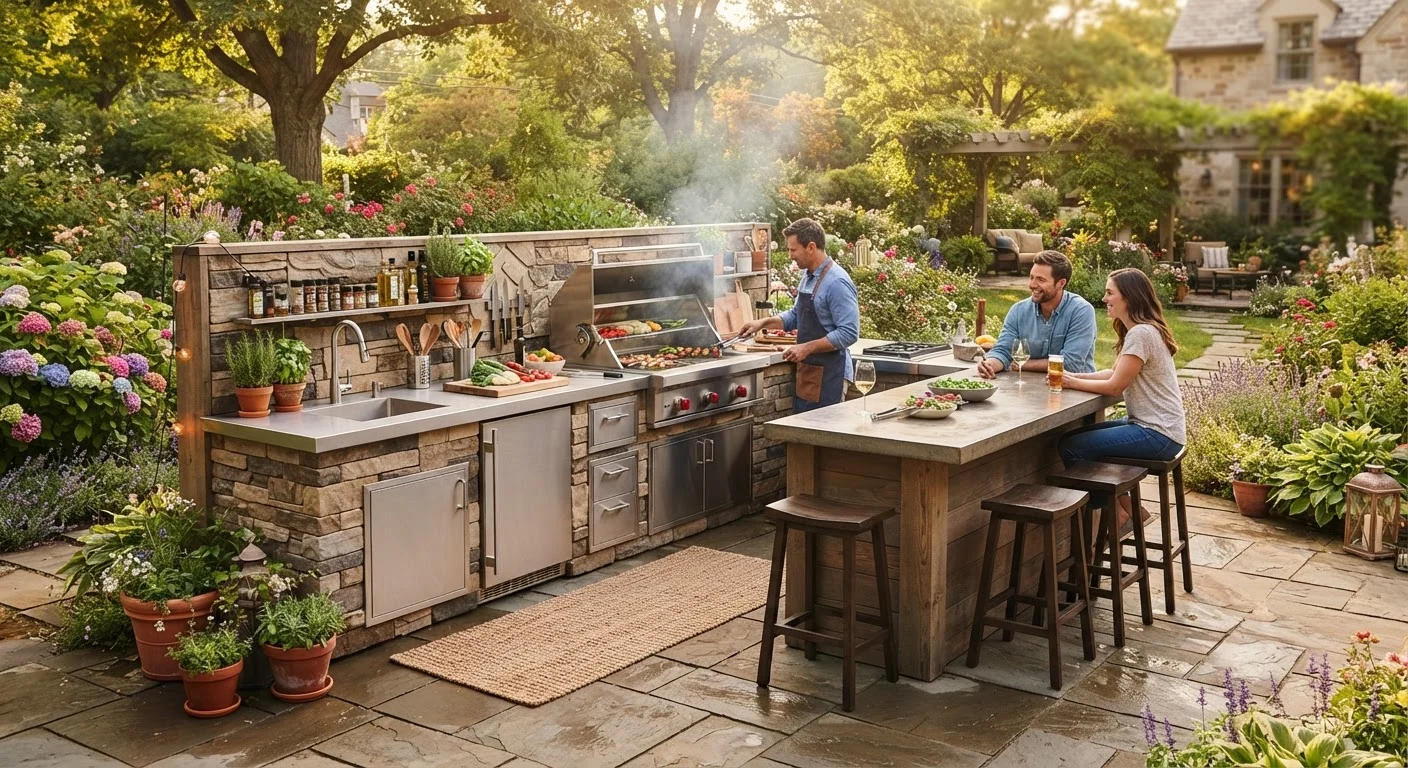
An outdoor kitchen is more than a grill with a shelf. At minimum, a functional setup typically includes a built-in cooking surface, some form of counter space, storage, and access to utilities - usually gas, water, and electricity. More complete builds add refrigeration, a sink with running water, and dedicated seating areas.
The core appeal is straightforward: you move the cooking outside, which keeps indoor spaces cooler and cleaner during summer, reduces kitchen cleanup, and makes hosting genuinely easier. When guests are already outside, there's no bottleneck around the kitchen door. See our outdoor entertaining layout guide for practical ideas on arranging the surrounding space to complement a kitchen setup.
Keeps indoor spaces cooler during summer cooking
Moving heat-generating cooking appliances outside noticeably reduces indoor temperatures and air conditioning load during warm months, a genuine quality-of-life improvement in hot climates.
Makes outdoor entertaining significantly more practical
Having food prep, cooking, and serving all in one outdoor zone eliminates constant trips indoors and lets the host stay engaged with guests throughout the event.
Adds permanent value as a property improvement
A professionally built outdoor kitchen is a fixed structure that can increase a home's appeal and appraised value, particularly in warmer US regions where outdoor living is a major selling point.
Expands usable square footage of the home
A functional outdoor kitchen effectively adds a new room to the home without a traditional addition, extending the living area into the yard for a substantial portion of the year.
Reduces indoor cleanup after large gatherings
Cooking and serving outside keeps grease, smoke, and food debris out of indoor kitchens, making post-party cleanup considerably less demanding.
From a home value standpoint, a well-built outdoor kitchen is considered a permanent improvement. Unlike a portable grill, a built-in structure is part of the property, and in markets where outdoor living is highly valued, it can contribute meaningfully to resale appeal - though exact returns vary significantly by region and execution.
The Real Complications You Need to Anticipate
The challenges of an outdoor kitchen are not reasons to avoid building one - they're reasons to plan carefully. The most significant complications fall into four categories: utilities, weather, permits, and maintenance.
Gas and plumbing connections require licensed tradespeople
Running natural gas lines and water supply outdoors is not a DIY task. Errors carry serious safety risks, and most jurisdictions require licensed contractors and formal inspections for this work.
Permits are commonly required and often overlooked
Permanent outdoor structures connected to utilities typically require building permits. Skipping this step can create legal complications and liability issues during future property sales.
Weather degrades materials faster than expected
Exposure to rain, UV, humidity, and temperature fluctuations accelerates corrosion and wear. Only materials specifically rated for outdoor use - and properly maintained - will hold up over time.
Upfront construction costs are substantial
Even modest built-in outdoor kitchens involve significant costs for materials, utility connections, and labor. More elaborate setups with refrigeration, sinks, and covered structures run considerably higher.
Seasonal winterizing adds ongoing maintenance obligations
In climates with freezing winters, water lines must be properly drained, equipment covered or stored, and surfaces protected - a recurring commitment that many owners underestimate at the planning stage.
Utilities are the most critical. Running a dedicated natural gas line to an outdoor structure requires a licensed plumber or gas fitter and must be inspected in most jurisdictions. The same applies to adding outdoor-rated electrical circuits for refrigerators, lighting, and outlets. These are not DIY tasks - improper gas connections carry serious safety risks, and unpermitted utility work can create liability issues when you sell the property.
Permits are frequently required for permanent outdoor structures, especially those involving gas, plumbing, or electrical work. Requirements vary significantly by municipality, so check with your local building department before any construction begins.
Check Local Permit Requirements Early
Permit requirements for outdoor kitchens vary widely by city, county, and state. Some jurisdictions require permits for any permanent structure; others focus specifically on gas and electrical work. Contact your local building department before breaking ground - not after. Starting without required permits can result in costly stop-work orders or mandatory demolition of completed work.
Weather exposure degrades materials faster than most homeowners expect. Stainless steel grades matter - lower-grade steel will rust. Concrete and tile need sealing. Cabinetry must be specifically rated for exterior use. Grills and burners require regular cleaning to prevent grease buildup and corrosion.
Planning for Long-Term Upkeep
One of the most underestimated aspects of an outdoor kitchen is the ongoing maintenance commitment. Unlike indoor appliances, outdoor cooking equipment is exposed to rain, humidity, UV, pests, and temperature swings year-round.
Up to 71%
Outdoor kitchen cost recouped at resale
Remodeling industry surveys have estimated outdoor kitchen projects can recoup a significant portion of their cost at resale, though figures vary by region, quality of construction, and market conditions.
3-5 years
Typical lifespan without proper maintenance
Outdoor kitchen components exposed to weather without regular cleaning, sealing, and covering can show significant deterioration within a few years, according to outdoor construction professionals.
Seasonal preparation is essential. In colder climates, water lines must be drained and shut off before freezing temperatures arrive, grill grates and burners should be cleaned and covered, and refrigeration units may need to be brought indoors or winterized. Our seasonal patio preparation guide walks through what to do quarter by quarter to protect your outdoor investment.
Routine cleaning after every use - clearing grease traps, wiping down surfaces, and covering equipment - dramatically extends the life of the installation. Budget time for this, not just money for the build.
The content on this site is for informational purposes only and is not a substitute for professional advice. Always consult a qualified professional for guidance specific to your situation.