

Summary
28 items · 45 minutes to 2 hours per season
Why Seasonal Patio Prep Matters
Your patio is one of the most used - and most neglected - areas of a home. Unlike interior rooms, outdoor spaces absorb rain, UV exposure, temperature swings, and biological growth without any climate control to buffer the damage. A consistent, season-by-season maintenance routine keeps surfaces safe underfoot, extends the life of furniture, and means your space is actually ready to enjoy rather than always needing attention first.
This checklist is organized by season so you can work through it at the right time of year. If you're also conducting a broader home review, pairing this with a seasonal energy audit helps catch issues in connected systems like outdoor outlets and lighting circuits. Once your patio is prepped, planning your entertaining layout becomes much more straightforward.
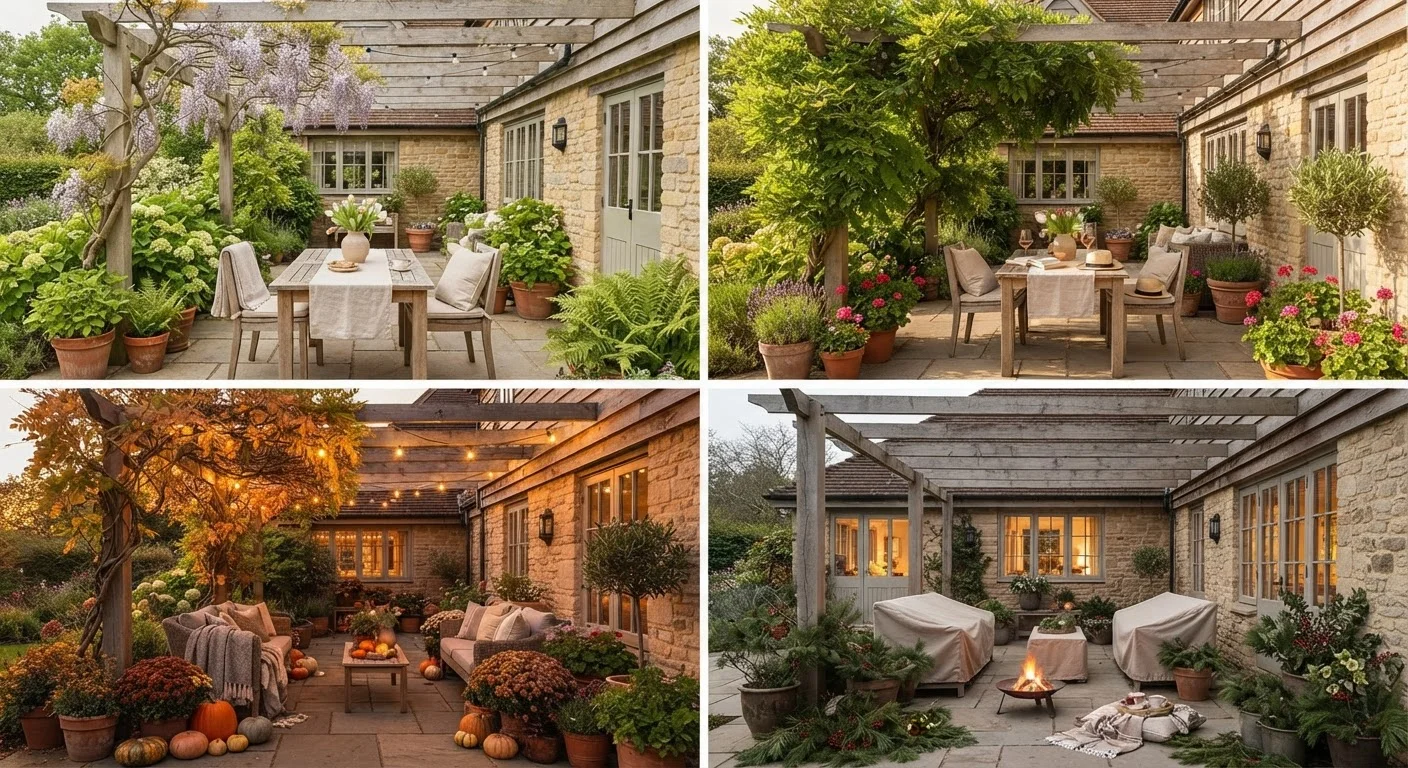
Spring: Wake-Up and Inspect
Summer: Maximize and Maintain
Autumn: Wind Down and Protect
Winter: Store, Secure, and Monitor
Tools and Supplies to Have on Hand
Before working through any season's checklist, gather your supplies. Most seasonal patio tasks require only basic cleaning and maintenance tools - nothing specialized or expensive. Having everything ready before you start means fewer interruptions and a more thorough job.
Stiff-bristle deck brush
Scrubs dirt, algae, and staining from patio surfaces without damaging grout lines or pavers.
Garden hose with adjustable nozzle
Rinses surfaces after scrubbing and keeps container plants watered throughout the season.
Breathable furniture covers
Protects outdoor furniture from moisture and UV exposure during storage and off-season months.
Patio surface sealant
Applied in spring or autumn to protect concrete, stone, or pavers from moisture infiltration and surface deterioration.
Wood cleaner or deck wash
Removes weathered gray surface from wooden furniture and decking before refinishing or sealing.
Sand or non-salt ice melt
Provides traction on icy patio surfaces in winter without causing chemical damage to paving materials.
For furniture care specifics, it's worth understanding why outdoor furniture degrades faster than expected - common care mistakes are easy to avoid once you know them.
Avoid Rock Salt on Patio Surfaces
Rock salt (sodium chloride) is highly effective on driveways but causes significant surface deterioration on concrete, natural stone, and clay pavers through repeated freeze-thaw cycles. Over time, it draws moisture into the material and accelerates spalling and cracking. Use sand or a patio-safe traction product instead, and always check that any deicing product is labeled as safe for your specific surface material.
Electrical Fixtures Require a Professional
Outdoor outlets, hardwired lights, and any electrical connections exposed to moisture are subject to local building codes and should only be inspected or repaired by a licensed electrician. Do not attempt to repair damaged wiring, replace outdoor GFCI outlets, or extend outdoor circuits yourself - the risks of shock or fire are serious and the work may require a permit.
Making the Most of Your Seasonal Prep
Patio maintenance is most effective when it connects to the rest of your outdoor space. After spring cleaning, consider whether your container plantings are due for a refresh - container gardening on patios covers seasonal swaps, soil selection, and pot sizing in practical detail. If privacy has been an issue, summer is the right time to assess and act - privacy screening options for outdoor spaces compares fences, plants, and panels honestly.
Shade is another summer priority. Whether you're considering a sail, awning, or pergola, understanding the differences between shade structures helps you make a practical choice before investing. And once the sun goes down, budget-friendly outdoor lighting using solar and low-voltage options can transform the space without any electrical work.
Autumn patio closedown pairs naturally with broader garden winterizing - see the end-of-season garden closedown checklist for protecting perennials and soil before the first hard freeze. Your lawn also deserves attention on the same timeline; the lawn care calendar maps out what to do each season to keep grass healthy through dormancy and into spring growth.
This article provides general guidance for typical residential patios in US climates. Specific conditions, materials, and local building codes vary. Always verify permit requirements for structural additions and consult a qualified professional for any electrical, gas, or structural work.
The content on this site is for informational purposes only and is not a substitute for professional advice. Always consult a qualified professional for guidance specific to your situation.