

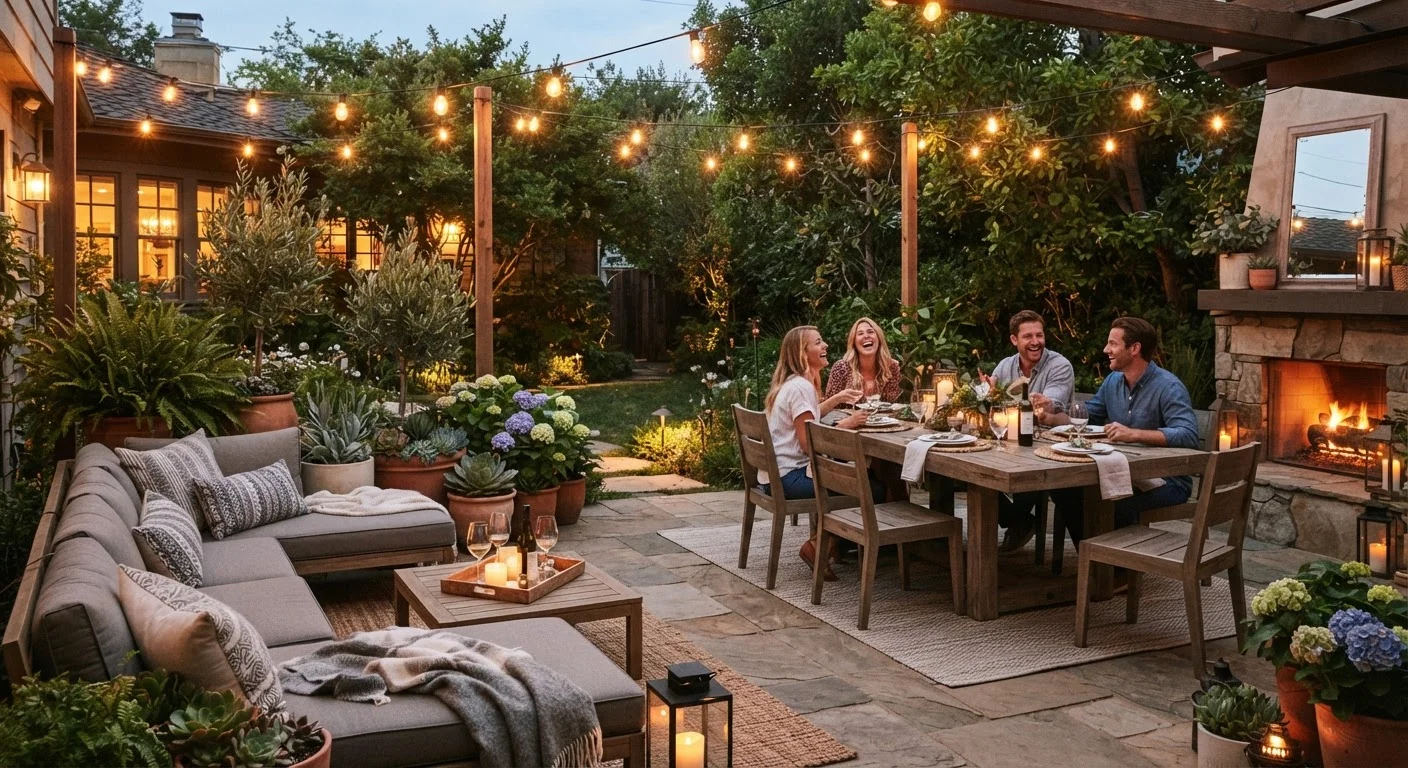
Why Most Outdoor Setups Fall Short
Most backyards have the raw ingredients for great outdoor entertaining - space, fresh air, and some form of seating - but the execution lets them down. Chairs placed too far apart discourage conversation. A grill positioned far from the table creates a host who disappears for twenty minutes. String lights hung too high cast romantic shadows on the deck but leave the food table in darkness.
The difference between a backyard people actually want to gather in and one that stays empty isn't budget - it's intentional layout. Whether you're working with a narrow concrete slab or a generous suburban lawn, the same core principles apply: define zones, manage comfort, and plan for real use rather than the idealized version. If your space is on the compact side, the design principles for small outdoor spaces are worth reviewing before you start rearranging furniture.
Below are seven practical setups and strategies that work in actual yards - not showroom displays.
Anchor the space with a defined seating zone
The most common layout mistake is spreading furniture across too large an area. Conversation dies when chairs are more than about eight feet apart. Instead, define a primary seating zone - typically 10-14 feet across - using an outdoor rug, a fire pit, or a low table as the anchor point. Arrange seating inward, facing the center.
On a patio, the hardscape itself defines the zone naturally. On grass or gravel, a large outdoor rug does the same job while also making the space feel more finished. Keep furniture pulled in from the edges rather than pushed against walls or fences, which tends to feel awkward and uninviting.
Pull furniture inward toward a central anchor - don't line it against the walls.
Separate dining and lounging into two distinct areas
Trying to make one seating arrangement do everything - dining, drinks, conversation - usually means it does none of them well. Where space allows, designate a dining area with a proper table and chairs, and a separate lounge zone with deeper, softer seating. Even a modest yard can support both if the dining area is kept tight (a 36-inch round table seats four comfortably).
The two zones should be close enough that people drift naturally between them but distinct enough that guests know where to sit for a meal versus where to settle in for conversation afterward. A slight change in surface - from wood decking to a gravel pad, or from concrete to turf - reinforces the distinction without fencing anything off.
Two distinct zones - dining and lounging - make a party flow naturally.
Position the grill for host visibility, not just convenience
Grills often end up pushed to a far corner for smoke or safety reasons, but that isolates the cook. Aim for a position that keeps the person cooking within easy conversation distance of both the dining table and the lounge area - roughly within 10-15 feet of each.
Leave at least three feet of clearance on all sides of the grill for safe operation, and make sure the prevailing wind direction isn't blowing smoke directly toward seating. A small prep cart or side table adjacent to the grill reduces trips indoors and keeps the cooking zone self-contained. If you're considering something more permanent, read up on the real pros and cons of outdoor kitchens before committing.
A well-placed grill keeps the cook in the conversation, not isolated in a corner.
Solve shade before you solve anything else
No amount of beautiful furniture or lighting overcomes a space that's unpleasantly hot at 5 p.m. Before choosing décor, track where direct afternoon sun falls in your yard and plan shade accordingly. Options range from market umbrellas (flexible, no installation) to sail shades (good for large areas) to permanent pergolas (most effective, requires planning).
Pergolas in particular offer shade, structure, and a place to hang lighting, but they may require permits depending on your municipality and how they're attached to the house. Our complete pergola planning guide covers footings, sizing, and local code considerations in detail. For a simpler solution, a 10-by-10-foot cantilever umbrella can shade a dining table for four without any installation at all.
Solve afternoon shade first - no furniture arrangement compensates for an unbearable sun angle.
Layer lighting for function and atmosphere
Outdoor lighting does two jobs: it makes the space safe and usable after dark, and it sets the mood. Both require different light sources at different heights. Task lighting - over the grill, above the dining table, along steps - needs to be bright and directed. Ambient lighting - string lights, lanterns, low path lights - should be warm and diffuse.
The good news is that neither requires running new electrical lines. Solar and battery-powered options have improved significantly and can handle most backyard needs. For a practical approach to layering these sources without any wiring, see our outdoor lighting on a budget guide. The key rule: never rely on a single overhead light source - it flattens the space and kills the atmosphere.
Layer task and ambient light at multiple heights - one overhead source is never enough.
Add privacy and wind protection strategically
An exposed backyard - visible to neighbors or open to wind - is harder to relax in, regardless of how well it's furnished. Privacy screening doesn't have to mean a full fence rebuild. Tall potted plants, slatted panels, bamboo screens, or outdoor curtains hung from a pergola can all create enclosure on a budget and without permits in most cases.
Wind is a trickier problem. Solid walls actually create turbulence on the lee side; semi-permeable barriers like slatted fencing or dense hedges reduce wind speed more effectively. For a detailed comparison of screening options - including plants, panels, and curtains - our privacy screening guide weighs the trade-offs honestly.
Semi-permeable screens reduce wind more effectively than solid walls - and often cost less.
Build in storage so setup and cleanup take minutes
The biggest friction point in outdoor entertaining isn't setup day - it's every casual evening when you consider going outside but don't, because dragging out cushions and lighting feels like too much work. Weatherproof storage built into the layout removes that barrier.
Deck boxes that double as extra seating, wall-mounted hooks for string lights, a small shelving unit in a covered area for tableware - each of these cuts setup time from twenty minutes to two. Keep frequently used items (citronella candles, a lighter, a few extra cups) stored outside in a waterproof container so the transition from indoors to outdoors requires almost no effort. The easier it is to use the space, the more often you actually will.
Outdoor storage built into the layout means the difference between a space you use and one you don't.
Putting It All Together
A well-functioning outdoor entertaining space rarely comes together in one weekend. Most homeowners get there incrementally - starting with seating, adding a shade solution, then layering in lighting and screening as needs become clear. That approach is smart: it lets you see how you actually use the space before committing to anything permanent.
For cooking zones, be honest about scale before investing. Our guide on outdoor kitchens walks through both the advantages and the real complications - from weather exposure to utility connections - so you can right-size your investment. And if you're planning any permanent structures like pergolas or shade sails attached to the house, check local permit requirements first; our pergola planning guide covers what to expect.
Lighting often has the single biggest impact per dollar spent. Done well, it extends usable hours and sets the mood without a single wire run underground - see our budget lighting guide for a layered approach using solar, battery, and low-voltage options.
Test your layout before committing
Before investing in furniture or permanent features, spend a few evenings outside with folding chairs arranged in different configurations. Note where the sun hits, which direction the wind comes from, and where you naturally walk between the grill and the table. Real use patterns almost always differ from what looks good on paper - and they're far more useful as a design guide.
The content on this site is for informational purposes only and is not a substitute for professional advice. Always consult a qualified professional for guidance specific to your situation.