

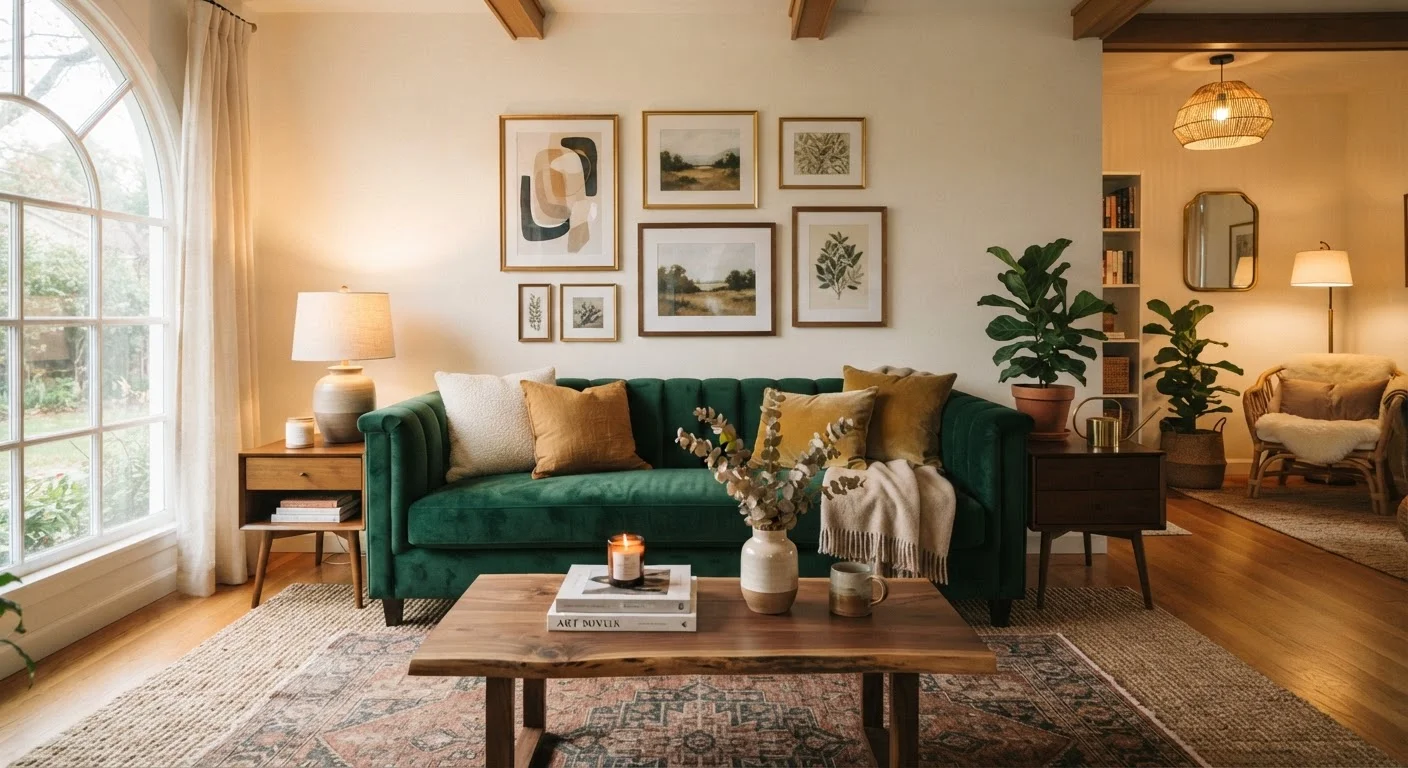
Why One Hero Piece Changes Everything
Designing a room from scratch - or refreshing one that never quite clicked - can feel overwhelming when you treat every piece as equal. The hero-piece approach flips that logic entirely. Instead of assembling furniture and hoping it coheres, you start with one extraordinary anchor and let every other decision radiate outward from there.
This method works because it gives your eye a clear destination the moment you walk into a room. Interior design professionals refer to this as creating a room focal point - a visual anchor that provides order and intention. When one piece carries the room's personality, supporting elements don't need to work as hard, which is excellent news for budget-conscious decorators. You can invest meaningfully in a single standout item and be more economical with everything else.
If you're newer to room styling, our guide to styling a room from scratch covers the foundational principles that pair perfectly with this approach.
Extract Your Palette From the Hero Piece
Treat your hero piece like a paint chip. Pull two to three colors directly from its fabric, finish, or pattern and repeat them across pillows, artwork, and accent objects. This method creates effortless cohesion throughout the room. For more on this technique, see pulling a palette from a patterned piece you already own.
What You'll Need Before You Begin
Getting the most from these steps means a little preparation up front. Gather the essentials below, then move through the steps in order - each one builds logically on the last.
What you will need
Measuring tape
Accurately measure the room and hero piece to check scale and plan furniture placement.
Graph paper or free floor-plan app
Sketch the room layout to experiment with furniture arrangement before moving anything.
Color swatches or paint chips
Match accent colors to the tones already present in your hero piece.
Painter's tape
Mark out furniture footprints on the floor to visualize scale without heavy lifting.
Working in a smaller space? Many of these principles adapt well - our small room styling strategies article covers how to make a statement piece work even in compact square footage.
Don't Skip the Scale Check
Before committing to a hero piece, measure your room carefully and sketch a rough floor plan. A sofa or armoire that dominates a small space visually can make the room feel oppressive rather than curated. Proportion is the single most common mistake in hero-piece styling - a piece that's 60-70% of a wall's width is generally a safe upper limit for large anchor furniture.
Step-by-Step: Building Your Room Around the Hero
Follow these steps in sequence. Each stage locks in a decision that makes the next one easier - resist the urge to jump ahead to accessories before placement and palette are settled.
Identify what makes your hero piece special
Before anything else, get crystal clear on why your chosen piece commands attention. Is it an unusual silhouette - a curved sectional or an arched bookcase? A saturated color against a neutral room? A richly grained wood finish? Naming the quality that makes it stand out tells you which design decisions to amplify and which to keep quiet. A piece that earns its title through bold color, for example, needs calm neighbors - busy patterns elsewhere will fight it for attention.
Establish the hero piece's position first
Place the anchor furniture before anything else moves into the room. In a living room, that usually means the sofa or an oversized accent chair faces the room's natural focal point - a fireplace, a picture window, or a feature wall. In a bedroom, the bed (or a dramatic headboard) typically centers on the longest uninterrupted wall. Getting placement right early prevents a cascade of awkward adjustments later. Check out furniture arrangement strategies that change a room for the spatial principles behind smart positioning.
Build your color palette outward from the piece
Scan your hero piece for its dominant color, one or two secondary tones, and any accent hues hiding in texture or pattern. These become your room's palette. Walls, rugs, curtains, and throw pillows should echo - not duplicate - these colors. Repeating a color at least three times throughout a room creates a sense of intention. If your hero sofa is a warm terracotta, pull that into a rust-hued throw, terracotta candle holders, and a warm-toned rug border.
Select supporting furniture that plays a supporting role
Every other piece of furniture in the room is a supporting actor. Choose items in finishes, scales, and profiles that complement rather than compete. If your hero piece is ornate - carved wood legs, tufted upholstery - keep supporting pieces simpler in silhouette. If it's minimal and sculptural, you can introduce a little softness elsewhere through rounded shapes or woven textures. Aim for contrast in scale: pair a large hero piece with one or two smaller accent pieces, not several mid-size items that create visual noise.
Anchor the arrangement with a well-scaled rug
A rug is the connective tissue that unifies the hero piece with the rest of the seating or sleeping arrangement. Size matters more than most people expect - a rug that's too small makes even a gorgeous sofa look adrift. As a general guideline, all front legs of seating furniture should sit on the rug in a living room setting. For bedroom arrangements, the rug should extend at least 18-24 inches beyond both sides of the bed. Learn more about getting this right with our guide on anchoring a room with rugs.
Layer lighting and accessories last
Lighting shapes how your hero piece reads in the room - uplighting a sculptural chair or directing a picture light toward a statement armoire adds drama without cost. Once lighting is sorted, add accessories in odd-numbered groupings, varying height and material. Keep the area immediately surrounding the hero piece relatively clear so sightlines remain unobstructed. Step back from the doorway and assess: the hero piece should be the first thing your eye lands on.
Avoid Overcrowding Around Your Statement Piece
It's tempting to pile on accessories once you have a hero piece you love, but visual noise undercuts the impact. Give your anchor furniture breathing room - clear sightlines from the room's entrance make the piece feel deliberate and powerful. When in doubt, remove one item rather than adding another.
Once you've completed the process, revisit the room after living in it for a week. Fresh eyes often reveal one or two items that can be edited out, sharpening the hero piece's impact even further. For additional inspiration on budget-friendly transformations, explore our room makeovers hub.
The content on this site is for informational purposes only and is not a substitute for professional advice. Always consult a qualified professional for guidance specific to your situation.