

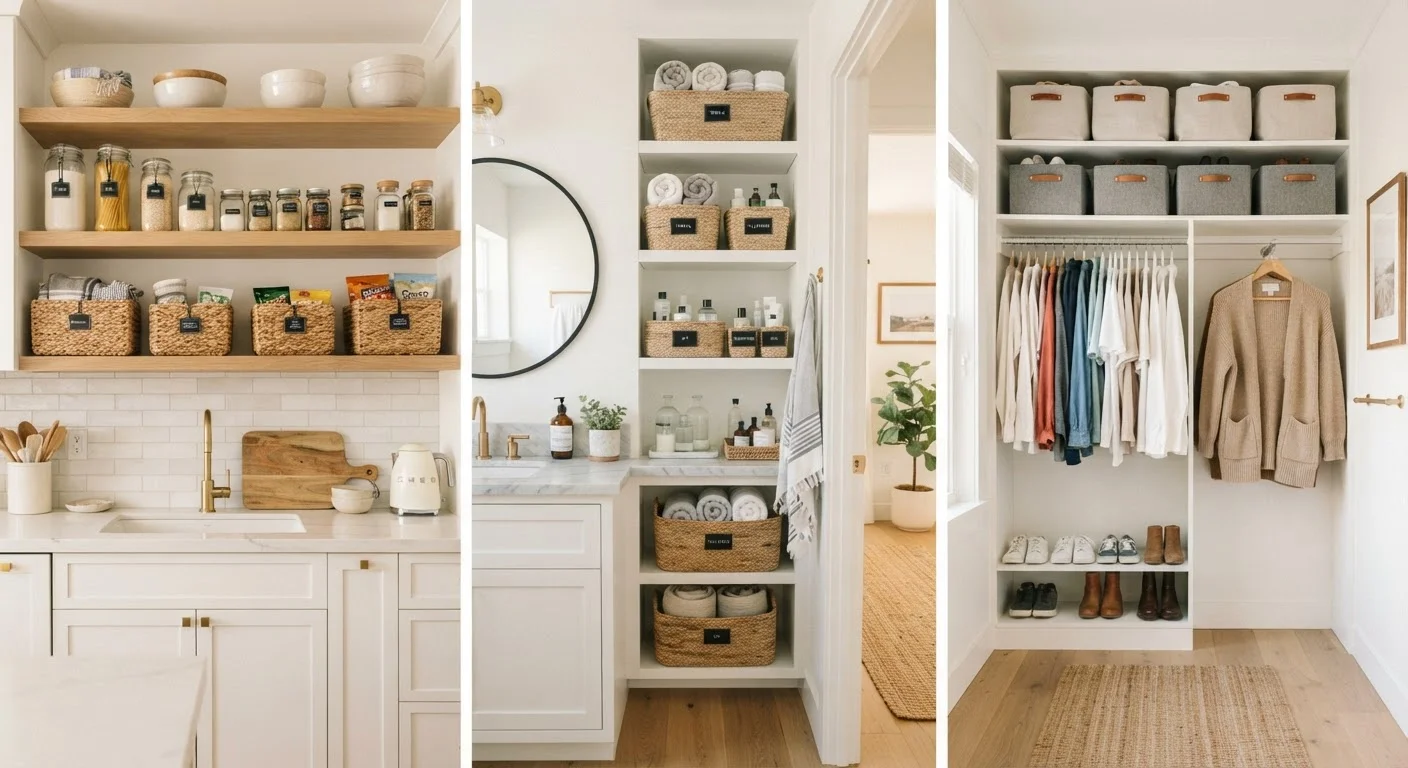
Why a Room-by-Room Framework Works
Whole-home organization projects fail most often because they treat every space identically. A bedroom closet, a kitchen pantry, and a garage workbench each have entirely different storage demands-items vary in size, frequency of use, and the number of people accessing them. A framework that addresses each room individually produces solutions that actually fit how you live.
This guide walks through every major zone in a home, identifies the most common storage failures in each, and offers concrete, affordable strategies to fix them. Whether you're tackling one room this weekend or planning a phased overhaul across several months, use this as your reference throughout the process.
Before diving into specific rooms, it's worth pairing this guide with a thorough declutter pass. The household declutter audit is an effective companion-it helps you determine what actually earns space before you design a system around it.
Step One: Audit Before You Organize
Resist the urge to buy bins and baskets before you understand what you're storing. An audit identifies three things: what you own, where it currently lives, and whether that location makes sense for how often you use it.
Walk through each room and categorize items by use frequency-daily, weekly, seasonal, or rarely. Items used daily should be at arm's reach; seasonal items belong in higher or deeper storage. This simple sorting exercise prevents the most common mistake: storing frequently used items behind rarely touched ones.
Before purchasing any storage product, measure the exact dimensions of the space it will occupy-height, width, and depth-and bring those numbers with you. Most storage problems worsen when items don't fit the space they were bought for.
Ill-fitting bins and shelves are the single most common reason a storage system fails within months of implementation, according to professional organizers.
When in doubt, start with categories rather than containers. Group like items together first, count what you have, then determine what kind of storage would hold that specific volume-rather than buying containers and forcing items to fit.
Organizing by category before selecting containers prevents over-purchasing and ensures the final system reflects actual storage needs rather than aspirational ones.
Also note where clutter consistently reappears. Recurring pile-up zones usually signal a missing storage system, not a character flaw. If keys and mail always land on the kitchen counter, the entryway likely lacks a functional drop zone-the solution is structural, not motivational.
Kitchen Storage: Counters, Cabinets, and Pantry
The kitchen is the most storage-complex room in most homes because it combines food, cookware, small appliances, cleaning supplies, and paperwork in one space. The guiding principle is zone-based storage: items live where they're used. Coffee supplies stay near the coffee maker; baking tools stay near the oven.
Countertops should hold only daily-use appliances. Everything else is better stored vertically-pull-out cabinet organizers, door-mounted racks, and under-shelf baskets dramatically expand usable cabinet space without renovation. Inside deep cabinets, turntables (sometimes called lazy Susans) reduce the dead space at the back.
For a thorough breakdown of every kitchen storage zone, the kitchen storage primer covers countertops, drawers, and pantry organization in detail. Pantry shelves work best when grouped by category-grains, canned goods, snacks-with the tallest items at the back and frequently grabbed items at eye level.
If you're handy with basic tools, custom pull-out shelves or a pegboard-mounted pot rack are achievable weekend projects. See DIY organizer ideas for material and joinery guidance.
Bathroom and Bedroom Organization
Bathrooms are typically small and moisture-prone, which limits material options. Open wire shelving promotes airflow and resists mildew better than solid-back particleboard units. Vertical space above the toilet and on door backs is consistently underutilized-both are viable locations for narrow shelving or over-door organizers.
Inside vanity cabinets, drawer dividers and stackable bins prevent the common jumble of products. Group items by routine: morning skincare together, first-aid supplies together. Anything expired or unused should exit the room entirely before new storage is introduced.
In bedrooms, the closet is the primary challenge. A single hanging rod is rarely the most efficient layout-most wardrobes contain far more folded items and short-hanging garments than floor-length pieces. Adding a second rod at mid-height roughly doubles hanging capacity at minimal cost. Under-bed storage works well for seasonal clothing and extra bedding, but only when accessed via flat pull-out bins rather than loose items shoved directly beneath the frame.
Dressers benefit from drawer inserts that segment socks, undergarments, and accessories. Folding clothes vertically (so items are visible front-to-back rather than stacked) makes every item accessible without disturbing the rest.
Living Areas, Garage, and Utility Spaces
Living rooms accumulate remotes, chargers, books, games, and hobby supplies-a wide mix that requires flexible storage. Media consoles and ottomans with interior storage handle bulky items; small trays or decorative boxes on shelves corral the miscellaneous. The key is establishing a clear home for every category so items can be returned quickly after use.
In smaller living areas, storage that doubles as furniture-benches with lids, nesting tables, shelving units-provides function without shrinking the room. For styling these spaces in a way that feels intentional rather than cluttered, the small-room styling strategies offers practical layout and visual techniques.
Garages and utility rooms demand heavy-duty solutions: wall-mounted pegboards for hand tools, labeled bins on freestanding shelving for hardware and seasonal gear, and ceiling-mounted platforms for rarely accessed items like camping equipment. Keep a clear floor zone-floor clutter in garages creates both safety hazards and difficulty finding items quickly.
Utility rooms housing laundry equipment benefit from wall-mounted drying racks, cabinet space for detergent and supplies, and a sorting system (hampers or labeled baskets) that separates loads before wash day rather than on it.
Maintaining the System Long-Term
The most thoughtfully designed storage system erodes without habits to support it. The most effective maintenance habit is the one-in, one-out rule: when a new item enters a category, an old one exits. This prevents gradual accumulation from overwhelming a fixed storage capacity.
Schedule brief resets-15 minutes per room, monthly-to return items to their designated spots and catch any category creep before it compounds. Seasonal transitions (spring and fall) are natural checkpoints for rotating clothing storage, reassessing pantry inventory, and reorganizing garage zones around current activities.
Labels are a low-effort, high-return investment. They reduce the cognitive load of remembering where things belong and make the system usable by every member of the household, not just the person who built it.
For a broader look at how storage improvements connect to room-wide style and function, explore the room styling hub and the room makeover strategies for affordable transformation approaches that extend beyond organization alone.
This article provides general home organization guidance for informational purposes. Results will vary based on individual home layout, budget, and household needs. For structural modifications or built-in storage installations, consult a qualified contractor and verify any applicable local building codes.
The content on this site is for informational purposes only and is not a substitute for professional advice. Always consult a qualified professional for guidance specific to your situation.