

Why Specs Matter More Than Price
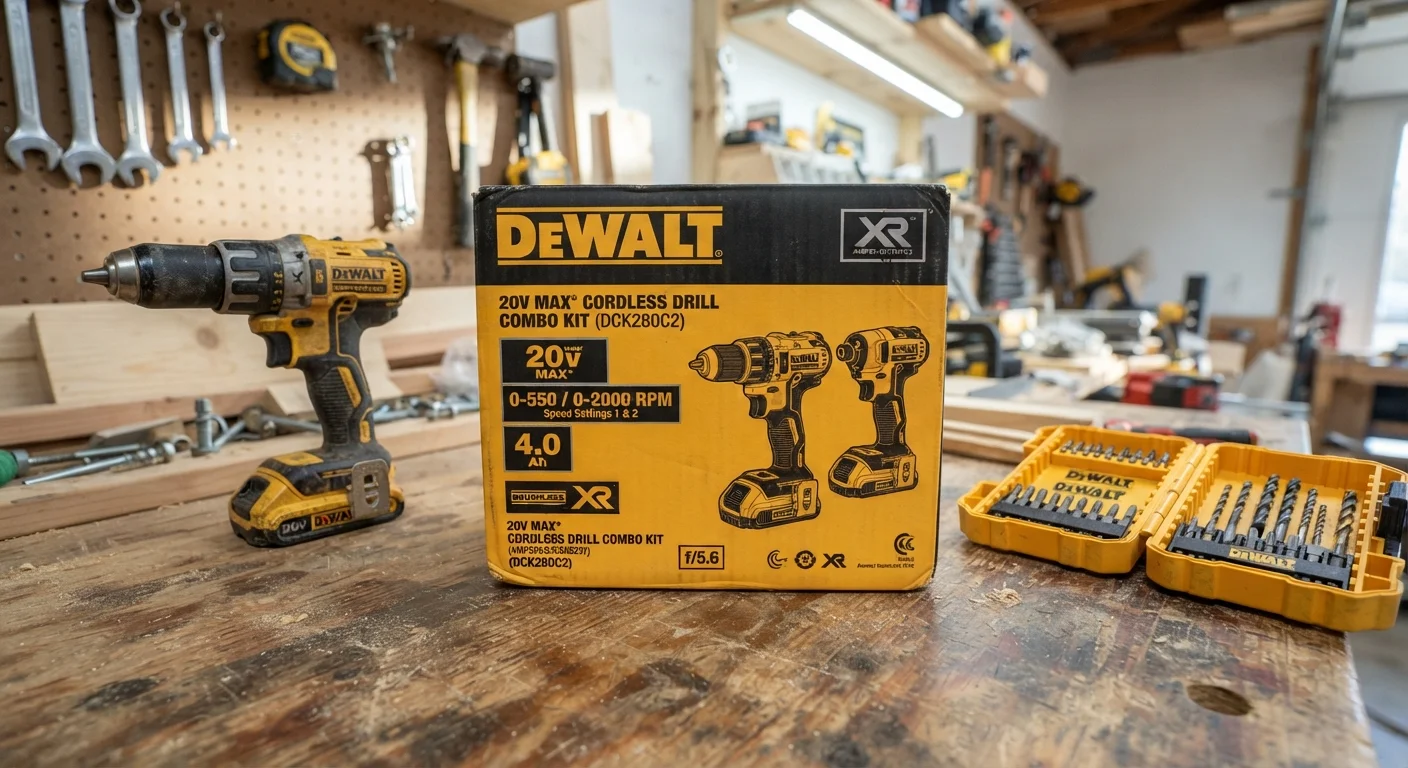
Walk down any hardware store aisle and you'll face a wall of boxed tool kits, each plastered with numbers: 20V MAX, 1,500 RPM, 1/2" chuck. These aren't marketing noise - they're measurable performance indicators that tell you whether a tool can handle your actual projects. Ignoring them in favor of price alone is the number-one way beginners end up with a drill that bogs out halfway through a 2×4.
Before diving into the numbers, it helps to understand the two broad categories you'll encounter: corded tools draw power from an outlet and are rated in amps, while cordless tools run on battery packs and are rated in volts. Each spec system has different implications. If you want a deeper orientation on how these tool types compare, see hand tools vs. power tools trade-offs before you shop.
Voltage (V)
The electrical potential of a battery pack, indicating how much energy it can deliver. Higher voltage typically supports more demanding tasks but also adds weight and cost.
Amperage (A)
The measure of electrical current a corded tool draws during operation. Higher amperage generally means a motor capable of sustaining more power under heavy loads.
No-Load Speed (RPM)
How fast a tool's motor spins when running freely without any material resistance. Real-world speed under load is always lower.
Chuck Capacity
The maximum diameter of drill bit shank the drill's clamping mechanism can hold. Common sizes are 3/8" and 1/2" for home use.
Torque
Rotational force, measured in inch-pounds (in-lbs) or newton-meters (Nm). It determines how effectively a drill can drive fasteners or bore holes into resistant materials.
Clutch
An adjustable mechanism on a drill-driver that limits torque output. Setting the clutch correctly prevents over-driving screws and stripping material.
Variable Speed Trigger
A trigger that allows the user to control tool speed by varying finger pressure. Useful for starting cuts or drives slowly before increasing speed.
Battery Platform
A family of tools from a single lineup that share compatible battery packs, allowing one battery to power multiple tools.
Decoding the Key Numbers on the Label
Here's what each spec actually measures - and what it means for everyday home projects.
Voltage (V or V MAX)
Voltage on a cordless tool indicates the battery pack's maximum electrical potential. Higher voltage generally supports more demanding tasks - driving large fasteners, boring through hardwood, cutting dense material. For most beginner home projects (assembling furniture, hanging shelves, light framing), an 18V-20V drill-driver is more than adequate. Going higher adds weight without much practical gain for light-duty work.
Amperage (A)
On corded tools, amperage measures current draw - essentially how hard the motor works under load. A 6-amp circular saw will labor through thick lumber; a 15-amp model will cut it with ease. More amps generally means more sustained power, but it also means a heavier, pricier tool. Match the amps to your workload, not just your ambitions.
No-Load Speed (RPM)
No-load speed is how fast the tool spins with nothing attached - measured in rotations per minute (RPM). It sounds impressive on paper, but it's not the whole story: a tool spinning at 3,000 RPM under no load may slow significantly once it contacts material. Variable-speed tools (those with a trigger that controls speed) are far more useful for beginners than single-speed models, since you can start slow and build confidence.
Chuck Capacity
The chuck is the clamp at the front of a drill that holds bits. Chuck capacity tells you the largest bit shank it can accept. A 3/8" chuck handles most household drilling; a 1/2" chuck accommodates larger bits for tougher jobs. Keyless chucks - tightened by hand - are quicker and practical for most DIY use.
Torque (in-lbs or Nm)
Torque is rotational force - what actually drives a screw or bores a hole against resistance. It's measured in inch-pounds (in-lbs) or newton-meters (Nm). For a drill-driver, look for adjustable torque settings (called a clutch). This lets you dial down force to avoid stripping screws in soft materials, and dial up for tougher tasks. A wide clutch range is more useful than a single high-torque number.
For a broader overview of how these tools work mechanically, Power Tools Demystified is a solid starting point before you buy.
Common Beginner Mistakes When Reading Specs
Even after learning what specs mean, a few traps catch beginners off guard:
- Assuming higher voltage always means better: A heavy 40V tool is overkill for hanging pictures and adds fatigue. Power tool myths covers this and similar misconceptions in detail.
- Ignoring battery compatibility: Many tool kits use a shared battery platform. Check whether the batteries in a kit are interchangeable across other tools in the same lineup - this saves money long-term.
- Overlooking weight: Specs rarely list tool weight prominently, but a heavy drill becomes exhausting quickly. If possible, handle the tool before purchasing.
- Confusing "MAX" voltage with actual working voltage: "20V MAX" refers to peak battery voltage; actual operating voltage is typically lower. This labeling is industry-standard, not misleading - but it means two tools both labeled 20V MAX can differ in real-world output based on motor design and battery quality.
Rounding out your setup? hand tools every first-time DIYer actually needs explains what to add once you have power tools covered.
The content on this site is for informational purposes only and is not a substitute for professional advice. Always consult a qualified professional for guidance specific to your situation.