

Why Floor Repair Myths Are So Persistent
Floor repair advice travels fast - through online forums, well-meaning neighbors, and decades-old handyman guides. The problem is that flooring materials have changed significantly, and what worked on a 1970s oak floor can actively harm today's engineered planks or vinyl tile. Myths persist because they often contain a grain of truth, or because the damage they cause is slow and not immediately obvious.
Understanding what's fact and what's fiction can protect your floors, your weekend, and your wallet. The myth-and-fact pairs below cover the most common misconceptions across wood, tile, vinyl, and laminate - the floor types most US homeowners deal with. For a broader foundation, see our complete flooring repair overview.
Myth
Vinegar is a safe, natural cleaner for all hard floors.
Fact
Vinegar's acidity can strip or dull the finish on hardwood, laminate, and tile grout over time.
Diluted white vinegar has a pH around 2.5-3, which is acidic enough to degrade polyurethane and aluminum oxide finishes with repeated use. On tile, it etches grout and can pit natural stone like marble or travertine. The floors that tolerate it best are sealed, glazed porcelain - and even then, grout joints remain vulnerable. Most flooring manufacturers explicitly recommend against vinegar, and using it voids warranties on many finished products. A pH-neutral floor cleaner formulated for your specific surface type is the safer choice for routine cleaning.
Myth
You can sand engineered hardwood floors as many times as solid hardwood.
Fact
Engineered wood has a thin veneer layer - often just 1-6 mm - that limits sanding to one or two passes at most.
Solid hardwood floors typically allow multiple sandings over decades because the solid wood plank runs the full thickness. Engineered wood, by contrast, is a composite: a real wood veneer bonded over plywood or high-density fiberboard. The veneer is thin by design. Sand too aggressively or too often and you'll cut through to the core layer beneath, at which point the board must be replaced rather than refinished. Before attempting any sanding, check the manufacturer's specifications for your floor's wear layer thickness. Our guide on sanding and refinishing hardwood covers what DIYers most often underestimate in this process.
Myth
A squeaky floor always means serious structural damage underneath.
Fact
Most squeaks are caused by minor friction between boards, fasteners, or subfloor layers - not structural failure.
Squeaks develop when two surfaces rub against each other as weight shifts across the floor. Common culprits include loose nails that have pulled slightly from joists, boards that have dried and shrunk leaving gaps, or subfloor panels that weren't glued and have begun to flex. In the vast majority of cases, these are cosmetic or minor mechanical issues. Structural concerns - like a sagging joist or rotted subfloor - typically come with visible deflection, soft spots underfoot, or other physical signs beyond noise alone. A squeak on its own warrants investigation, but it's rarely cause for alarm without additional symptoms.
Myth
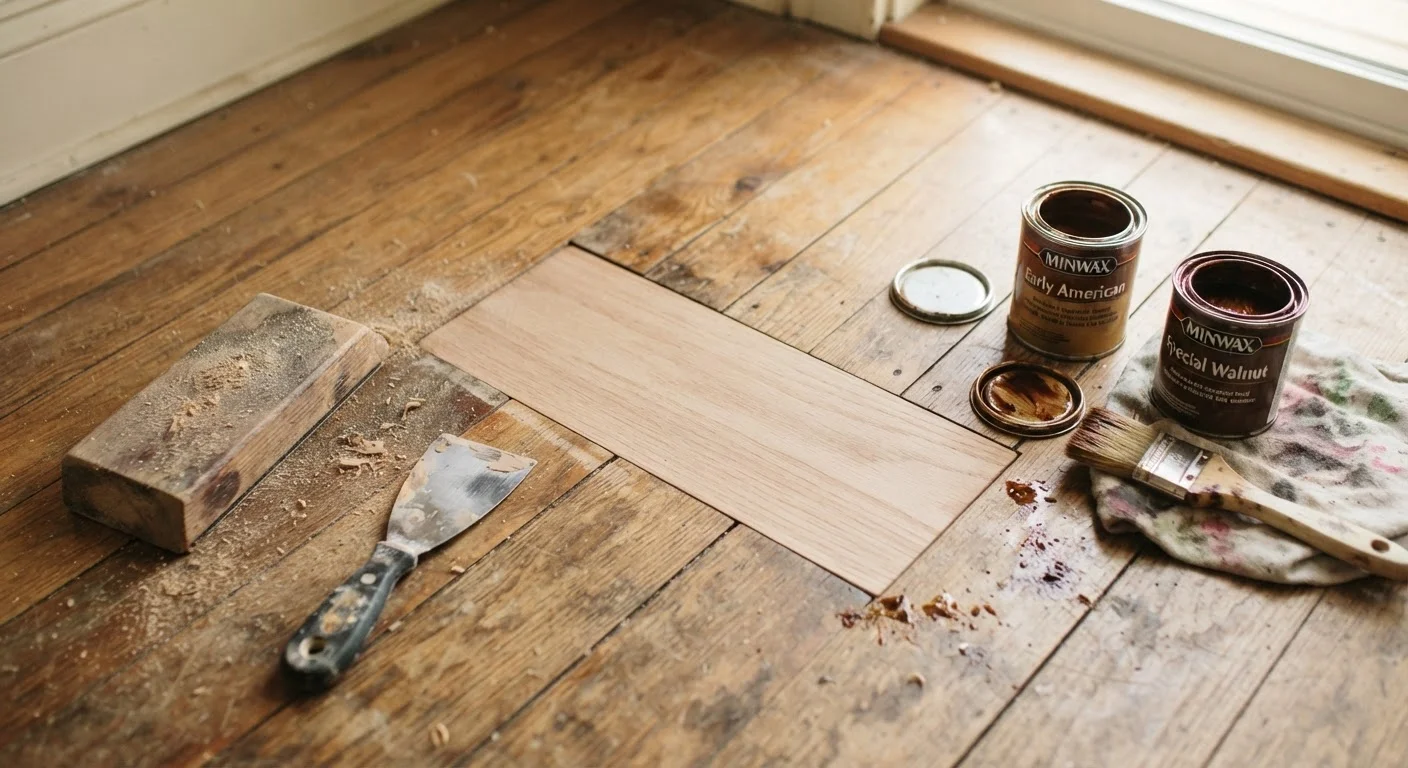
A patched floor section will blend in seamlessly with the rest of the floor.
Fact
Achieving an invisible repair is genuinely difficult - stain color, finish sheen, and years of wear all affect how a patch reads visually.
Even when you match the species, stain, and finish perfectly on paper, a new repair sits against aged, UV-exposed boards that have shifted in tone. Finish sheen fades and flattens over time, so a freshly applied coat will typically look slightly different until it weathers in. This isn't a reason to skip repairs, but it is a reason to set realistic expectations. Strategic placement - keeping patched areas under furniture or rugs during initial aging - can help. Our article on color matching, sheen, and ageing walks through practical techniques for minimizing the visual gap.
Myth
Laminate floors can be refinished just like hardwood when they look worn.
Fact
Laminate flooring cannot be sanded or refinished - the surface is a photographic layer under a clear wear coat, not real wood.
Laminate looks like wood, but its top surface is a printed image protected by a transparent aluminum oxide coating. There is no stainable wood fiber beneath the wear layer. Sanding will destroy the printed surface immediately, leaving a blotchy, unusable plank. When laminate wears through or is deeply scratched, the solution is plank replacement, not refinishing. This is one reason smart material sourcing matters at installation time - keeping a few spare planks from the original lot makes future replacements much easier to match.
Myth
You can fix a water-damaged floor by simply drying the surface and refinishing.
Fact
Water damage often penetrates to the subfloor, adhesive layer, or structural components - surface treatment alone rarely resolves it.
When water sits on or under a floor, the damage travels by capillary action into every porous layer it contacts. Solid wood swells and can cup or crown. Engineered wood delaminated at the glue line. Subfloor panels absorb moisture and begin to soften or grow mold. Refinishing or patching the top surface without confirming that the underlying layers are dry and structurally sound is one of the most common and costly floor repair mistakes. A moisture meter is a useful tool for assessing whether drying is genuinely complete before any repair work begins.
[important_callout]Where These Myths Lead Homeowners Astray
The real cost of floor repair myths isn't just financial - it's the compounding effect of a small mistake becoming a large problem. Using the wrong cleaner repeatedly can break down a finish that took years to develop. Sanding engineered wood past its wear layer means replacement, not repair. Ignoring a subfloor issue while patching the surface floor creates a cycle of recurring damage.
Don't Let Small Myths Create Big Repair Bills
Many of the most expensive floor repairs start with a well-intentioned but incorrect fix applied repeatedly over time - the wrong cleaner degrading a finish, or a surface patch hiding an unresolved moisture problem. If a repair doesn't hold, or if symptoms return quickly after a fix, treat that as a signal to investigate the root cause rather than reapply the same solution.
If you're uncertain whether your issue lives in the surface floor or the layer below it, our guide on subfloor versus surface floor explains how the two interact and which type of repair each problem calls for. Likewise, gap filler selection is a common stumbling block - different materials behave very differently on flooring, as covered in our breakdown of wood filler, epoxy, and wax sticks.
The good news: catching and correcting these myths early keeps most repairs firmly in DIY territory. Acting on bad information is what tends to push projects into professional-cost territory. For a broader look at how DIY assumptions can mislead, see other common DIY decor myths worth questioning.
This article is for general informational purposes only. Flooring materials, local building codes, and moisture or structural conditions vary widely. Always verify the specific requirements of your floor type and consult a qualified professional when damage is extensive or the cause is unclear.
The content on this site is for informational purposes only and is not a substitute for professional advice. Always consult a qualified professional for guidance specific to your situation.