

Our Verdict
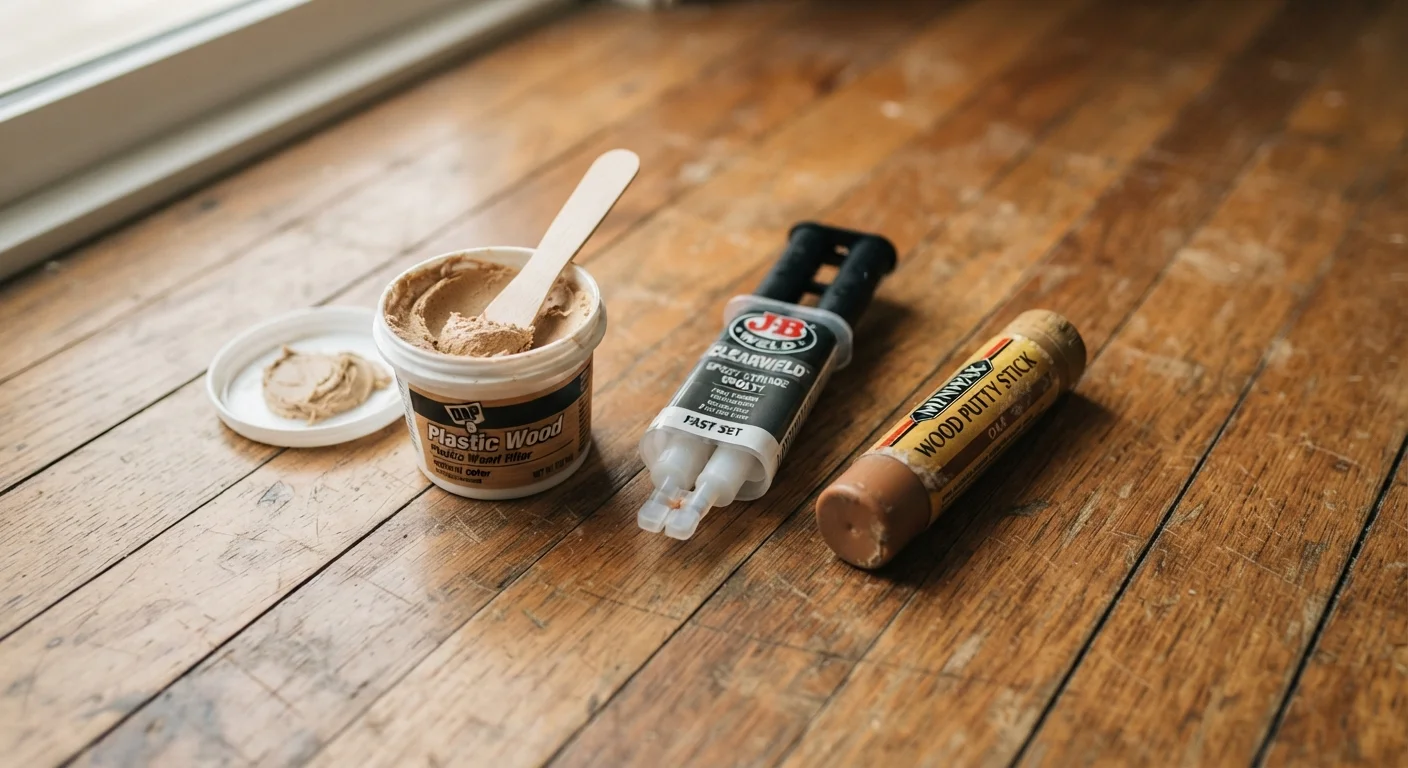
Each filler has a clear role: wax sticks for quick, flexible cosmetic touch-ups; wood filler for moderate gaps in stable solid hardwood; and epoxy for deep, structural, or high-stress repairs. Choosing the wrong one often leads to cracking, poor adhesion, or finish incompatibility - problems that can be worse than the original gap.
| Best for | Recommended |
|---|---|
| Quick cosmetic touch-ups on finished floors | Wax Sticks |
| Moderate gaps in stable solid hardwood | Wood Filler |
| Deep gouges, rot pockets, or high-traffic areas | Epoxy |
| Floors with seasonal movement or engineered wood | Wax Sticks |
Why the Wrong Filler Makes Things Worse
Gap fillers are not interchangeable. A product that performs flawlessly in one situation can crack, discolor, or pop out entirely in another. The three most common DIY options - wood filler, two-part epoxy, and wax sticks - differ fundamentally in flexibility, adhesion, finish compatibility, and workability. Understanding those differences before you buy is the single most effective way to avoid re-doing the job.
For a broader look at diagnosing what your floor actually needs before reaching for any filler, see our complete flooring repair overview. And if you've landed here after reading about common floor repair myths, this comparison gives you the practical detail to act correctly.
Wood Filler: Reliable but Rigid
Wood filler - sometimes called wood putty in its non-hardening form - is a latex- or solvent-based compound that dries solid. It sands, stains, and accepts polyurethane finishes reasonably well, which makes it a natural choice for gaps and gouges in solid hardwood floors that will be refinished afterward.
Where it works well: Stationary gaps between boards, nail holes, and shallow gouges in solid hardwood that won't move much seasonally. Because it cures hard, it can be sanded flush and finished like bare wood.
Its critical limitation: Wood filler has almost no flexibility. Wood floors expand and contract with humidity changes throughout the year. In gaps that open and close even slightly, a rigid filler will crack and eventually fall out. Avoid it in wide seasonal gaps, engineered wood floors with significant movement, and any area near exterior walls where moisture fluctuation is pronounced.
For a hands-on walkthrough of applying filler to hardwood specifically, our hardwood patching guide covers the technique in detail.
| Wood Filler | Epoxy | Wax Sticks | |
|---|---|---|---|
| Best gap depth | Shallow to moderate | Deep voids | Shallow / surface only |
| Flexibility after cure | Rigid | Very rigid | Semi-flexible |
| Sandable | Yes | Yes | No |
| Accepts stain / finish | Yes (latex types vary) | Yes (with prep) | No |
| Suitable for seasonal movement | Poor | Poor | Good |
| Skill level required | Beginner | Intermediate | Beginner |
| Typical cost per repair | Low | Moderate to high | Low |
| Works on engineered / laminate | Limited | Limited | Yes |
Epoxy: The Heavy-Duty Option
Two-part epoxy fillers consist of a resin and a hardener that are mixed immediately before application. Once cured, epoxy is extremely hard, bonds tenaciously to wood, and resists moisture better than any latex filler. It's the right choice for deep gouges, areas where the wood fiber itself is compromised, or repairs near water sources like entryways and kitchens.
Where it works well: Deep voids, rot pockets that have been treated and dried, and high-traffic spots where a softer filler would compress or wear away quickly. Epoxy can be tinted with pigment powders to approximate wood color before application.
Its critical limitations: Epoxy is non-flexible once cured - even more rigid than standard wood filler - so it shares the same seasonal movement problem. It also sets quickly, requiring confident, practiced application. Uncured epoxy requires careful ventilation and skin protection; always follow the manufacturer's safety instructions. Finally, epoxy is typically more expensive per repair than the other two options.
Epoxy Requires Ventilation and Skin Protection
Uncured two-part epoxy releases vapors that can cause respiratory irritation and skin sensitization. Always work in a well-ventilated space, wear nitrile gloves, and keep the product away from open flames. Read the full safety data sheet for the specific product before you begin - curing times and hazard profiles vary between formulations.
Wax Sticks: Fast, Flexible, and Finish-Friendly
Wax-based filler sticks - sometimes called burn-in sticks or floor repair crayons - work by softening with friction or a heat source and pressing into the gap. They remain semi-flexible after application, which is exactly what floors with seasonal movement need.
Where they work well: Surface scratches, shallow gaps between boards, and cosmetic repairs on finished floors where you cannot or do not want to sand and refinish. They're the fastest option and require no drying time. Wax sticks are also the safest choice for engineered wood or laminate floors, where you cannot sand down to bare wood.
Their limitation: Wax doesn't accept stain or polyurethane finish on top, which matters if you plan to refinish the floor later. They're also unsuitable for deep voids - the wax will compress underfoot over time. Color matching requires some trial and error, and the repair may need refreshing every few years in high-traffic zones.
Once any repair is done, achieving a seamless look comes down to finish matching. Our guide on color matching and sheen consistency explains how to close that gap between the repaired patch and the surrounding floor.
Matching the Filler to Your Specific Situation
Three questions will narrow your choice quickly:
- How deep is the damage? Surface scratches and shallow gaps under ¼ inch: wax stick. Moderate gaps and nail holes in solid wood: wood filler. Deep voids or structural damage: epoxy.
- Will this floor move seasonally? If yes - engineered wood, floors near exterior walls, or homes with wide humidity swings - choose wax for flexibility. Rigid fillers will crack.
- Do you plan to refinish afterward? If sanding and recoating is part of your plan, wood filler or epoxy can be sanded and finished. Wax cannot be successfully overcoated with polyurethane or oil finish.
If squeaky boards are part of your problem alongside surface gaps, those are separate issues with separate fixes - our guide to silencing squeaky floors addresses those specifically.
This article is for general educational purposes. Always follow product safety instructions, ensure adequate ventilation when using solvent-based or epoxy products, and consult a flooring professional if you are uncertain about the extent of structural damage.
The content on this site is for informational purposes only and is not a substitute for professional advice. Always consult a qualified professional for guidance specific to your situation.