

Why Plumbing Permits Exist
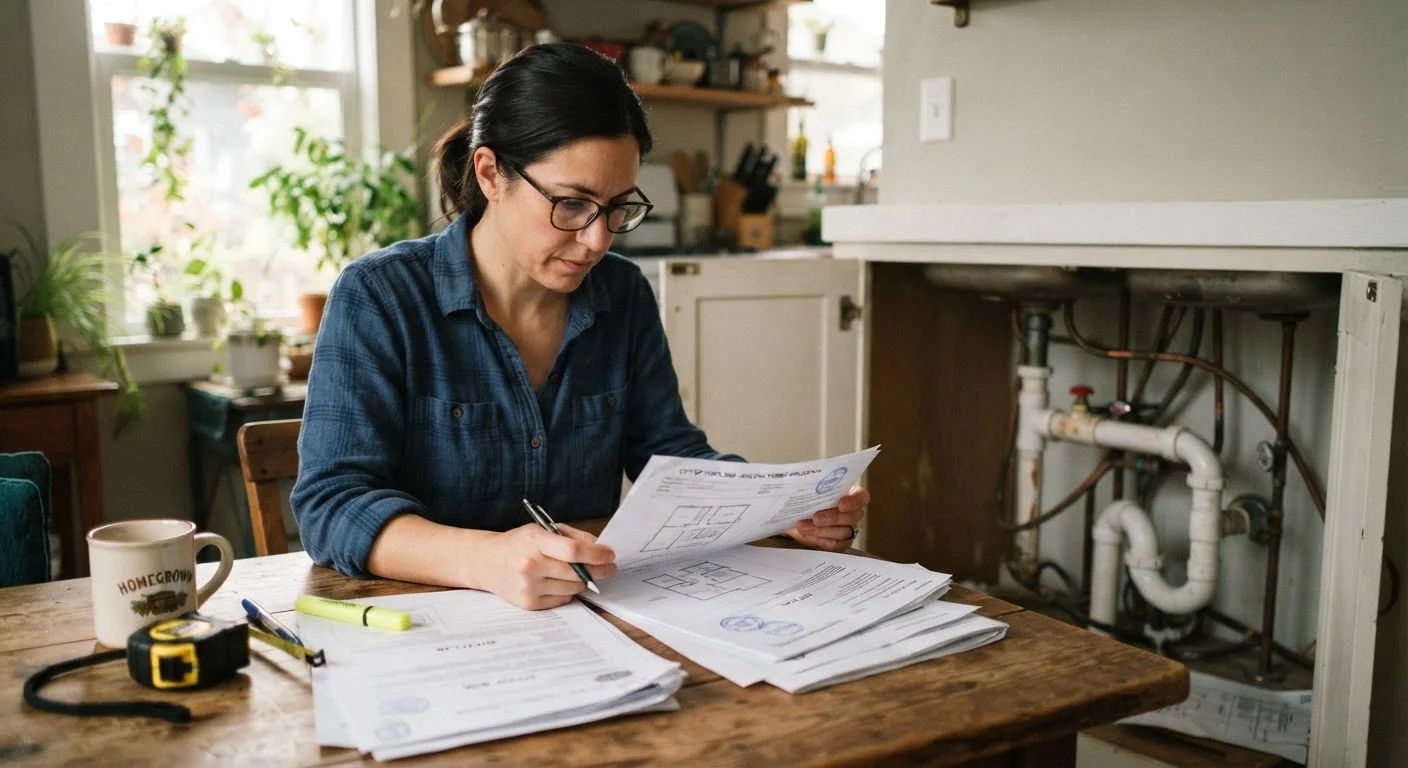
Permits aren't bureaucratic red tape for its own sake - they serve a clear purpose. When plumbing work is inspected and approved, it confirms that the installation meets the minimum safety and sanitation standards your local code requires. Those standards exist to protect you, your family, and anyone who lives in your home after you.
If you're new to how your home's systems fit together, the Homeowner's Introduction to Household Plumbing Systems is a solid starting point before tackling any significant project.
The inspection process also creates a paper trail. That documentation becomes important when you refinance, sell, or file an insurance claim. Unpermitted work discovered during a home sale can delay or derail the transaction entirely - or shift liability to you as the seller.
Permit Requirements Vary - Always Verify Locally
The examples in this article reflect common patterns across US jurisdictions, but they are not universal rules. A project that requires a permit in one city may not require one in the next county over - or vice versa. Your local building department is the only authoritative source for your specific situation. When in doubt, call before you start.
Work That Typically Does NOT Require a Permit
Most routine maintenance and minor repairs fall below the permit threshold in the majority of US jurisdictions. These tasks generally involve replacing like-for-like components without altering or extending existing lines:
- Replacing a faucet, showerhead, or toilet fill valve
- Fixing a leaky P-trap or supply line under a sink
- Unclogging drains using mechanical or hand tools
- Replacing a toilet with one of the same rough-in dimension
- Repairing or replacing exposed shut-off valves
Even for these smaller jobs, developing the habit of verifying locally is worthwhile - some municipalities draw the line differently. Our room-by-room plumbing audit guide can help you identify which issues you're actually dealing with before you decide on a course of action.
Work That Typically DOES Require a Permit
Once a project moves beyond simple replacement into new installation, relocation, or extension of plumbing systems, a permit is usually required. Common examples include:
- Water heater replacement - Nearly always requires a permit due to pressure relief, venting, and gas or electrical connections involved.
- Adding a new fixture - Installing a bathroom, utility sink, or outdoor hose bib that didn't exist before means new supply and drain lines, which require code review.
- Relocating existing plumbing - Moving a sink, toilet, or shower during a remodel involves altering drain lines and potentially vent stacks.
- Drain line extensions or replacements - Significant work on drain-waste-vent (DWV) systems typically triggers permit requirements.
- Sewer line repairs or replacement - Work on main sewer lines is almost universally permitted and often requires a licensed contractor.
~50%
Home sales affected by unpermitted work issues
Industry observers and real estate professionals frequently note that unpermitted improvements - including plumbing - are among the most common issues that surface during home sale inspections and title reviews.
50 states
Jurisdictions with varying local plumbing codes
Every US state, and often individual cities and counties within them, adopts and amends model plumbing codes differently - meaning there is no single national answer to what requires a permit.
For permitted work, the licensed-professional requirement is also worth noting: many jurisdictions require a licensed plumber to perform or at minimum supervise the work, regardless of whether you pulled the permit yourself.
How to Verify Requirements in Your Area
There's no single national standard that dictates exactly what needs a permit - local amendments to model codes mean requirements differ from one jurisdiction to the next. Here's how to get accurate, current information for your location:
- Contact your local building department directly. Most city and county websites have a building or permits section with contact information and sometimes online project lookup tools.
- Describe your project specifically. Don't ask "do I need a permit for plumbing?" - explain exactly what you plan to do. The more detail you provide, the more useful the answer.
- Ask about the inspection process. If a permit is required, find out what the inspector will check and at what stage - some inspections must happen before walls are closed up.
- Keep records. Once permitted work passes inspection, retain the permit card and any inspection reports with your home records. These documents have long-term value.
The parallel is worth drawing: permit considerations apply across many home improvement scopes. If you've thought through similar questions for insulation work, the guide on installing insulation safely walks through a comparable framework for that trade.
What Unpermitted Work Actually Costs You
It's tempting to skip the permit process to save time or money - but the downstream risks are real and worth understanding clearly:
- Home sale complications: Buyers' inspectors and real estate attorneys routinely flag unpermitted work. You may be required to bring work up to current code at your expense before closing.
- Insurance claim denials: If a plumbing failure occurs in an area of unpermitted work, your homeowner's insurer may deny or reduce the claim on the grounds that the work wasn't code-compliant.
- Municipal fines and stop-work orders: If unpermitted work is discovered during another inspection, you could face fines and an order to expose and redo the work.
- Safety risk: Permits exist partly because code requirements encode hard-won safety lessons. Work that bypasses inspection may miss issues that become hazardous over time.
Understanding the difference between plumbing myths and plumbing realities also matters here - many homeowners skip permits because they've heard others do it without consequence. The truth about costly plumbing myths makes for useful reading alongside this topic.
This article is for general informational and educational purposes only. Permit requirements, codes, and regulations vary by jurisdiction. Always verify current requirements with your local building or code enforcement authority before starting any plumbing project. This content does not constitute legal, financial, or professional contracting advice.
Frequently Asked Questions
In most jurisdictions, simple like-for-like replacements of faucets, toilets, or showerheads do not require a permit because they involve no changes to the existing supply or drain lines. However, local rules vary, so checking with your building department before starting is always the safest approach.
Unpermitted work can lead to fines, required removal and redo of the work, and complications when selling or refinancing your home. Insurers may also deny claims related to unpermitted systems. It's not worth the risk when permits are designed to protect you as the homeowner.
In many US states, homeowners are legally allowed to pull permits for work on their own primary residence. However, some jurisdictions require a licensed plumber to both pull the permit and perform the work. Contact your local building department to confirm what's allowed in your area.
Your local building or code enforcement department is the authoritative source - many now offer online portals where you can look up requirements by project type. You can also call the department directly or consult a licensed local plumber who works regularly in your jurisdiction.
In most US jurisdictions, replacing a water heater does require a permit and inspection because it involves gas or electrical connections and pressure relief safety components. Some areas allow licensed plumbers to self-certify, but a permit is almost universally expected for this scope of work.
The content on this site is for informational purposes only and is not a substitute for professional advice. Always consult a qualified professional for guidance specific to your situation.