

Start here
How Your Home Plumbing Is Organized
Next
The Supply System: Getting Water In
Then
The Drain-Waste-Vent System: Getting Water Out
Critical skill
Shut-Offs: Your Most Important Plumbing Skill
Apply it
What You Can DIY and When to Call a Pro
How Your Home Plumbing Is Organized
Most homeowners interact with their plumbing every day without ever thinking about how it works - until something goes wrong. The good news is that residential plumbing follows a logical structure, and once you understand that structure, most problems become far less intimidating.
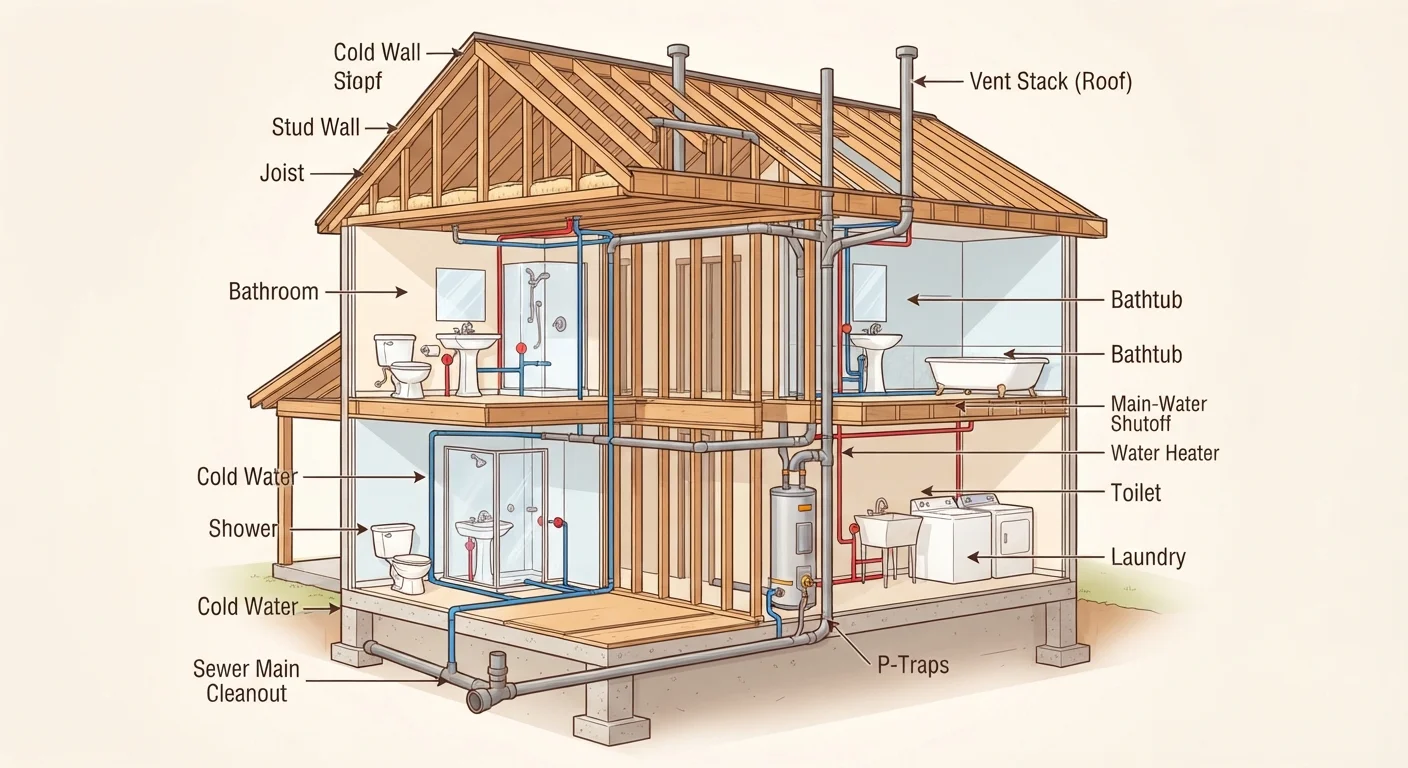
A typical home has three interconnected systems working in parallel:
- The supply system - brings pressurized fresh water in from the municipal main or a private well.
- The drain-waste-vent (DWV) system - carries used water and waste out of the home by gravity.
- Shut-off valves - allow you to isolate any section of pipe for repairs without flooding the house.
These systems never overlap: supply pipes carry only clean water under pressure, while drain pipes carry only waste water downhill. Understanding that separation is the foundation of every plumbing repair you'll ever attempt. For a deeper dive into pipe materials and pressure fundamentals, see our complete plumbing reference.
Supply system
The network of pressurized pipes that delivers fresh cold and hot water from the main line to every faucet, fixture, and appliance in your home.
Drain-waste-vent (DWV)
The system of non-pressurized pipes that carries used water and waste out of your home by gravity, while vent pipes maintain air flow to keep drains running smoothly.
P-trap
The curved section of pipe directly beneath a sink or drain that holds a small amount of water, creating a seal that blocks sewer gases from entering your home.
PSI
Pounds per square inch - the unit used to measure water pressure in your supply pipes. Residential homes typically operate between 40 and 80 PSI.
Shut-off valve
A valve that stops the flow of water to a specific fixture or to the entire house. Fixture shut-offs are usually located directly behind or beneath individual fixtures.
Vent pipe
A pipe that runs from the drain system up through the roof, admitting outside air into drain lines so waste water flows freely without creating suction.
The Supply System: Getting Water In
Water enters your home through a single main supply line, typically at a pressure of 40-80 PSI (pounds per square inch). From there it splits into two parallel paths: one delivers cold water directly to every fixture, and the other first routes through a water heater before branching to fixtures that need hot water.
Supply pipes are always under pressure, which is what makes a burst pipe or failed fitting so damaging so quickly. Pipe materials vary by home age - older homes may have galvanized steel or copper; newer construction often uses cross-linked polyethylene (PEX) or chlorinated polyvinyl chloride (CPVC). Each material has different repair methods, so identifying what's in your walls is a useful first step before tackling any supply-side repair.
To understand what the numbers on your water meter and pressure gauge actually mean, this guide to PSI and flow rate breaks it down clearly for non-plumbers.
The Drain-Waste-Vent System: Getting Water Out
Unlike the supply system, the DWV system works entirely by gravity - there's no pressure pushing waste water out. Drain pipes are pitched at a slight downward angle (typically ¼ inch per foot) so water flows toward the main drain and eventually out to the municipal sewer or a septic tank.
Three components work together in this system:
- Drain pipes - carry water and solids from each fixture toward the main drain line.
- Waste pipes - the larger main lines that collect flow from individual drains.
- Vent pipes - run vertically up through walls and exit through the roof. They admit air into the drain system, which prevents the suction that would otherwise empty your p-traps (the water-filled curves under sinks) and allow sewer gas into your living space.
A gurgling drain or a toilet that seems to pull water after flushing is often a venting problem, not a clog. Before assuming a blockage, consider whether air flow in the system may be restricted.
Shut-Offs: Your Most Important Plumbing Skill
Knowing where your shut-off valves are - and confirming they actually work - may be the single most valuable plumbing skill you can have. In a leak emergency, every second counts.
There are two types to know:
- Fixture shut-offs - small valves behind toilets, under sinks, and behind appliances like washing machines. They shut off water to just that one fixture.
- Main shut-off - cuts all water to the entire house. It's typically located where the supply line enters the foundation, in a basement, utility room, or crawl space.
Seized Valves Can Fail When You Need Them Most
A shut-off valve that hasn't been turned in years may look fine but fail to fully close in an emergency. Never assume a valve works just because it's there. Test each valve annually by turning it fully off and then back on - if it's stiff, leaks past the stem, or won't fully stop flow, it should be replaced proactively.
Make it a habit to test your shut-off valves once a year. Valves that sit unused for years can seize or fail to seal completely when you finally need them. If a valve won't turn smoothly or continues to drip after closing, plan to replace it before it becomes an emergency repair.
Once you're comfortable with your home's plumbing layout, a room-by-room audit is a smart next step. This home plumbing audit checklist helps you spot leaks, slow drains, and early warning signs before they escalate.
What You Can DIY and When to Call a Pro
Many of the most common plumbing complaints are well within a motivated beginner's ability to fix. The key is knowing which side of the line a given repair sits on.
Generally DIY-friendly
- Unclogging drains with a plunger or hand-operated drain snake
- Replacing a toilet flapper or fill valve
- Tightening or replacing compression fittings on supply lines
- Swapping out a faucet aerator or showerhead
- Replacing a shut-off valve under a sink (after closing the supply)
Usually requires a licensed plumber
- Anything involving the main sewer line or water main connection
- Relocating or adding new drain or supply pipes behind walls
- Work requiring a permit (rules vary by municipality - always check locally)
- Any repair near a gas line
If you're brand new to home projects in general, this beginner's weekend renovation guide covers tool basics, safety habits, and how to evaluate whether a job is within your skill level. Having the right hand tools on hand before you start will also make any plumbing repair go more smoothly.
This article provides general educational information about residential plumbing systems. It is not a substitute for professional assessment. Always verify local code requirements and consult a licensed plumber for any work that may require permits or involves hazardous systems.
Frequently Asked Questions
The three systems are the fresh water supply system, the drain-waste-vent (DWV) system, and the network of shut-off valves that control both. Each serves a distinct function and understanding how they connect makes troubleshooting much easier.
The main shut-off is most often located where the water line enters the house - commonly near the front foundation wall, in a basement, crawl space, or utility room. In warmer climates it may be outside near the water meter. Turn it clockwise to shut off all water to the home.
The DWV system carries used water and waste out of the house to the sewer or septic system. Venting is essential because it admits air into the drain pipes, which prevents negative pressure (suction) that would siphon water out of your p-traps and allow sewer gas to enter your home.
Yes - these are among the most beginner-friendly plumbing repairs. A slow drain usually responds to a plunger or a drain snake, while a running toilet is typically caused by a faulty flapper or fill valve, both of which are inexpensive and straightforward to replace.
Most jurisdictions require permits for new pipe installations, moving existing pipes, or work that ties into the main water or sewer line. Work involving gas lines always requires a licensed professional. Check with your local building department before starting any significant plumbing project.
Water pressure is the force that pushes water through your supply pipes, measured in pounds per square inch (PSI). Most residential homes operate comfortably between 40 and 80 PSI. Pressure below 40 PSI can cause weak flow, while pressure above 80 PSI can stress pipes and fixtures over time.
The content on this site is for informational purposes only and is not a substitute for professional advice. Always consult a qualified professional for guidance specific to your situation.