

Why Insulation Misconceptions Are So Costly
Most homeowners think about insulation only when energy bills spike or a draft becomes impossible to ignore. By that point, a fixable problem may have compounded for years. The trouble is that insulation looks straightforward - you stuff material into a cavity, and heat stays where you want it. In practice, it's a system, and common assumptions about how that system works lead to both under-investment and well-intentioned mistakes that don't actually improve efficiency.
This article walks through the most persistent insulation myths, explains why they persist, and replaces each with an accurate picture you can act on. For a broader foundation, the complete home insulation guide covers materials, zones, and safety in full detail.
Myth
A higher R-value on the label means my insulation is doing a better job in my home.
Fact
R-value measures a material's thermal resistance under controlled lab conditions - not how it performs once installed in a real home.
R-value is a useful starting point, but it captures only one variable. Air leakage, thermal bridging through studs and framing, moisture accumulation, and improper installation can each reduce effective performance significantly below the rated value. A batt rated R-19 that is compressed to fit a shallower cavity, or left with gaps around pipes, performs far below that number in practice. Understanding what R-value actually measures - and where it falls short - helps you set realistic expectations before you buy.
Myth
Adding more insulation on top of existing insulation always improves efficiency.
Fact
Adding insulation over old, damaged, or moisture-compromised material can trap problems rather than solve them.
If existing insulation has settled significantly, become wet, or is infested with pests, layering new material on top locks in those problems. Wet insulation loses much of its thermal resistance and can promote mold growth inside wall or attic cavities. Before topping up, inspect what's already there. If it's in good condition and simply thin, adding to it makes sense. If it's damaged, removal and replacement - often a professional job - is the right path. The warning signs of insulation failure are worth reviewing so you know what to look for.
Myth
New homes are well-insulated because they were built to code.
Fact
Building codes set minimum legal requirements, not optimal energy performance benchmarks.
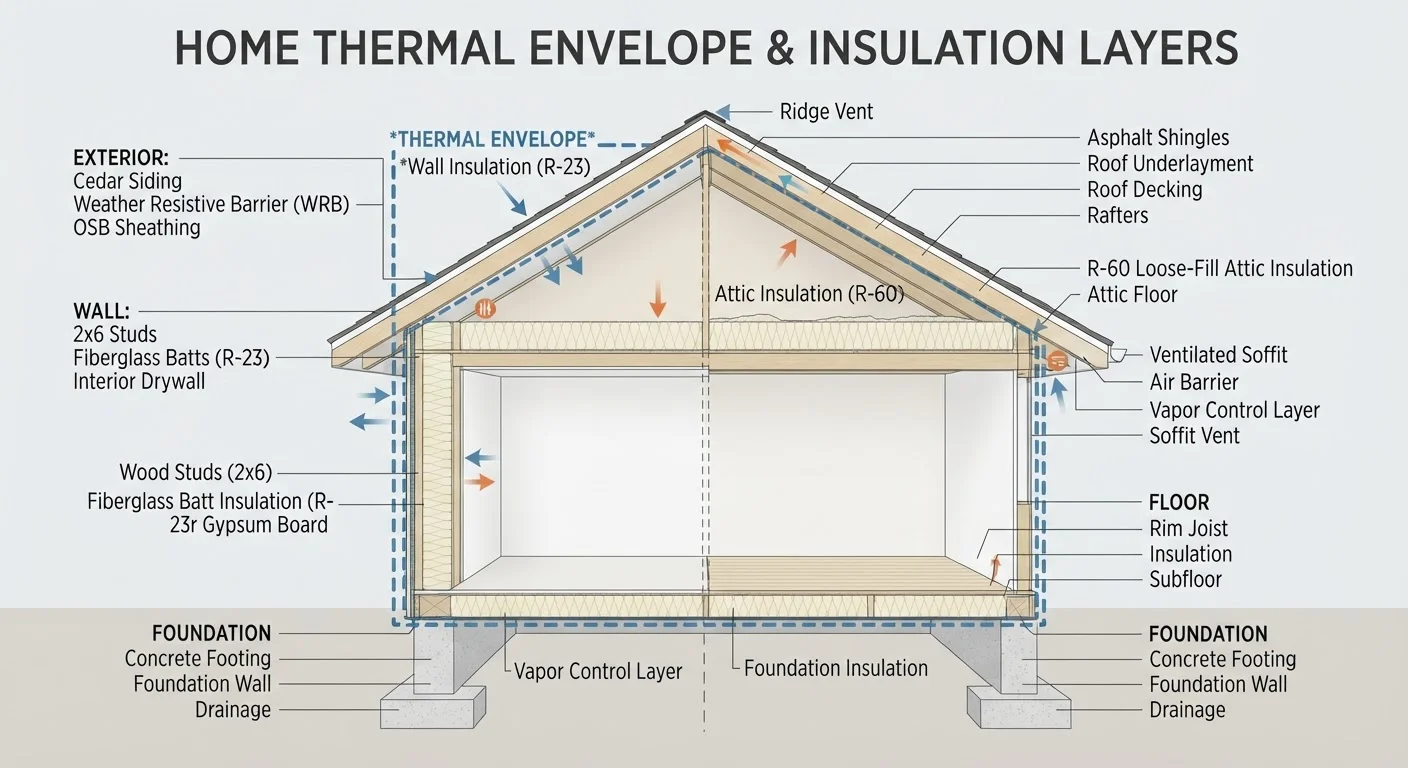
Code compliance means a home met the baseline standard at the time of construction - it does not mean that home is energy-efficient by today's standards or by the standards appropriate for your specific climate zone. Many homes built even in the last decade have insulation levels well below what energy modeling suggests is cost-effective for their region. If you've moved into a newer home and are still seeing high heating or cooling bills, the insulation may be meeting code while still leaving significant room for improvement. Understanding each insulation layer can help you evaluate what your home actually has.
Myth
Insulation alone will solve drafts and uneven room temperatures.
Fact
Drafts are primarily an air-sealing problem, not an insulation problem - and the two require different solutions.
Insulation resists heat transfer by conduction; it does not stop air movement. Cold drafts entering around outlets, window frames, attic hatches, or rim joists are caused by gaps in the building envelope that allow air infiltration. Adding more insulation over unsealed gaps reduces heat loss through the material itself, but the air continues to bypass it entirely. Effective weatherization requires sealing air leaks first, then insulating. This sequencing is one of the most commonly skipped steps in DIY efficiency upgrades - and skipping it is one of the reasons homeowners are often disappointed with the results. For a broader look at energy-saving mistakes, see persistent energy-saving myths.
Myth
A vapor barrier is always required with insulation.
Fact
Whether a vapor barrier is needed - and where it goes - depends on climate zone, material, and location in the home.
In cold climates, a vapor barrier on the warm-in-winter side of insulation (typically the interior face) helps prevent moisture in warm indoor air from condensing inside a wall or attic. But in mixed or hot-humid climates, placing a vapor barrier on the wrong side can trap moisture and cause damage. Some insulation materials, such as closed-cell spray foam, act as their own vapor retarder and don't need an additional layer. Installing a vapor barrier where none is needed - or on the wrong side - can create moisture problems worse than having no barrier at all. Local building codes and climate zone guidance should determine the right approach for your specific situation.
Myth
All insulation types perform the same - it's just about thickness.
Fact
Different insulation materials have distinct properties that make some far better suited to specific locations than others.
Fibreglass batts, mineral wool, cellulose, open-cell foam, and closed-cell foam each behave differently when exposed to moisture, heat, fire, and air movement. Closed-cell spray foam adds structural rigidity and acts as an air and vapor barrier; fibreglass batts do neither. Mineral wool resists fire and moisture better than standard fibreglass. Cellulose, made from recycled paper, can be an effective blown-in option for dense-packing wall cavities but requires careful moisture management. Treating all insulation as interchangeable leads to misapplication - particularly in crawl spaces, basements, and cathedral ceilings where moisture and condensation behavior varies significantly from a standard attic. What the R-value rating really tells you explains what that single number captures - and what it leaves out.
What Getting Insulation Right Actually Requires
Correcting these myths points toward a common theme: insulation performance is rarely about a single number or a single material. It depends on where insulation is placed, how well air movement is controlled, and whether moisture is managed appropriately for each zone of your home.
Some Insulation Work Requires Permits or Licensed Pros
Spray foam insulation in enclosed cavities, blown-in insulation in finished walls, and any work near electrical wiring or HVAC equipment may require permits or licensed contractors in your jurisdiction. Improperly installed insulation can create fire hazards, moisture damage, or health risks from off-gassing. Always check local building codes and consult the honest trade-offs of DIY insulation before deciding to tackle a project yourself.
Before adding or replacing insulation, a home energy audit - offered by many utility companies and independent energy assessors - can identify exactly where heat is escaping and which fixes will deliver the most return. This prevents the common trap of insulating the attic while ignoring the rim joists or crawl space where losses may be larger.
Material choice also matters more than many homeowners realize. Comparing fibreglass, foam, and mineral wool reveals meaningful differences in moisture behavior, fire ratings, and suitability by location - differences that a single R-value number won't capture.
Finally, some insulation work genuinely requires professional installation or permits. Spray foam in enclosed cavities, blown-in insulation in finished walls, and any work near electrical panels or HVAC equipment carries real risk if done without the right training. See the guide to safe insulation installation for a clear breakdown of what's reasonable for DIY and what isn't.
This article provides general educational information about home insulation. Insulation performance, costs, and code requirements vary by location, climate zone, and home construction. Always verify local building codes and consult a qualified professional before undertaking significant insulation work.
The content on this site is for informational purposes only and is not a substitute for professional advice. Always consult a qualified professional for guidance specific to your situation.