

Our Verdict
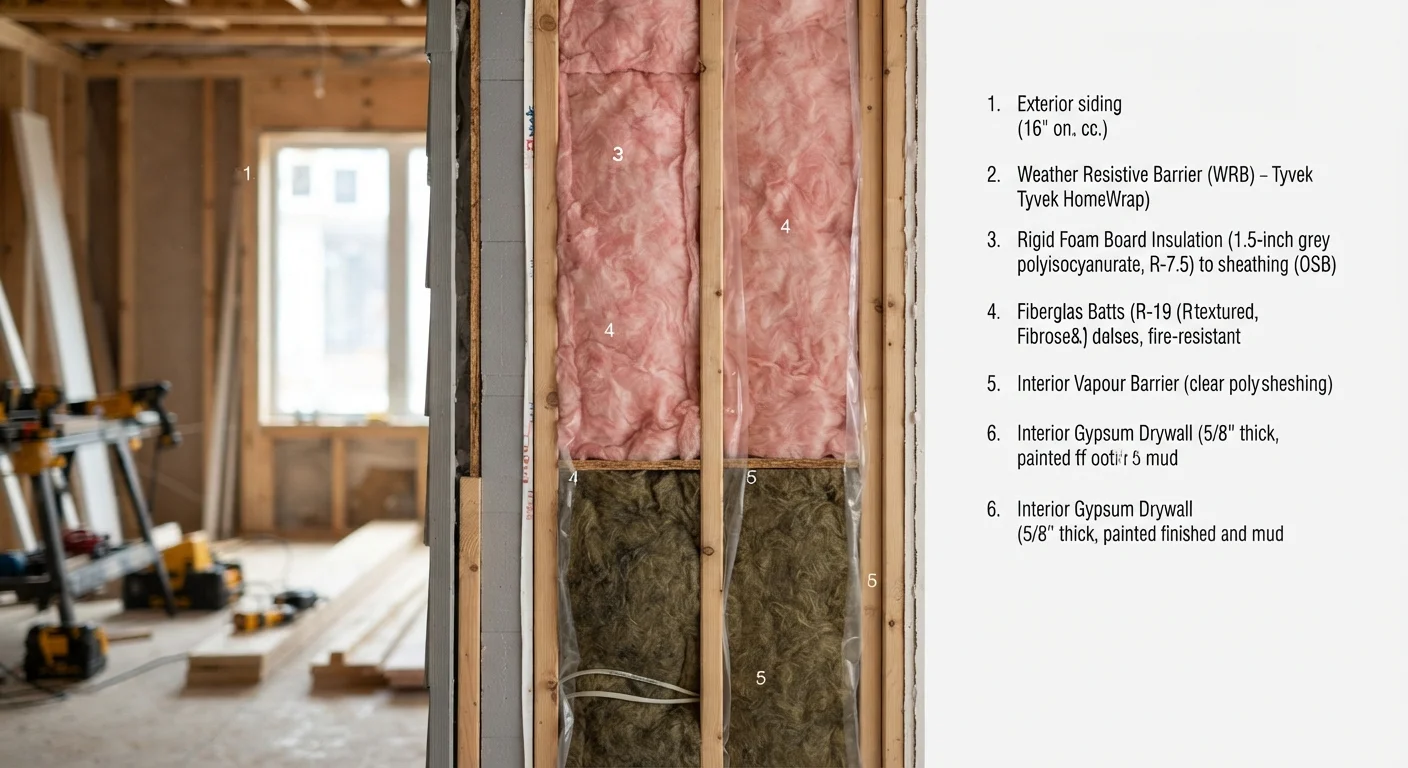
Fibreglass batts remain the most accessible and affordable choice for standard wall and attic cavities. Mineral wool earns its place wherever fire resistance or moisture is a concern. Rigid foam and spray foam excel in tight or irregular spaces where air sealing matters most. The right insulation depends on where it's going, what your climate demands, and how comfortable you are with the installation process.
| Best for | Recommended |
|---|---|
| Budget-conscious DIYers insulating standard stud cavities | Fibreglass Batts |
| Areas prone to moisture or requiring fire resistance | Mineral Wool |
| Basements, exterior walls, and continuous insulation layers | Rigid Foam Board |
| Irregular cavities or whole-attic air sealing | Spray Foam or Blown-In |
Why the Material You Choose Actually Matters
Insulation is rarely just insulation. The material you select determines how well your home holds temperature, how it handles humidity, how it performs in a fire, and how complicated your weekend project becomes. For a full grounding in what each insulation layer actually accomplishes, see what every insulation layer does.
The core metric most people know is R-value - a measure of thermal resistance per inch of thickness. Higher R-value means better resistance to heat flow. But R-value alone doesn't capture moisture behavior, air sealing capability, fire ratings, or ease of installation - all of which shape the real-world performance of your insulation system.
| Fibreglass Batts | Mineral Wool | Rigid Foam | Spray Foam | Blown-In Cellulose | |
|---|---|---|---|---|---|
| R-value per inch | R-3.0 - R-3.8 | R-3.7 - R-4.2 | R-3.8 - R-6.5 | R-3.5 - R-7.0 | R-3.2 - R-3.8 |
| Moisture resistance | Poor - absorbs water | Good - hydrophobic | Very good (XPS/polyiso) | Excellent (closed-cell) | Moderate - can hold moisture |
| Fire resistance | Moderate | Excellent | Varies; needs facing | Requires thermal barrier | Good (treated) |
| Air sealing | None | Minimal | Good with sealed edges | Excellent | Moderate |
| DIY-friendliness | High | High | Medium | Low - pro equipment needed | Medium - rented blower |
| Relative material cost | Low | Moderate | Moderate-High | High | Low-Moderate |
| Best applications | Wall/attic cavities | Fire-rated walls, wet areas | Exterior, basement, under-slab | Tight cavities, air sealing | Attic top-up, existing cavities |
Fibreglass: The Familiar Workhorse
Fibreglass batts are the insulation most DIYers picture first - those pink or yellow blankets that fit between studs and joists. They're widely available, relatively inexpensive, and straightforward to cut and install without specialized tools. R-value typically runs around R-3.0 to R-3.8 per inch depending on density.
The tradeoffs are worth understanding. Fibreglass is not an air barrier - air can still move through it, reducing real-world performance if the surrounding framing has gaps. It also absorbs moisture and loses effectiveness when wet, so vapor management matters in humid climates or below-grade applications. Wear gloves, eye protection, and an N95 respirator when handling it; the fine glass fibers are an irritant.
For most unfinished attics and interior wall cavities, fibreglass batts remain a practical, cost-effective starting point.
Mineral Wool: The Underrated Upgrade
Mineral wool - sold as rock wool or slag wool - is made from volcanic rock or recycled steel slag spun into fibers. It offers a slightly higher R-value per inch than standard fibreglass (roughly R-3.7 to R-4.2) and brings meaningful advantages in fire resistance and moisture handling. Mineral wool is naturally hydrophobic, meaning it doesn't absorb water and retains its insulating properties even if it gets damp.
It also performs better in high-temperature scenarios; mineral wool can withstand temperatures well over 1,000°F before breaking down, making it a smart choice in areas near mechanical equipment, garages, or party walls where fire ratings matter. The material is denser and heavier than fibreglass, which makes it easier to cut precisely but slightly more fatiguing to work with overhead. Cost runs higher than fibreglass, but the performance gap in demanding conditions often justifies it.
Rigid Foam and Spray Foam: Air Sealing Champions
Rigid foam boards - typically expanded polystyrene (EPS), extruded polystyrene (XPS), or polyisocyanurate (polyiso) - offer R-values ranging from about R-3.8 to R-6.5 per inch, making them the most thermally efficient option by thickness. They're particularly valuable for continuous insulation on exterior walls, basement rim joists, and under-slab applications where moisture resistance is essential. XPS and polyiso resist moisture well; EPS is more permeable but remains a solid all-around choice.
Spray foam occupies a different category. Closed-cell spray foam delivers R-6 to R-7 per inch and acts as both an air barrier and vapor retarder - a combination no other material matches. Open-cell spray foam is softer, cheaper, and more vapor-permeable but still provides excellent air sealing. The catch: spray foam application requires professional equipment and training for anything beyond small canned applications. Most whole-cavity or attic projects should be handled by a licensed installer.
For an in-depth look at how these formats compare to batt and blown-in options, see batts, blown-in, and rigid boards compared.
Blown-In and Other Options
Blown-in (loose-fill) insulation - usually made from fibreglass or cellulose - is the go-to for existing attics or hard-to-reach cavities. Cellulose, made from recycled paper treated with fire retardant, achieves around R-3.2 to R-3.8 per inch and is one of the more environmentally friendly options. It settles over time, which is worth factoring into initial installation depth.
Blown-in fibreglass settles less but shares many of the same moisture vulnerabilities as batt fibreglass. Both blown-in types require a rented blower machine, which most home improvement stores offer with material purchase.
Beyond these main categories, reflective or radiant barriers deserve mention for hot climates - they reduce radiant heat gain rather than conducting resistance, so they work differently from conventional insulation and are not assigned traditional R-values. They're most effective in attics in warm, sunny regions.
Whichever material you're evaluating, cross-reference it against your climate zone's recommended R-values. The insulation quick-reference guide offers a concise lookup table to help you match material to application. And if you're questioning assumptions you've heard about insulation, common insulation myths debunked is worth a read before you buy.
This article is for educational purposes only. Always verify local building codes and permit requirements before beginning any insulation project, and consult a licensed professional for work involving electrical, mechanical, or structural systems.
The content on this site is for informational purposes only and is not a substitute for professional advice. Always consult a qualified professional for guidance specific to your situation.