

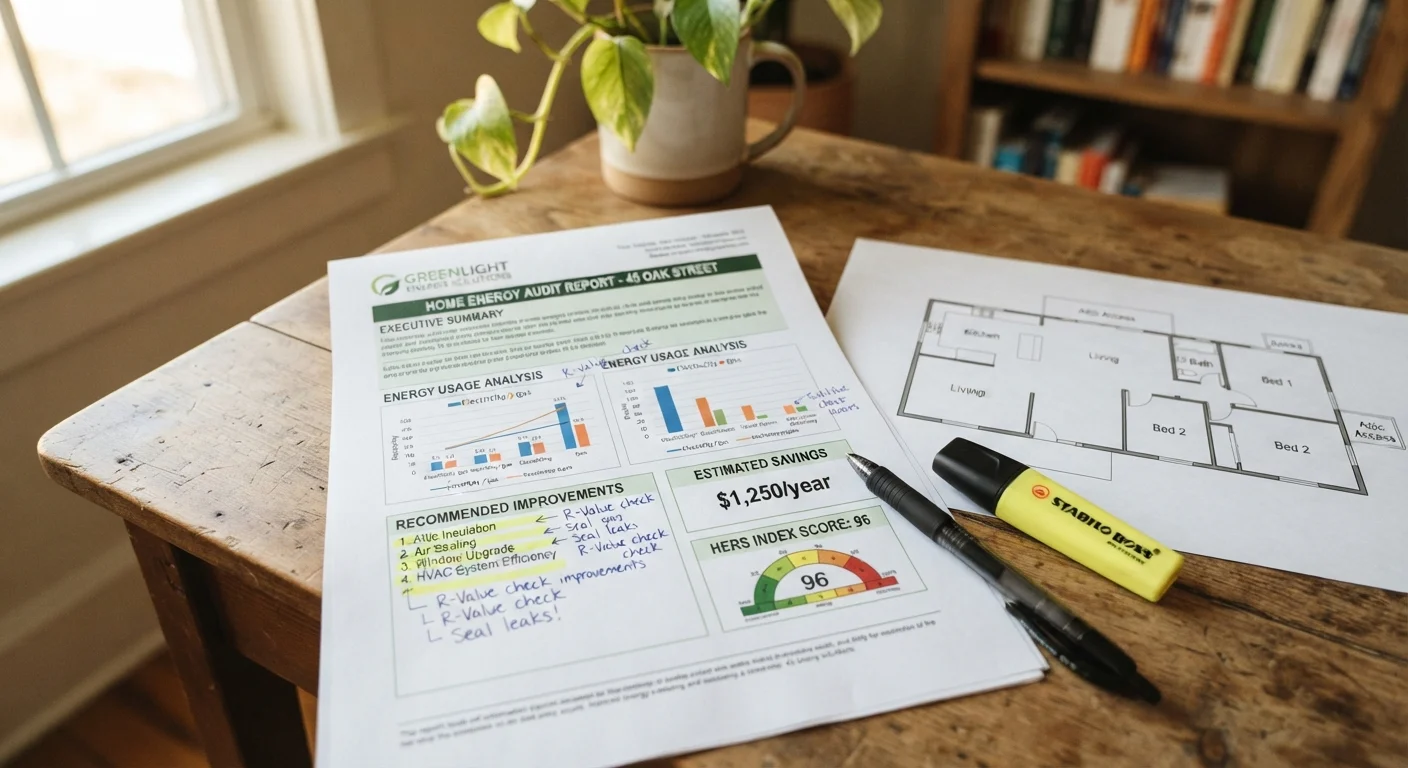
What an Energy Audit Report Actually Contains
When a certified energy auditor finishes inspecting your home, you receive a written report - and it can be dense. Most reports follow a similar structure regardless of who conducted the audit, typically covering four core areas: existing conditions, problem areas identified, prioritized recommendations, and projected cost-benefit figures.
Existing conditions describe your home's current performance baseline: insulation R-values (a measure of thermal resistance), air leakage rates measured in blower-door test results (usually expressed as ACH50 - air changes per hour at 50 Pascals of pressure), and HVAC equipment efficiency ratings. These numbers tell you where your home stands before any work is done.
Problem areas are specific findings - an attic with R-19 insulation where R-49 is recommended, duct leakage losing 20% of conditioned air before it reaches living spaces, or a hot water heater operating well below its rated efficiency due to sediment buildup.
If you want to put those problem areas into household context, cross-referencing the report findings with your utility bill history is a useful exercise. See our plain-language guide to reading your utility bill to understand the units and charges that tie back to these audit findings.
Decoding Priority Ratings and Cost-Benefit Estimates
Most reports assign each recommendation a priority level - commonly High, Medium, or Low - based on the combination of potential energy savings and upfront cost. Here's how to read those tiers practically:
- High priority: Improvements with a short estimated payback period, typically under five years. Air sealing gaps around penetrations, adding attic insulation, and sealing duct leaks consistently appear here because they address the largest sources of energy loss at relatively low cost.
- Medium priority: Upgrades that make a real difference but require more upfront investment, such as replacing an aging HVAC system or upgrading windows. Payback periods of 7-15 years are common in this tier.
- Low priority: Items where savings are marginal relative to cost, or where existing equipment is functioning adequately. These may become higher priority when equipment reaches end-of-life.
The simple payback period - how many years before projected savings offset the upgrade cost - is the most common metric in audit reports. Treat these figures as reasonable estimates rather than certainties; savings depend on your actual energy use patterns, local utility rates, and installation quality. An auditor projecting $400 in annual savings from attic insulation is working from modeled assumptions, not a guarantee.
Use the Report as a Living Document
Don't file your audit report away after reading it once. Revisit it each time you complete an upgrade, and use it as a checklist to track progress over time. If you make significant changes to your home's envelope or systems, consider scheduling a follow-up audit to measure actual improvement against the original baseline.
For a structured way to follow up on insulation-related findings room by room, see our room-by-room insulation audit guide.
How to Work Through the Report Step by Step
Rather than reading the report front to back and feeling overwhelmed, approach it as a decision-making document. The steps below help you extract what matters and create a workable action plan.
Read the Summary Section First
Most reports open with an executive summary listing the top three to five findings and their associated recommendations. Read this before diving into technical appendices. It tells you what the auditor considered most significant and sets context for everything that follows.
Locate the Blower Door and Duct Leakage Results
Find the section reporting your home's air leakage rate (ACH50) and duct leakage percentage. Compare these against the targets your auditor recommends. An ACH50 above 7 in a cold climate, for example, typically indicates significant air sealing opportunity. Duct leakage above 15% is generally considered high.
Map Each Recommendation to a Priority Tier
Go through the recommendations list and group each item into High, Medium, or Low priority based on the report's own ratings. If the report doesn't assign tiers explicitly, apply this rule of thumb: items with estimated payback under five years go in High; those over ten years go in Low.
Identify Which Tasks Are DIY-Appropriate
For each High-priority item, note whether the report suggests professional installation or whether it's a task a capable homeowner can handle. Air sealing with caulk and spray foam, adding attic insulation batts, and installing programmable thermostats are commonly DIY-appropriate. HVAC work, electrical upgrades, and spray-foam insulation in enclosed cavities typically are not.
Build a Phased Action Plan
Sequence your improvements: start with low-cost, high-impact air sealing tasks you can do yourself, then budget for professional work on medium-priority items over the following one to two years. Note which upgrades may be linked - for example, air sealing before adding insulation improves the effectiveness of both.
Once you've completed this process, you'll have a short list of prioritized actions rather than a wall of recommendations. For a broader roadmap connecting audit findings to whole-home improvements, our complete walkthrough for optimizing every major system covers how each system interacts with the others.
What to Do Before Hiring Anyone
Some audit recommendations are straightforward DIY tasks - caulking around window frames, adding weatherstripping to doors, or installing outlet gaskets on exterior walls. Others involve licensed trades, permits, and inspections.
Work involving your electrical panel, gas lines, structural elements, or significant HVAC modifications typically requires a licensed contractor and, in most jurisdictions, a permit. Always check with your local building department before beginning work flagged in the report as involving these systems. Unpermitted work can create problems when you sell your home and may void manufacturer warranties or homeowners insurance coverage.
When evaluating contractors for larger projects, use the audit report itself as a specification document - it describes what needs to be done and the performance target. Ask for a written scope of work, and request that contractors explain how their approach meets the auditor's recommendation. This keeps conversations grounded in measurable outcomes rather than vague promises.
For a practical starting point on behavioral and low-cost changes you can make immediately, the Smart Energy Habits hub covers everyday adjustments that complement physical upgrades. And if you want to extend the audit process to a seasonal routine, our seasonal energy audit checklist gives you a repeatable framework.
The content on this site is for informational purposes only and is not a substitute for professional advice. Always consult a qualified professional for guidance specific to your situation.