

Summary
18 items · 30-90 minutes per season (some tasks require a licensed technician)
Why Seasonal Maintenance Matters for Your HVAC System
Your heating and cooling system is typically the largest energy consumer in your home, often accounting for nearly half of annual utility costs. Yet most homeowners only think about it when something goes wrong - which is precisely when repairs become expensive and discomfort peaks.
Seasonal maintenance closes that gap. By working through a structured checklist before each heating and cooling season, you catch small problems before they become system failures, keep efficiency high, and extend the life of equipment that can cost thousands to replace. If you want a broader view of how HVAC fits into your home's overall efficiency picture, the complete home energy efficiency walkthrough covers every major system in one place.
Use the checklist below as your twice-yearly reference - once in spring before cooling season, and once in fall before heating season. Tasks marked must are non-negotiable for safe, efficient operation. Always verify local code requirements and confirm which tasks require a licensed contractor in your area.
Know Where DIY Ends With HVAC
Several HVAC maintenance tasks - including handling refrigerant, inspecting heat exchangers, testing gas connections, and working inside electrical panels - are regulated, hazardous, or both. Attempting these without proper training and licensing risks equipment damage, voided warranties, carbon monoxide exposure, or serious injury. When in doubt, always hire a licensed HVAC professional and verify which tasks require permits or inspections in your local jurisdiction.
What You'll Need
Most seasonal HVAC maintenance requires only basic supplies and a few hours of time. However, several tasks on this list - particularly anything involving refrigerant, gas connections, or electrical components - fall outside DIY scope and require a licensed HVAC technician. Before you begin, gather the tools below and plan to schedule professional service for the items flagged accordingly.
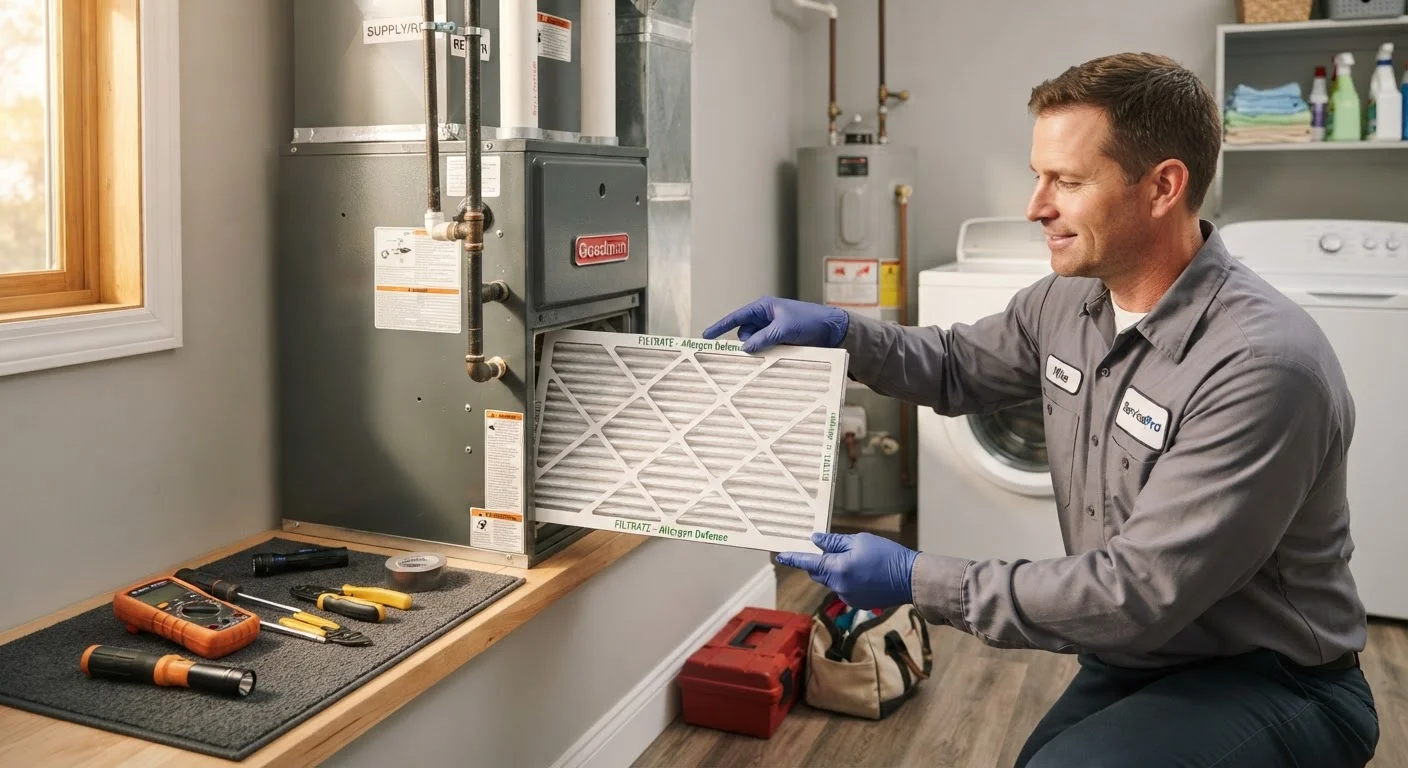
Replacement air filters (correct MERV rating for your system)
Swapping clogged filters is the single most frequent DIY maintenance task - buy the size listed on your existing filter frame.
Fin comb
Used to straighten bent aluminum fins on condenser or evaporator coils to restore proper airflow.
Garden hose with adjustable nozzle
Low-pressure rinse for cleaning outdoor condenser coils of dirt and debris.
Wet/dry vacuum
Clearing blockages from the condensate drain line to prevent water backup.
Non-contact voltage tester
Confirming power is off at the disconnect box before performing any work near the outdoor unit.
Foil-backed HVAC tape (not standard duct tape)
Sealing small gaps or disconnections in accessible ductwork - standard duct tape degrades quickly under heat cycling.
Licensed HVAC technician
Required for refrigerant handling, heat exchanger inspection, gas line checks, and electrical component testing.
The Seasonal HVAC Maintenance Checklist
Work through these groups in order. Complete the General / Year-Round tasks every season, then follow the appropriate Spring (Cooling) or Fall (Heating) section based on time of year. If you notice symptoms like short cycling, uneven temperatures, or rising bills while working through this list, the signs your HVAC is working harder than it should article can help you interpret what you're seeing.
General / Year-Round Tasks
Spring (Cooling Season Prep)
Fall (Heating Season Prep)
Pairing HVAC Care With Whole-Home Efficiency
Maintaining your HVAC system in isolation only goes so far. A well-tuned furnace or air conditioner still works harder than it needs to if your home is poorly sealed or under-insulated. After completing this checklist, consider pairing it with a seasonal room-by-room energy audit to identify drafts, insulation gaps, and appliance inefficiencies that put extra load on your system.
Insulation is often the most cost-effective complement to HVAC maintenance - explore the home insulation topic hub for upgrade options that reduce heating and cooling demand at the source. And if you're planning to tackle filter changes or thermostat adjustments yourself, review the common DIY HVAC pitfalls first - even simple tasks have predictable failure points worth knowing about.
This article is for general informational and educational purposes only. HVAC systems vary by type, age, and local code requirements. Always consult a licensed HVAC professional for tasks involving electrical components, refrigerant, gas lines, or any work requiring permits in your jurisdiction. Verify local regulations before beginning any maintenance work.
The content on this site is for informational purposes only and is not a substitute for professional advice. Always consult a qualified professional for guidance specific to your situation.