

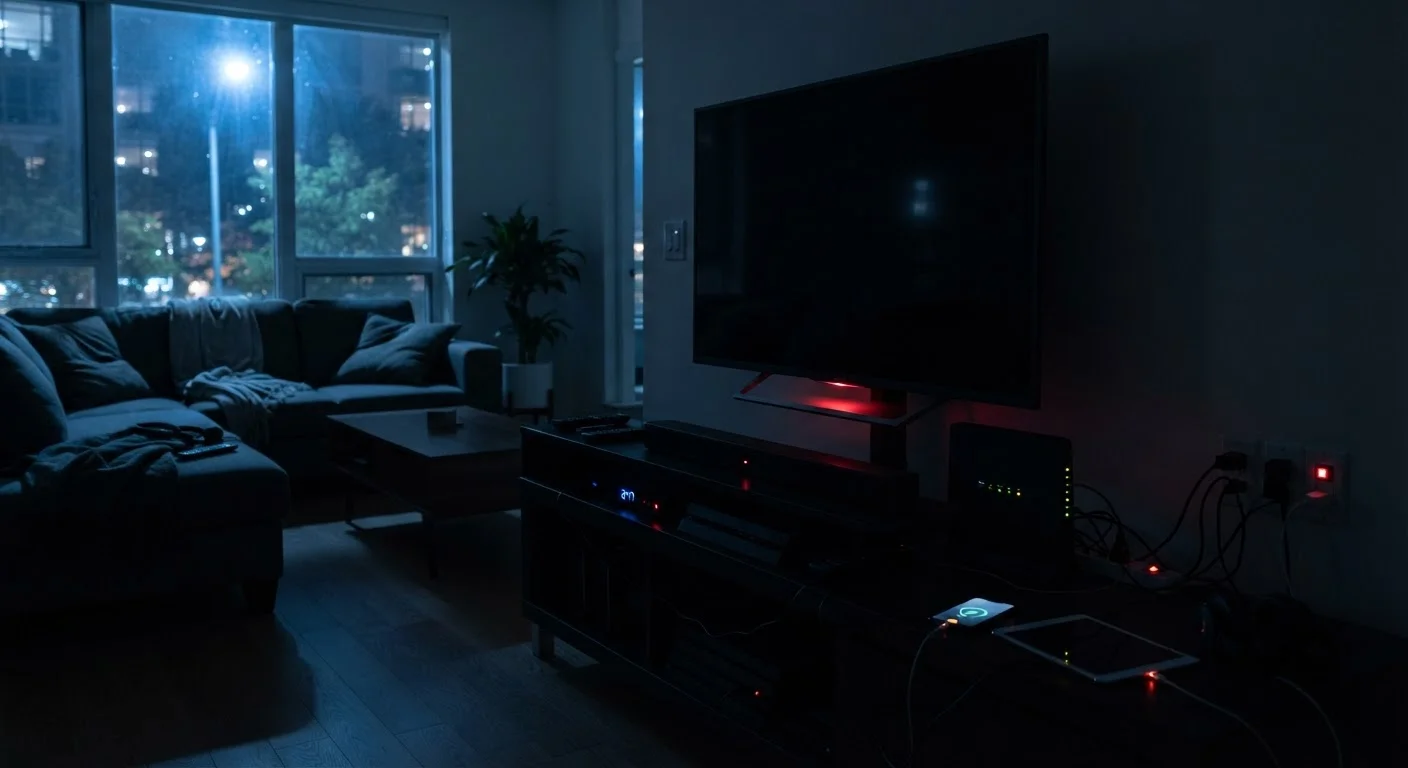
Why Your Bill Climbs Even When Nothing Is 'On'
Most homeowners focus on the obvious energy users - the HVAC system, the clothes dryer, the oven. But a quieter category of consumption runs continuously in the background: devices that appear to be off but are still drawing power from the grid. This is the phantom load problem, and it exists in virtually every modern home.
Every device with a remote control, a digital display, an instant-on feature, or a battery charger circuit stays partially active when it isn't in use. That small draw - sometimes just a watt or two - multiplies across dozens of devices and runs 24 hours a day, 365 days a year. The cumulative effect is real money leaving your pocket for electricity that delivers you no benefit. If you've ever wondered why your bill seems higher than your actual usage warrants, phantom loads are a strong candidate for investigation. For a clearer picture of how your utility measures and charges for this consumption, see how to decode your utility bill.
The Biggest Offenders in a Typical Home
Not all phantom loads are equal. Understanding which devices pull the most idle power helps you prioritize where to act first.
- Home entertainment systems: Cable or satellite boxes are among the highest standby consumers in many homes, often drawing 15-30 W continuously. Surround-sound receivers, older game consoles, and DVD or Blu-ray players add to the total.
- Desktop computers and monitors: A desktop left in sleep mode can still draw 5-20 W. Monitors with "power save" modes vary widely in actual standby consumption.
- Kitchen appliances with clocks or displays: Microwaves, coffee makers, and ovens with digital readouts draw a small but constant current to keep that clock running.
- Chargers and power adapters: Laptop bricks, phone chargers, and tablet adapters left plugged in without a device consume power. Individually modest, they add up across a household.
- Older televisions and audio equipment: Devices manufactured before stricter efficiency standards tend to draw significantly more standby power than newer models.
5-10%
Share of home electricity from standby power
The U.S. Department of Energy estimates standby power accounts for roughly 5-10% of residential electricity consumption in a typical American home.
~40
Average number of products drawing standby power per US home
Research by the Lawrence Berkeley National Laboratory found that a typical U.S. household has approximately 40 products continuously drawing power in standby or off modes.
$100+
Estimated annual standby cost for many US households
The Natural Resources Defense Council has cited estimates suggesting standby power costs U.S. households roughly $19 billion annually in aggregate, translating to over $100 per home per year in many cases.
To see how these habits fit into a broader picture of everyday energy use, small appliance habits that inflate your bill covers related patterns worth knowing.
Practical Ways to Cut Phantom Loads
The good news is that reducing standby waste doesn't require expensive upgrades or dramatic lifestyle changes. A few targeted habits and low-cost tools handle most of the problem.
Measure Before You Act
A plug-in energy monitor lets you check the actual standby draw of any device. Many public libraries lend these tools for free. Plug a device in, put it in standby, and read the wattage. This tells you exactly which items are worth addressing - and which are negligible.
Use Smart Power Strips
A smart power strip monitors a primary outlet (say, your TV) and cuts power to linked outlets (your receiver, streaming stick, game console) when the primary device turns off. One strip can eliminate standby draw from an entire entertainment cluster automatically.
Put Chargers on a Timer Outlet
An inexpensive mechanical outlet timer can limit the hours a charging station or home office power strip is live - overnight charging windows, for example - rather than keeping adapters energized all day.
Switch Off at the Outlet
For devices you use infrequently, the simplest solution is still the most effective: switch them off at the wall or unplug them entirely. The trade-offs of switching appliances off at the wall are worth understanding before you decide which devices warrant this treatment.
Start With Your Entertainment Center
If you only tackle one area of your home for phantom loads, make it your TV and media setup. A single smart power strip placed there can eliminate standby draw from four to six devices at once with no ongoing effort. It's the highest-impact, lowest-effort swap most homes can make.
You can also cross-reference your findings with a room-by-room energy audit checklist to catch phantom load sources you might otherwise overlook.
Separating Fact From Common Misconceptions
Some homeowners assume that because a device is "off," it's definitely not drawing power. Others believe the savings from tackling standby are too small to bother with. Neither position is fully accurate. Phantom loads vary enormously by device age and type - an older cable box can draw as much standby power as an LED bulb running full-time. Multiplied across a home with 20 or 30 plugged-in devices, the total is far from trivial.
It's equally important not to overcorrect. Devices that require constant power - like your router, smart thermostat, or security system - deliver ongoing value from that draw and generally shouldn't be unplugged. The goal is eliminating waste, not eliminating convenience. For a broader look at energy myths that lead homeowners astray, common energy-saving myths worth questioning is a useful companion read.
This article is for general informational and educational purposes only. Energy savings will vary depending on your home, local utility rates, and specific devices. Always follow manufacturer guidelines and consult a licensed electrician for any wiring or electrical work.
Frequently Asked Questions
The U.S. Department of Energy has estimated that standby power accounts for roughly 5-10% of residential electricity use. In a typical home with many plugged-in devices, that can translate to a noticeable line item on your monthly bill - potentially tens of dollars per year.
Home theater equipment (receivers, game consoles, cable boxes), older desktop computers left in sleep mode, and large appliances with digital displays or clocks - such as ovens and microwaves - tend to draw the most. Phone chargers left plugged in with nothing attached are lower culprits but still contribute when multiplied across a household.
Yes, most chargers draw a small amount of power whenever they are plugged into the wall, even with no device connected. Individually the draw is very small - often under 0.5 W - but it adds up across multiple chargers left in outlets 24/7.
A smart power strip detects when a primary device (like your TV) is turned off and automatically cuts power to linked peripheral outlets (like your soundbar and game console). This eliminates standby draw for an entire entertainment cluster without requiring you to manually unplug anything.
For most consumer electronics, unplugging regularly causes no meaningful harm. Devices with internal clocks or complex settings - like some cable boxes or smart home hubs - may need reconfiguration after power loss, which is worth factoring into your approach.
A plug-in energy monitor (sometimes called a kill-a-watt meter) is the most direct method. Plug it between the device and the wall outlet, set the device to standby, and read the wattage. Many public libraries lend these meters for free.
The content on this site is for informational purposes only and is not a substitute for professional advice. Always consult a qualified professional for guidance specific to your situation.