

Why Plant Lifespan Matters for Your Garden
When you walk through a garden center or read a seed catalog, the terms annual, biennial, and perennial appear on nearly every label. These aren't just botanical jargon - they're practical signals that tell you how much time, money, and replanting effort each plant will demand. Misreading them is one of the most common reasons gardeners feel frustrated when a favorite plant disappears after its first season or never seems to bloom.
Understanding these categories is foundational gardening knowledge. Once you grasp the differences, you can design planting schemes that maintain color and structure across seasons without guesswork. See our guide to reading a plant label for help decoding everything else printed on that small tag.
Start With a Mix, Not a Category
If you're new to gardening, resist the urge to fill your beds exclusively with annuals for instant color or perennials for low maintenance. A combination of all three types gives you immediate impact, long-term structure, and the interesting seasonal variation that makes a garden feel alive. Aim for roughly 50-60% perennials as your foundation, with annuals and biennials filling in the gaps.
Annuals: One Season, Full Impact
An annual germinates, grows, flowers, produces seed, and dies - all within a single growing season. Because every ounce of the plant's energy goes into reproducing quickly, annuals are typically prolific bloomers that put on a long, showy display from spring through frost.
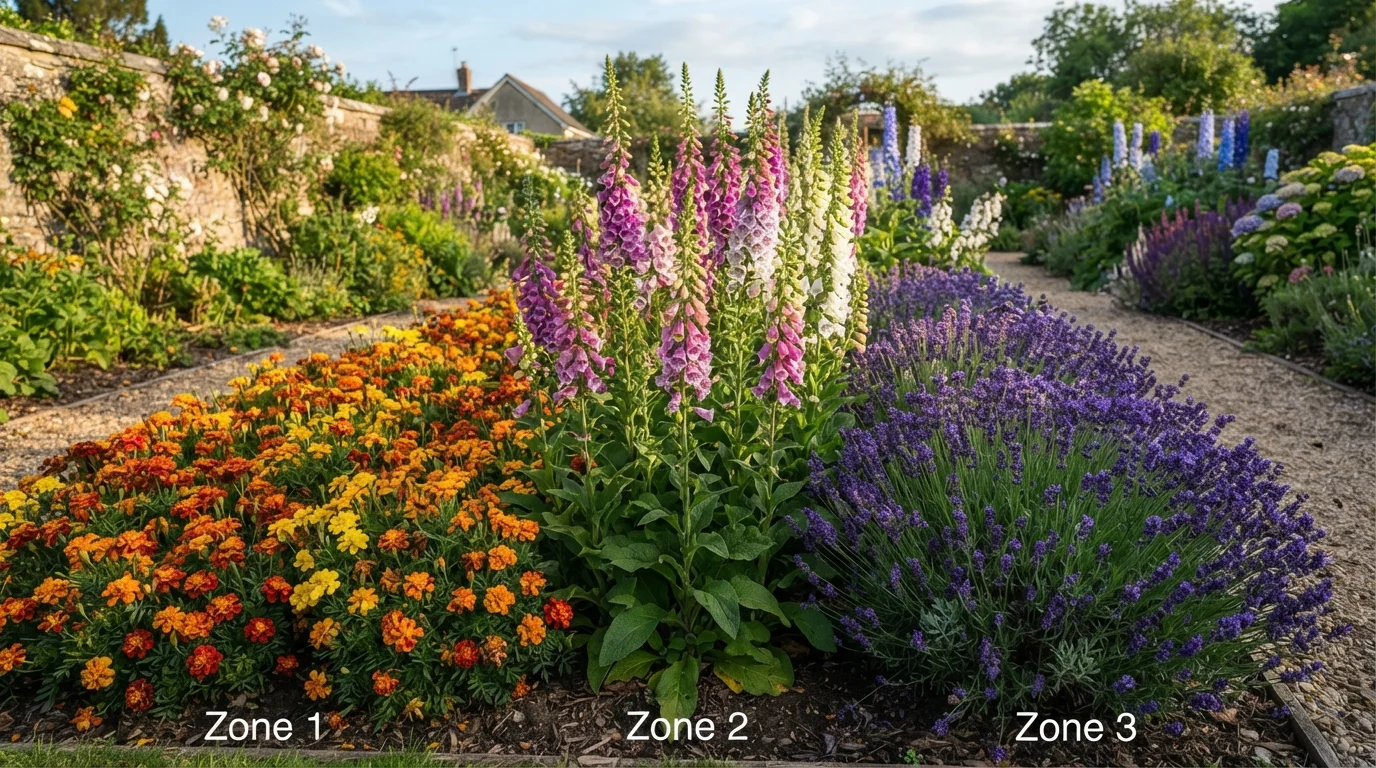
Common examples include zinnias, petunias, marigolds, and basil. You replant them each year, which gives you the flexibility to completely reinvent a bed's color palette every spring. That creative freedom comes at a cost: annual seed or transplant purchases add up over time, and the labor of replanting is real.
Some plants labeled and sold as annuals - impatiens and snapdragons, for instance - are biologically perennial in frost-free climates. In most US growing zones, freezing winters end their life cycle, so gardeners treat them as annuals. Always consider your local climate and planting calendar when choosing annuals.
~2,000
Annual plant species commonly cultivated in US gardens
Botanical surveys indicate thousands of annual species are available to home gardeners, ranging from vegetables and herbs to flowering ornamentals.
Year 2
When most perennials reach peak performance
Horticultural guidance commonly notes that perennials often underperform in year one while establishing roots, with strongest blooming from the second season onward.
3-5 years
Typical interval for dividing perennial clumps
Many perennials benefit from being lifted and divided every three to five years to maintain vigor and prevent overcrowding, according to standard horticultural practice.
Biennials: A Two-Year Journey to Bloom
Biennials are the least understood of the three categories because their life unfolds across two separate growing seasons. During year one, the plant puts all its energy into growing a leafy rosette and establishing roots. It doesn't flower. In year two, it sends up a flower stalk, blooms, sets seed, and then dies.
Foxglove (Digitalis purpurea), hollyhock (Alcea rosea), and sweet William (Dianthus barbatus) are classic biennials. To maintain a continuous display of biennials in your garden, the trick is staggering plantings - sow a new batch each year so you always have first-year seedlings alongside second-year bloomers.
Many nurseries sell biennials already in their second-year state, meaning they'll flower the same season you plant them. Read labels carefully to understand what stage of growth you're purchasing.
Perennials: The Garden's Long-Term Foundation
Perennials live for three or more years, dying back to their root system each winter (in most climates) and re-emerging each spring. Because they don't need to reproduce urgently, many perennials invest heavily in root development during their first season and bloom most vigorously from year two onward.
Coneflowers (Echinacea), black-eyed Susans (Rudbeckia), daylilies (Hemerocallis), and lavender are familiar perennial workhorses in US gardens. Over time, many spread or multiply, letting you divide clumps and fill more garden space for free.
Perennials typically cost more at the nursery than annuals, but that upfront investment pays off over multiple seasons. They also form the structural backbone of a well-designed garden bed - you plan annuals and biennials around them for seasonal color. If you're deciding how to arrange your planting space, comparing raised beds versus in-ground planting can help you choose the setup that best supports long-lived perennials.
Combining All Three for a Garden That Works Year-Round
The most satisfying gardens typically blend all three plant types strategically. Perennials provide the framework and reliably return each year. Annuals fill gaps and provide non-stop color during the growing season. Biennials add height and a naturalistic quality, often self-seeding to renew themselves with minimal effort from you.
When planning your layout, map out where perennials will anchor each bed, then plug annuals into the remaining spaces for the season. Introduce biennials in spots where you don't mind a quiet, foliage-only year before the payoff of flowers the next. Over time this approach creates a layered, dynamic garden that evolves naturally.
For seasonal timing on when to sow, transplant, and cut back each plant type, building a personalized garden calendar around your climate is one of the highest-value planning exercises a home gardener can do.
“A garden is a place where growth happens on the plant's own schedule. Understanding that schedule - not fighting it - is the first step toward becoming a confident gardener.”
— Liberty Hyde Bailey, Pioneering American botanist and horticulturalist, Cornell University
Frequently Asked Questions
Annuals complete their life cycle in one growing season and then die, so you replant them each year. Perennials survive winter and regrow from their roots for three or more years, making them a lower-maintenance long-term investment.
Typically, no. Biennials spend their first growing season developing leaves and roots, then flower and set seed in their second year before dying. However, some nurseries sell biennials in their second-year state so they bloom shortly after purchase.
Yes, this is common. Impatiens, for example, are true perennials in frost-free tropical climates but are grown as annuals in most of the US because they cannot survive freezing winters. Always check your USDA hardiness zone when interpreting a plant's category.
Not necessarily. Perennials cost more upfront and may take a year or two to establish fully. Annuals deliver continuous color for an entire season and let you change your garden's look each year. A mix of both suits most home gardens well.
Check the plant label, seed packet, or catalog description - these almost always state annual, biennial, or perennial. Our guide to <a href="/garden-outdoors/gardening-basics/reading-a-plant-label-without-the-confusion">reading plant labels</a> explains how to decode all that information confidently.
Most perennials return reliably, but they still benefit from seasonal maintenance like dividing overcrowded clumps, cutting back dead foliage, and occasional feeding. Neglected perennials can decline in vigor or bloom less over time.
The content on this site is for informational purposes only and is not a substitute for professional advice. Always consult a qualified professional for guidance specific to your situation.