

Why Climate-First Planning Outperforms the Calendar
Generic planting guides suggest sowing tomatoes in April or pruning roses in March - but those dates are meaningless without knowing where you live. A gardener in coastal Oregon and one in inland Tennessee both call it spring in April, yet their soils, last-frost risks, and day lengths differ dramatically. Building your garden calendar around your climate conditions is the difference between consistent harvests and recurring disappointment.
Climate-first planning means anchoring every key task - sowing, transplanting, pruning, and putting the garden to bed - to local weather patterns rather than month names alone. Once you understand a handful of foundational numbers for your location, a surprisingly logical seasonal rhythm emerges. This guide walks you through establishing those anchors and translating them into a workable plan.
For a complementary look at how timing affects your lawn, see the Lawn Care Calendar for season-by-season outdoor maintenance tasks.
Finding Your Frost Dates and Growing Season
Two numbers form the backbone of any garden calendar: your average last spring frost date and your average first fall frost date. The span between them is your frost-free growing season - the window in which tender crops like tomatoes, squash, and basil can live outdoors without protection.
The USDA Plant Hardiness Zone Map categorizes the country by average annual minimum winter temperatures and is the standard reference for determining which perennials will survive your winters. Frost dates, however, are separate data and come from long-term weather records compiled by NOAA and your local cooperative extension service. Both tools are free and publicly accessible online - search for your ZIP code combined with "frost dates" and "hardiness zone" to pull up local figures.
Write your last spring frost date on a piece of tape and stick it inside your seed storage box. Every time you reach for seeds, that number is right there to anchor your timing decisions.
Gardeners commonly misjudge seed-starting schedules because the critical frost-date reference isn't visible at the moment of decision-making.
When calculating days-to-maturity for fall crops, add 10-14 days to the seed-packet number to account for slower growth as day length shortens in late summer.
Plants grow more slowly as sunlight hours decrease in fall, so the days-to-maturity figure listed on packets - usually measured under optimal summer conditions - tends to underestimate real-world timing.
Once you have your last spring frost date, you can back-calculate seed-starting indoors. Most tomatoes, for example, need 6-8 weeks of indoor growth before transplanting, so count back from your last frost date to determine when to sow under lights. The Seeds vs. Seedlings guide can help you decide which crops benefit most from an early indoor start versus direct sowing.
Mapping Your Garden Year Season by Season
With frost dates in hand, translate them into seasonal task blocks rather than specific dates - this keeps your calendar flexible enough to adapt to year-to-year variation.
- Late winter (6-8 weeks before last frost): Start slow-growing crops indoors - peppers, onions, leeks, and celery. Order seeds and review your bed layout.
- Early spring (2-4 weeks before last frost): Direct-sow cold-tolerant crops outdoors - peas, spinach, kale, and carrots. Start tomatoes and other heat-lovers indoors if not already done.
- After last frost: Transplant warm-season seedlings. Plant summer bulbs and succession-sow fast crops like lettuce every two to three weeks for continuous harvest.
- Midsummer: Succession-sow fall crops (brassicas, root vegetables) based on your first fall frost date, counting backward by days-to-maturity listed on seed packets.
- Early fall: Harvest, save seeds, and begin cutting back spent annuals. Consider cold frames or row cover to extend the season.
- Late fall/winter prep: Amend beds with compost, protect perennials, and clean tools. The End-of-Season Garden Closedown checklist covers this phase in detail.
Planning which crops occupy each bed across the year also sets up effective crop rotation, which reduces pest buildup and maintains soil health over multiple seasons.
Reading Microclimates in Your Own Yard
Your local frost date is a statistical average for your region - your actual yard behaves differently depending on its topography and structures. Low-lying spots collect cold air and frost earlier than elevated areas. South-facing beds against a brick wall absorb and radiate heat, extending the season noticeably. Beds under roof overhangs stay drier and may warm faster in spring.
Spend one growing season walking your yard at different times of day and after cold overnight temperatures. Notice which beds thaw first in spring, where frost damage shows up last, and where soil stays wet longest. These observations let you assign crops strategically - heat-loving peppers in the warmest microclimate, frost-tolerant greens in the coldest corner.
If you grow in containers, microclimates are even more pronounced: pots on a sunny patio can be a full USDA zone warmer than in-ground beds nearby. The Container Gardening on Patios guide explains how to use that warmth to your advantage.
Keeping Records That Actually Improve Your Garden
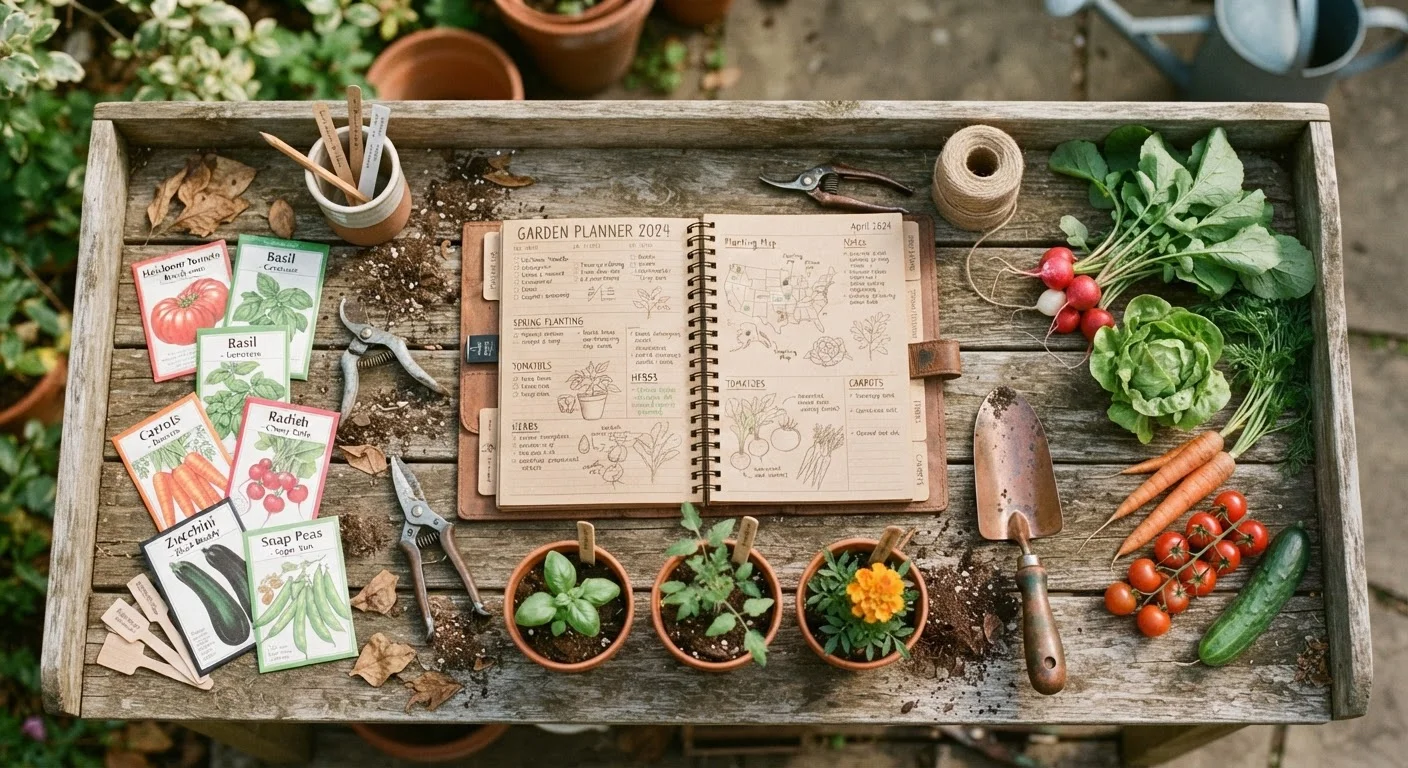
A garden calendar is a living document, not a one-time plan. The single most impactful habit you can develop is recording what you actually do - sowing dates, transplant dates, first and last harvest dates, and any unusual weather events - alongside the outcomes. A basic spiral notebook works as well as any app.
After two or three seasons, your notes will reveal patterns specific to your yard: which variety of beans consistently outperforms others, whether your last frost reliably comes two weeks earlier than the regional average, or whether a particular bed is always too wet to work in March. That knowledge is more precise and actionable than any generic growing guide.
Review your records each winter and adjust your forward calendar accordingly. Seasonal planning for your outdoor spaces as a whole - including entertaining areas - pairs naturally with this habit; see Seasonal Outdoor Living for a complementary patio-focused checklist.
Over time, a climate-anchored, observation-informed garden calendar becomes your most reliable gardening tool - one that keeps improving every year you use it.
The content on this site is for informational purposes only and is not a substitute for professional advice. Always consult a qualified professional for guidance specific to your situation.