

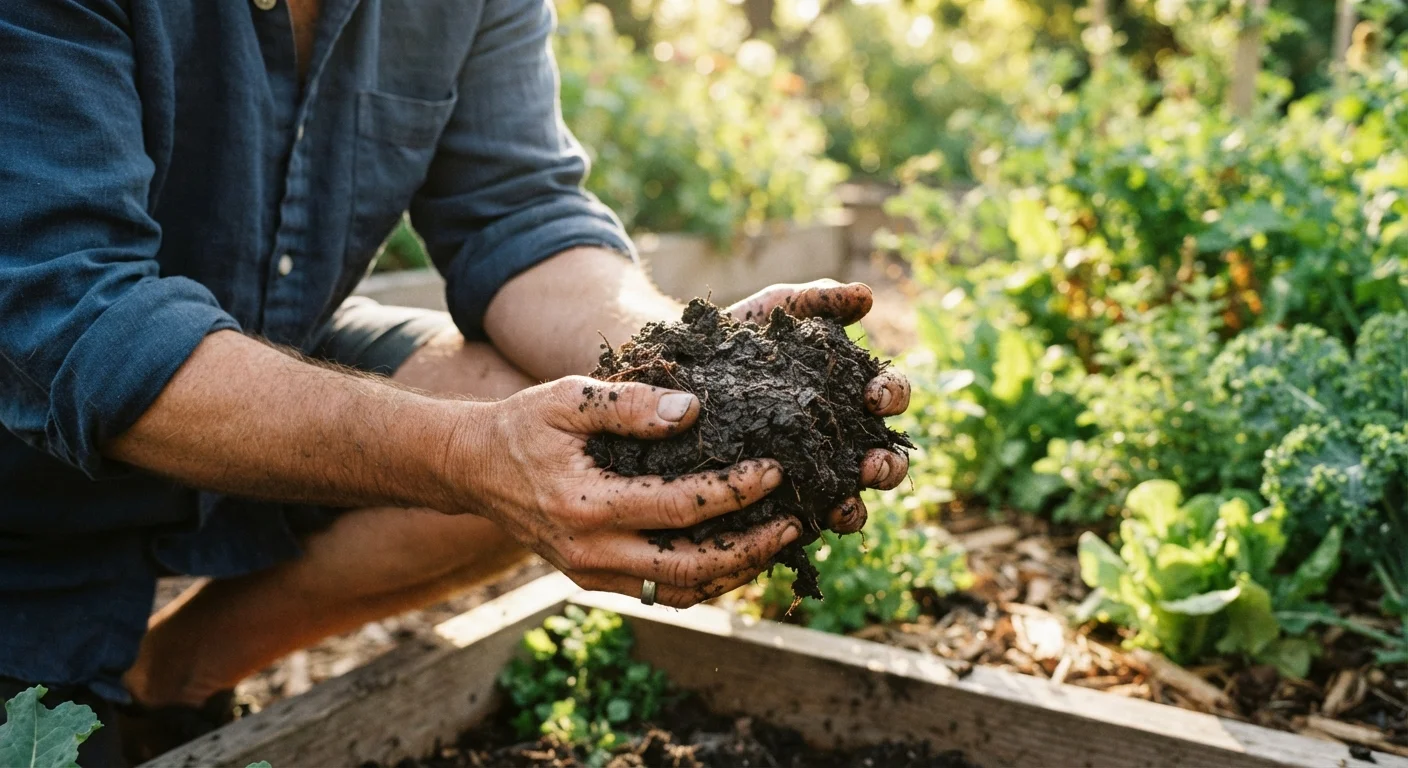
The Five Main Soil Types Explained
Most garden soils fall into one of five broad categories, each with distinct characteristics that directly affect how you garden.
- Clay soil is made of very fine, flat particles that pack tightly together. It holds moisture and nutrients well but drains slowly, becomes waterlogged in wet weather, and bakes hard in summer. It's also heavy and difficult to dig when wet.
- Sandy soil has large, coarse particles with plenty of air space between them. Water passes through quickly, which means it dries out fast and nutrients wash away easily. It's light and easy to dig but can be hungry and thirsty.
- Silty soil sits between clay and sand in particle size. It retains moisture better than sand and is reasonably fertile, but it can compact and form a crust on the surface if walked on frequently.
- Loamy soil is a balanced blend of sand, silt, and clay - typically around 40% sand, 40% silt, and 20% clay. It drains well, holds moisture and nutrients, is easy to work, and supports a wide range of plants. Most gardeners aim toward this ideal.
- Peaty soil is dark, spongy, and high in organic matter. It retains water exceptionally well but is naturally acidic and low in nutrients. Common in boggy or moorland areas.
If you're starting a garden from bare ground, identifying your soil type should be one of your very first steps.
How to Test Your Soil Type at Home
You don't need a laboratory or expensive kit to get a solid read on your soil. These hands-on methods give reliable results in minutes.
The Ribbon Test
- Take a small handful of soil from your garden bed - ideally about 4-6 inches below the surface - and moisten it until it holds together without being soggy.
- Squeeze it firmly into a ball in your palm.
- Press the ball between your thumb and forefinger, pushing forward to form a ribbon.
Interpret your results: a ribbon longer than 2 inches that feels smooth indicates clay. A ribbon shorter than 1 inch or none at all indicates sandy soil. A short, slightly gritty ribbon suggests loam. A silky, smooth ribbon that breaks apart fairly quickly points to silt.
The Jar Test
For a more visual result, fill a clear glass jar about one-third with dry garden soil, then fill it the rest of the way with water. Add a drop of dish soap, seal it, and shake vigorously. Leave it undisturbed for 24-48 hours. Sand settles first at the bottom, silt settles in the middle layer, and clay - the finest particles - either forms the top layer or stays suspended in the water. The relative thickness of each layer reveals your soil's composition at a glance.
Test Multiple Spots in Your Garden
Soil can vary considerably within a single yard - the area near a fence may be sandier, while a low-lying corner may have heavier clay. Run the ribbon or jar test in at least three different spots to get an accurate overall picture. This also helps you tailor amendments to specific beds rather than treating the whole garden identically.
Both tests work best with fresh garden soil rather than soil that has been stored or has dried out completely. Collect samples from several spots in the garden to get a representative picture.
What Your Soil Type Means for Your Garden
Understanding your soil type turns a vague frustration - plants struggling, beds staying too wet, or seedlings drying out - into a solvable problem with clear solutions.
25%
Of US agricultural soils classified as clay-heavy
According to USDA Natural Resources Conservation Service soil surveys, a significant portion of cultivated land across the US has high clay content, affecting drainage and workability.
3-5 years
Typical timeline to significantly improve soil structure
Horticultural guidance from cooperative extension services generally indicates that consistent annual amendments can meaningfully transform soil texture and biology within a few growing seasons.
50%
Of healthy soil volume is pore space
Well-structured loamy soil is roughly half solid particles and half pore space filled with air and water - a balance that supports both root growth and soil organism activity.
Clay soil gardeners need to prioritize drainage. Avoid working the soil when it's wet, which destroys its structure. Raised beds are one effective option - compare your choices in our guide to raised beds vs. in-ground planting. Adding organic matter annually - compost, leaf mold, or well-rotted manure - improves structure steadily over time.
Sandy soil gardeners should focus on water and nutrient retention. Mulching generously and incorporating organic matter before planting helps. You may need to water more frequently and feed plants more often, as nutrients leach quickly through the profile.
Loamy soil needs the least intervention but still benefits from a compost top-dressing each year to maintain organic content.
Silty soil benefits from reduced foot traffic and the addition of coarse organic matter to prevent compaction and crusting.
Soil type also intersects with pH - a separate but closely related factor. Even the best-draining loam won't perform if the pH is wrong for your plants. Our article on soil pH and lawn health covers how to test and adjust pH alongside texture improvements.
Improving Any Soil Type Over Time
Regardless of what you find under your feet, the good news is that soil is not fixed. It's a living system that responds to what you add and how you manage it.
The single most universally beneficial amendment for any soil type is compost. Added regularly - at least once a year, ideally each spring and fall - it improves drainage in clay, boosts water retention in sandy soil, and feeds the soil biology that makes nutrients available to plants. Homemade or purchased compost both work well.
Other useful strategies include:
- Mulching the surface with wood chips, straw, or shredded leaves - this regulates temperature, reduces moisture loss, and adds organic matter as it breaks down.
- Avoiding compaction by creating designated walking paths and never stepping directly on planting beds.
- Cover cropping in vegetable beds over winter with plants like crimson clover or winter rye, which protect and feed the soil during dormant months.
Soil improvement is a long game - expect meaningful change after two to three seasons of consistent amendments, not overnight. Patience and consistency are more effective than any single dramatic fix.
This article provides general gardening guidance. Soil conditions vary significantly by region and local geology. For precise analysis, consider submitting a sample to your local cooperative extension service, which can provide a detailed nutrient and texture report for your specific area.
Frequently Asked Questions
The ribbon test is the most reliable DIY method. Take a handful of moist soil and squeeze it firmly into a ball, then press it between your thumb and forefinger to form a ribbon. Clay soil forms a long, smooth ribbon; sandy soil falls apart immediately; loam forms a short ribbon that crumbles. You can also drop a soil ball from waist height - sandy soil shatters, clay soil bounces slightly.
Loam is widely regarded as the ideal soil for vegetables because it balances drainage, aeration, and nutrient retention. If your soil is clay-heavy or sandy, adding compost and other organic matter each season gradually moves it closer to a loamy texture.
Yes. Working compost, aged manure, or leaf mold into clay soil over multiple seasons improves its structure significantly. Avoid digging clay when it's wet, as this damages its structure further and creates compaction.
No - they measure different things. A soil texture test identifies particle composition (sand, silt, clay). A soil test kit typically measures pH and nutrient levels, which are separate but related factors. Both types of information are useful together.
Absolutely. Compacted clay lawns drain poorly and become waterlogged, encouraging moss and disease. Sandy lawns dry out quickly and may need more frequent watering and feeding. See our guide on <a href="/garden-outdoors/lawn-care/soil-ph-and-your-lawn-the-connection-most-gardeners-overlook">soil pH and lawn health</a> for related factors.
Each soil type favors different plants. Lavender and rosemary thrive in sandy, well-drained soil. Willows and hostas tolerate clay. Loamy soil suits the widest range of vegetables, fruits, and ornamentals. Always cross-reference your soil conditions with <a href="/garden-outdoors/gardening-basics/reading-a-plant-label-without-the-confusion">plant label information</a> before buying.
The content on this site is for informational purposes only and is not a substitute for professional advice. Always consult a qualified professional for guidance specific to your situation.