

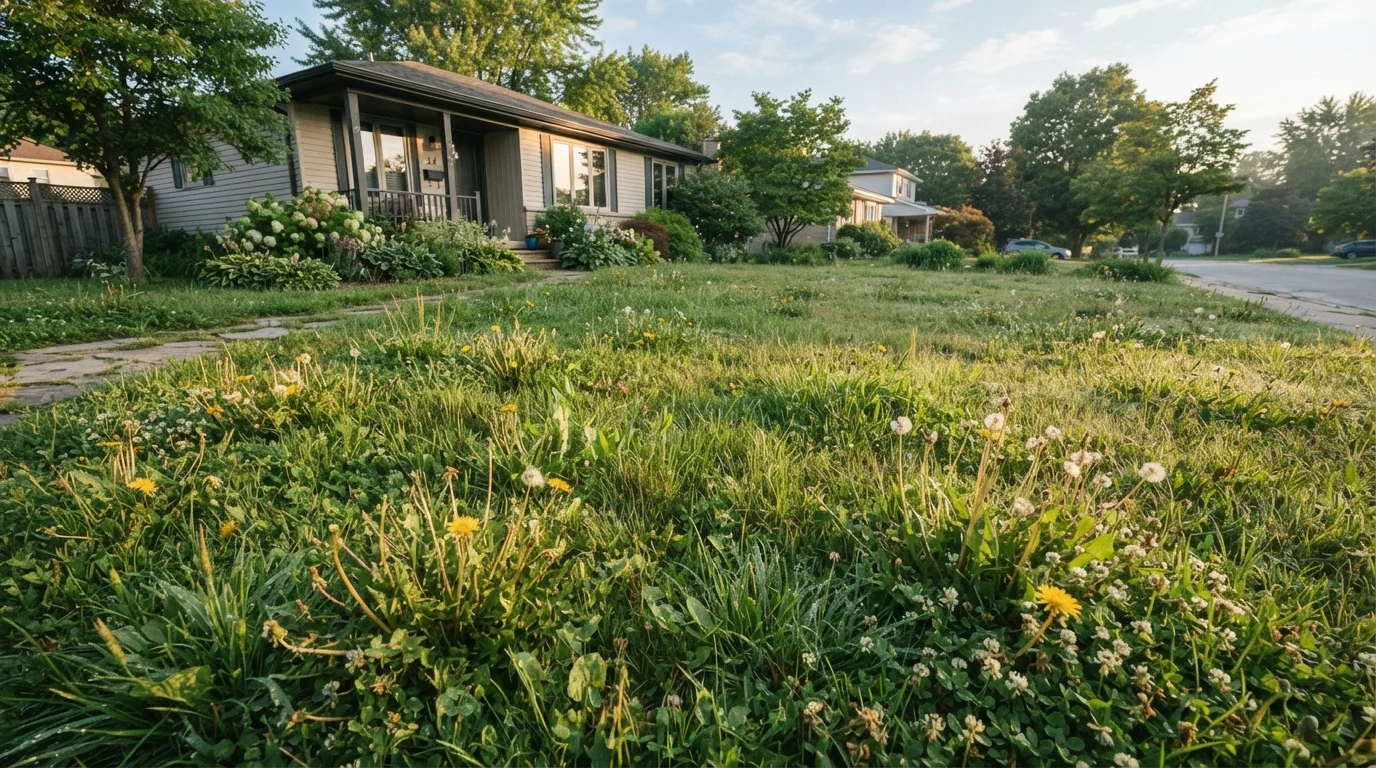
Why Weed ID Matters Before You Act
Pulling out a weed that turns out to be a seedling of your own grass, or applying a broadleaf treatment to a grassy weed that won't respond to it, are two of the most common lawn-care frustrations. Getting the identification right first saves effort and avoids wasted treatments.
Weeds generally fall into three categories: broadleaf weeds (like dandelions and clover), grassy weeds (like crabgrass and annual meadow grass), and sedges. Each category responds differently to control methods. Beyond species type, knowing whether a weed is an annual - completing its cycle in one season - or a perennial - returning from established roots year after year - shapes your entire management approach.
It's also worth remembering that most weeds exploit a weakness. Compacted soil, low mowing height, thin grass, or poor drainage all create openings. Our lawn troubleshooting guide can help you read what your lawn's condition is telling you beyond the weeds themselves.
Dandelion (Taraxacum officinale)
What it looks like: A rosette of deeply toothed leaves lying flat against the soil, with a hollow stem bearing a single yellow flower that matures into a spherical seed head. The taproot can extend 6-18 inches into the ground.
Why it's in your lawn: Dandelions thrive in compacted, low-fertility soil. Their flat rosette habit allows them to survive mowing almost indefinitely.
Management: Hand-pull after rain when soil is soft, using a long-handled weeder to extract the full taproot. Leaving even a few inches of root in the ground will allow regrowth. Repeated removal over one to two seasons is typically needed to exhaust established plants. Improving soil compaction through core aeration reduces future invasion.
The full taproot must come out - leaving even a small piece behind guarantees regrowth.
White Clover (Trifolium repens)
What it looks like: Three-part round leaflets, often with a pale chevron marking. Low-growing and spreading by stolons (surface runners), with white globe-shaped flowers that attract pollinators.
Why it's in your lawn: Clover fixes atmospheric nitrogen, so it tends to thrive in nitrogen-poor turf. Its presence often signals underfeeding rather than an aggressive invasion.
Management: Before removing clover, consider whether it's actually a problem - it stays green in dry spells and supports beneficial insects. If removal is the goal, improving fertility with a balanced nitrogen feed often suppresses it naturally over time. For persistent patches, hand-removal before flowering prevents seed spread. Note that some homeowners intentionally include clover in low-maintenance lawn mixes.
Clover in your lawn is often a sign of low nitrogen - address the soil before pulling the plant.
Crabgrass (Digitaria spp.)
What it looks like: A coarse, light-green annual grass that germinates in late spring and spreads in a star-shaped, low-growing mat. Finger-like seed heads appear in summer. It dies with the first hard frost but leaves behind thousands of seeds.
Why it's in your lawn: Crabgrass germinates when soil temperatures consistently reach around 55-60°F and loves hot, bare soil - particularly in thin or drought-stressed turf.
Management: Prevention is easier than cure. Overseeding bare patches in fall and maintaining a mowing height of at least 3 inches shades soil and discourages germination. Young plants can be hand-pulled before seed set. Once established and seeding, physical removal should be paired with collection of plant material to avoid scattering seeds.
Crabgrass is an annual - stop it before it sets seed and you interrupt next year's population.
Annual Meadow Grass (Poa annua)
What it looks like: A pale green, fine-bladed grass with boat-shaped leaf tips. It forms small tufts or cushions and produces tiny white seed heads even at low mowing heights. Unlike lawn grasses, it has a lighter color that makes patches visible.
Why it's in your lawn: Poa annua germinates in cool, moist conditions - often in fall or early spring - and favors compacted, poorly drained areas. It can complete its entire life cycle and set seed within a single mowing cycle.
Management: Core aeration improves drainage and disrupts seedbed conditions. Overseeding with competitive lawn grass species reduces bare soil. Because it blends with turf, hand removal of clumps is easier in early spring before seed heads form. There is no selective herbicide that removes Poa annua from cool-season lawns without harming surrounding grass.
Annual meadow grass can set seed faster than your mowing schedule - act early in cool seasons.
Broadleaf Plantain (Plantago major)
What it looks like: Oval to egg-shaped leaves with prominent parallel veins, forming a flat rosette. A central spike bears small, inconspicuous flowers. Leaves are tough and leathery - resistant to foot traffic and mowing.
Why it's in your lawn: Plantain is a reliable indicator of compacted soil. Its rosette habit and tough leaves are evolved for survival in high-traffic areas.
Management: Core aeration is the most important long-term fix. Hand-digging individual plants with a dandelion fork works well while soil is moist, provided the central root crown is removed. In heavily compacted areas, plan to aerate the lawn before overseeding to give grass a genuine competitive advantage.
Plantain almost always signals compacted soil - aeration addresses the cause, not just the symptom.
Creeping Charlie / Ground Ivy (Glechoma hederacea)
What it looks like: Round to kidney-shaped, scallop-edged leaves on square stems that root at nodes as they spread. Crushed leaves have a distinctive minty-herbal scent. Small purple flowers appear in spring.
Why it's in your lawn: Ground ivy thrives in shady, moist, and poorly drained areas where lawn grasses struggle to compete. Thin turf under trees is a common entry point.
Management: Improve drainage and sunlight access where possible - thinning overhanging branches may help in shaded spots. Hand-pulling before flowering can limit spread but must be thorough, as any rooted node left behind will regenerate. Improving lawn density through overseeding with shade-tolerant grass varieties is the most sustainable approach in low-light conditions. See Ground-Level Lawn Care for New Homeowners for guidance on managing challenging lawn areas.
Ground ivy exploits shade and poor drainage - improving those conditions reduces its foothold.
Building a Weed-Resistant Lawn Over Time
Individual weed removal is only part of the picture. A lawn that's mowed at the right height - generally no shorter than 3 inches for most cool-season grasses - shades the soil surface and makes it harder for weed seeds to germinate. Overseeding thin patches in fall reduces bare ground that weeds would otherwise colonize.
Mow High to Suppress Weeds Naturally
Raising your mowing height to 3-4 inches for most cool-season grasses creates a dense canopy that shades soil and dramatically reduces weed seed germination. This single adjustment is one of the most effective and lowest-effort preventive measures available. Avoid the common impulse to cut short in spring - it often does more to help weeds than the grass. Check our guide to common lawn myths for more on why shorter isn't always better.
Timing matters, too. Annual weeds like crabgrass and annual meadow grass are most vulnerable early in the season before they set seed. Letting even a few plants go to seed can introduce thousands of new seeds into the soil bank. For perennials like dandelions and plantain, persistence pays - removing regrowth repeatedly over a season gradually exhausts root reserves.
For a structured approach to seasonal lawn tasks including when to overseed, aerate, and feed, the Lawn Care Calendar provides a month-by-month breakdown. And if you're starting fresh after severe weed damage, Starting a Lawn From Scratch covers your options for rebuilding. A healthy, dense lawn established on well-prepared soil is ultimately your most effective and lowest-effort weed management tool.
The content on this site is for informational purposes only and is not a substitute for professional advice. Always consult a qualified professional for guidance specific to your situation.