

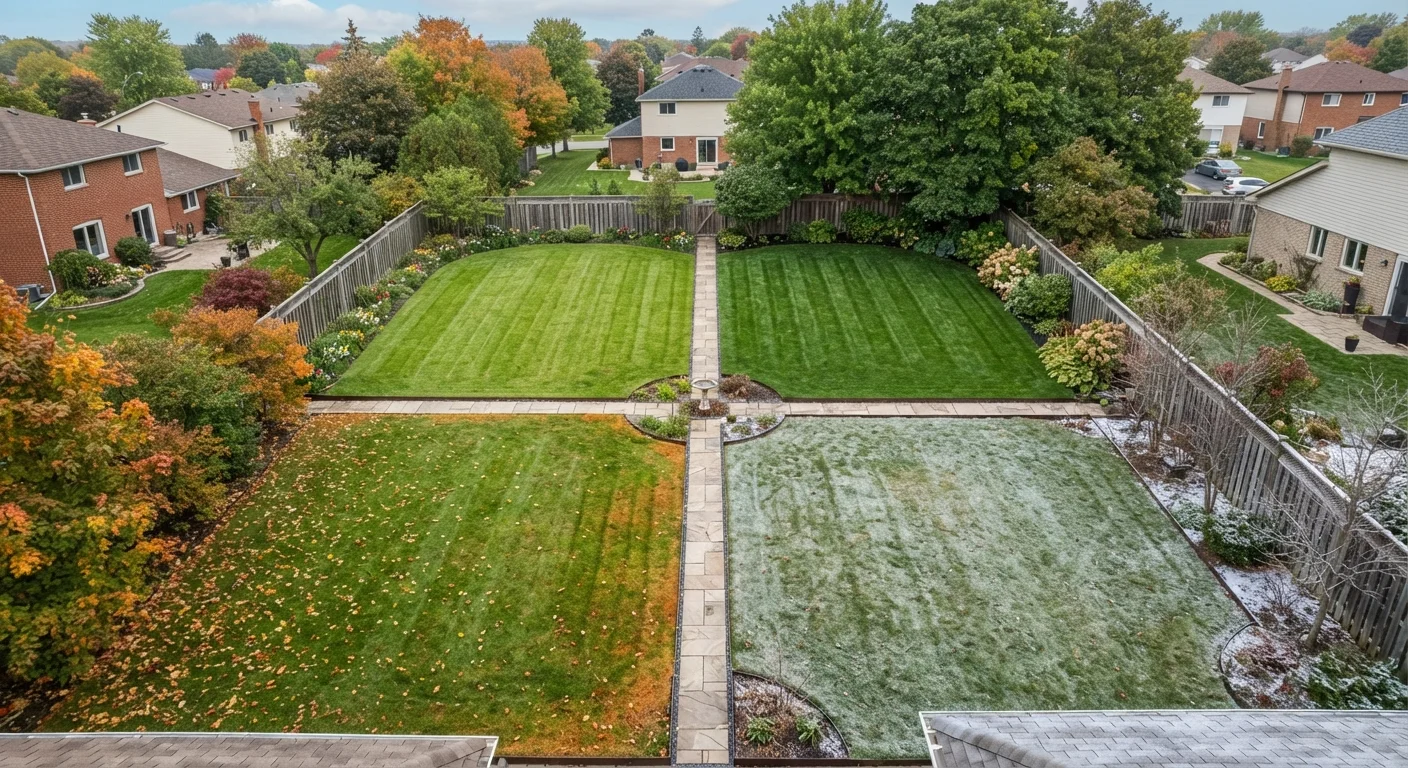
Why a Seasonal Approach Matters
Lawn care isn't a single task - it's a rhythm. Grass grows, rests, recovers, and stores energy differently across the year, and treating it the same in January as in July sets you up for an uphill battle. A seasonal calendar aligns your effort with what the lawn actually needs, so you're not fighting biology.
The two main grass categories in the US - cool-season grasses (fescues, bluegrass, ryegrass) and warm-season grasses (Bermuda, zoysia, St. Augustine) - have opposite peak-growth windows. Cool-season lawns thrive in spring and fall; warm-season lawns push hard in summer. Before following any seasonal advice, identify your grass type, because the timing shifts significantly. See how local climate shapes garden timing for more on adapting schedules to your region.
Spring: Wake-Up and Repair
Roughly March-May for most of the US. As soil temperatures climb above 50°F, grass breaks dormancy and begins active growth. Spring is your window to fix winter damage and set the lawn up for success.
- Rake and dethatch: Remove matted dead grass (thatch) that accumulated over winter. A thin layer of thatch (under ½ inch) is normal; anything thicker blocks water and nutrients from reaching roots.
- Overseed bare spots: Fill thin or dead patches with seed matched to your existing grass type. Keep seeded areas consistently moist until germination establishes.
- First mowing: Begin mowing when grass reaches about 3-4 inches. Never remove more than one-third of the blade height in a single cut.
- Spring fertilizing: For cool-season grasses, a light application of a balanced or slow-release fertilizer in mid-spring supports steady growth without spurring excessive top growth at the expense of roots. Warm-season grasses don't need feeding until they green up fully.
- Weed pre-emergents: Apply a pre-emergent herbicide before soil temps hit 55°F to prevent crabgrass germination - but skip it if you're overseeding, as it will inhibit grass seed too.
If you're spotting recurring bare areas or moss, those are diagnostic signals worth investigating. Our lawn troubleshooting guide walks through the most common causes.
Before your first spring mow, tug on a handful of grass - if the roots hold firm in the soil, the lawn has broken dormancy and is ready. Mowing too early on frost-loosened turf can uproot grass crowns.
Soil temperature and root anchoring are more reliable readiness indicators than calendar date alone, especially in variable spring weather.
When aerating in fall, leave the soil plugs on the surface to break down naturally - they return organic matter and microbes to the lawn without any extra effort.
Removing cores and top-dressing with compost over the aeration holes accelerates soil improvement, but even leaving plugs in place delivers measurable benefit.
Set a reminder to check mower blade sharpness at the start of each season - a blade that cut cleanly in October may be dull by April.
Sharp blades produce clean cuts that heal quickly, while ragged cuts leave the grass vulnerable to fungal disease and discoloration.
Summer: Protect and Sustain
Roughly June-August. Heat and drought stress are the primary enemies in summer. Your goal shifts from growth promotion to protection.
- Raise the mowing height: Set your mower deck higher - typically 3.5 to 4 inches for cool-season grasses. Taller grass shades the soil, reduces evaporation, and crowds out weeds.
- Water deeply and infrequently: Aim for about 1 inch of water per week (from rain or irrigation), applied in one or two sessions rather than daily shallow sprinkles. Early morning watering minimizes evaporation and disease risk.
- Hold off heavy fertilizing for cool-season lawns: Pushing rapid growth during summer heat stresses these grasses. Warm-season lawns, however, are in their prime and benefit from a midsummer feeding.
- Watch for grubs and insects: Japanese beetle grubs and other lawn pests are active in summer. Irregular brown patches that peel back like a carpet can signal grub damage beneath.
Manage foot traffic on drought-stressed turf and consider letting cool-season lawns go semi-dormant during extended dry spells - dormancy is a survival mechanism, not failure. Check for common weeds that exploit stressed turf using our lawn weed identification reference.
Fall: Strengthen Before Winter
Roughly September-November. Fall is arguably the most important season for long-term lawn health, especially for cool-season grasses entering their second peak-growth window. Roots grow actively even as top growth slows, making this the ideal time for restorative work.
- Aerate: Core aeration - removing small plugs of soil - relieves compaction, improves drainage, and allows nutrients and air to reach roots. Fall aeration is especially beneficial for high-traffic lawns.
- Overseed: Thin lawns benefit enormously from fall overseeding. Cooler temperatures and more reliable moisture give new seed an excellent chance to establish before winter.
- Fertilize for root strength: A fall fertilizer higher in potassium supports root development and cold hardiness. This feeding fuels the lawn's underground preparation for dormancy.
- Keep mowing: Continue mowing until growth stops. For the final cut of the season, lower the deck slightly to around 2-2.5 inches to reduce the risk of snow mold.
- Leaf management: Don't let fallen leaves mat over the lawn for weeks - they block light and promote fungal disease. Mulch-mow light leaf cover; rake or blow heavy accumulation.
Pair your fall lawn work with the broader outdoor tasks in our end-of-season garden closedown checklist.
Winter: Rest and Plan
Roughly December-February. Most lawns across the US are either fully dormant or growing very slowly in winter. Your primary job is to avoid causing damage.
- Minimize foot traffic: Walking repeatedly on frozen or frost-covered turf crushes grass crowns and causes compaction that shows up as bare paths in spring.
- Avoid de-icing salt near lawn edges: Salt runoff damages grass. Use sand or calcium-based alternatives on nearby paths and driveways where possible.
- No mowing needed: If growth has genuinely stopped, mowing serves no purpose and stresses the plant.
- Plan and resupply: Winter is the right moment to review what worked, map out any landscaping changes, and take stock of tools and supplies you'll need come spring.
If you're new to lawn maintenance and want a comprehensive foundation, our no-jargon introduction for new homeowners covers the core concepts clearly.
Year-Round Habits That Make the Difference
Beyond seasonal tasks, a few consistent practices separate a lawn that merely survives from one that thrives:
- Sharpen mower blades annually - dull blades tear grass rather than cutting it cleanly, leaving ragged edges that brown and invite disease.
- Test your soil every 2-3 years - a basic soil pH and nutrient test guides fertilizer choices more accurately than any generic schedule.
- Mow at consistent intervals - during peak growing seasons, weekly mowing keeps grass in the optimal height range without scalping.
- Adjust to your conditions - a shaded lawn, a clay-heavy yard, or a high-rainfall region all call for modifications. The calendar is a framework, not a fixed prescription.
If you prefer to reduce or eliminate synthetic inputs, explore what a chemical-free lawn care routine realistically looks like - there are effective approaches, though they require adjusted expectations on timing and results.
A well-maintained lawn rarely demands dramatic intervention. Consistent, seasonally appropriate care adds up to real results over time - and the calendar is the simplest tool you have for staying on track.
The content on this site is for informational purposes only and is not a substitute for professional advice. Always consult a qualified professional for guidance specific to your situation.