

Choosing the Right Shade Structure
Not all shade solutions are created equal. The best choice for your outdoor space depends on how permanent you want the installation, the size of the area you're covering, your local climate, and how much DIY work you're willing to take on. This reference breaks down the four most common residential shade structures so you can match the right option to your situation.
| Most portable option | Outdoor umbrella |
| Most permanent structure | Pergola |
| Typical shade sail lifespan | 5-10 years (UV-rated fabric) |
| Permit often required for | Attached pergolas, electrical awnings |
| Best for wall-adjacent spaces | Awning |
| Widest design flexibility | Shade sail (multi-panel layering) |
For broader context on making your patio work year-round, see our guide on seasonal outdoor living preparation.
Shade Sails
A shade sail is a tensioned fabric panel - typically triangular or rectangular - anchored between posts or fixed points like a wall, fence, or tree. The angled, taut design gives it a contemporary look and allows rainwater to run off when installed at a pitch.
- Coverage: Flexible; one sail covers roughly 100-300 sq ft depending on shape and size. Multiple sails can be layered.
- Installation: Requires sturdy anchor points capable of handling significant lateral tension. Post footings in concrete are common. Hardware matters: stainless steel turnbuckles and heavy-duty eye bolts are typical.
- Best for: Modern homes, irregularly shaped patios, or spaces where rigid structures aren't practical.
- Limitations: Fabric degrades in UV over time (typically 5-10 years depending on material). Most need to be removed during high winds or heavy snow seasons.
Awnings
An awning is attached directly to the exterior wall of a house and projects outward over a door, window, or patio. Retractable models fold back when not in use; fixed awnings are permanently extended.
- Coverage: Generally 8-20 feet of projection, depending on model and wall attachment width.
- Installation: Requires secure wall anchoring into structural framing - not just siding. Retractable motorized versions involve electrical wiring, which should be handled by a licensed electrician.
- Best for: Patios and decks directly adjacent to the home's exterior; situations where you want shade on demand without permanent structure.
- Limitations: Fixed awnings can't adapt to changing sun angles. Both types require periodic fabric cleaning and hardware inspection.
Note: Awning installation that penetrates exterior walls or involves electrical work may require a building permit in some municipalities. Always verify local requirements before beginning.
Pergolas
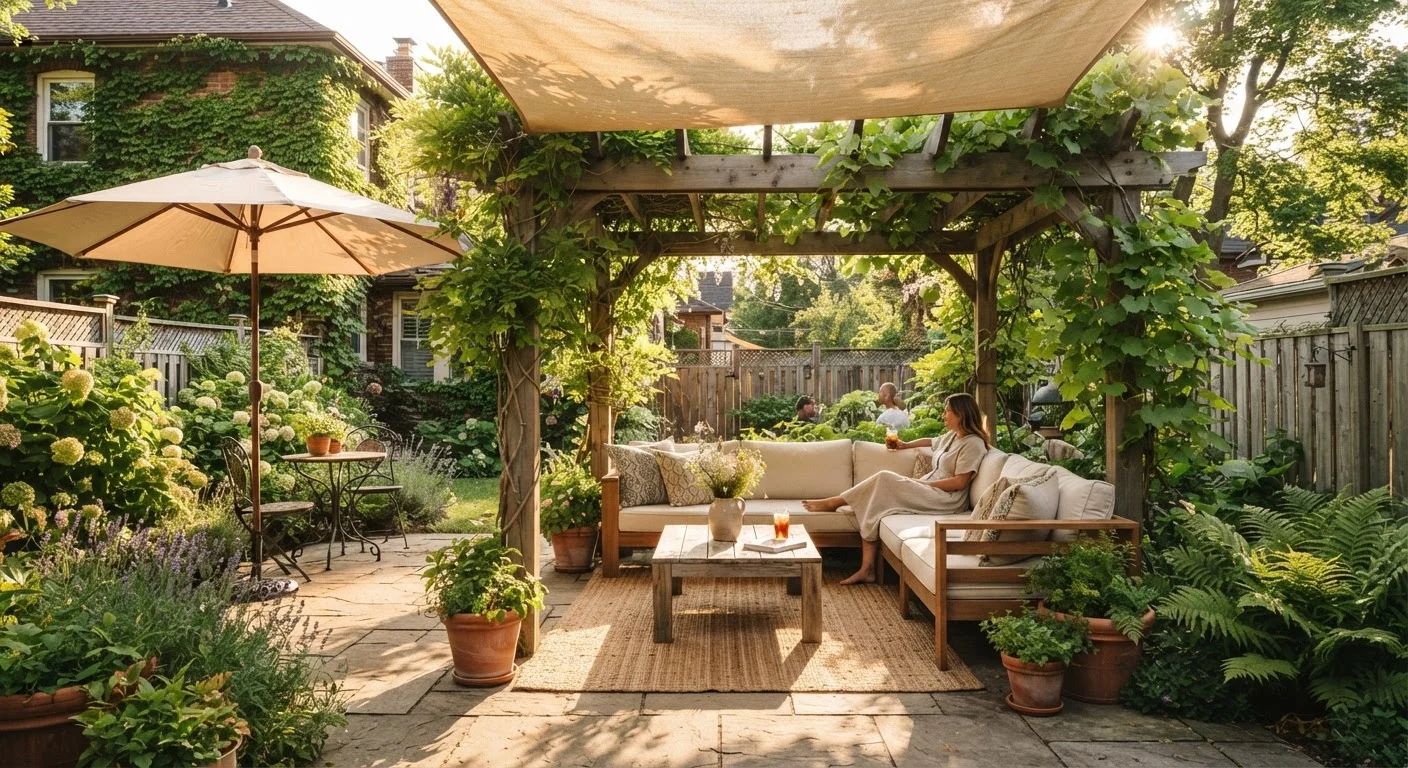
A pergola is a freestanding or house-attached open-roof structure with vertical posts and horizontal crossbeams or lattice. It provides partial shade and a defined outdoor room - particularly when fitted with a fabric canopy, climbing plants, or louvered panels.
- Coverage: Highly customizable, from a small 10×10 ft kit to a large custom-built structure spanning an entire patio.
- Installation: Freestanding pergolas require post footings. Attached pergolas connect to the home's ledger board - this typically requires a permit and must meet local building codes. For a full pre-build checklist, see everything to know before building a pergola.
- Best for: Homeowners wanting a permanent, property-enhancing structure that can accommodate lighting, ceiling fans, or outdoor curtains.
- Limitations: Highest cost and effort among the four options. Wood pergolas need regular sealing or staining.
Outdoor Umbrellas
The most portable option, an outdoor umbrella mounts in a weighted base or threads through a patio table's center hole. Cantilever (offset) styles allow the pole to stand to one side, keeping the shaded area completely clear.
Cantilever umbrella
An offset patio umbrella with its pole positioned to the side rather than through the center. This design keeps the entire shaded area beneath the canopy free of obstructions, making it ideal for seating arrangements and loungers.
Tensile structure
A structure - like a shade sail - that achieves stability through fabric tension rather than rigid framing. The material must be kept taut between anchor points to maintain its shape and shed water.
Ledger board
A horizontal beam bolted directly to a home's framing and used to anchor an attached pergola or deck. Proper ledger attachment is critical to structural integrity and typically falls under building permit requirements.
Retractable awning
An awning fitted with a folding arm mechanism - manual or motorized - that allows the fabric canopy to extend or retract as needed. Retractable models protect the fabric when not in use, extending its lifespan.
Post footing
A concrete anchor set below ground level that supports an upright post for a pergola, fence, or shade sail. Footing depth requirements vary by local frost line depth and load.
- Coverage: Typically 7-13 feet in diameter; cantilever models can reach further.
- Installation: No permanent installation required. Base weight is critical - umbrellas can become airborne in wind if under-ballasted.
- Best for: Renters, small patios, poolside use, or anyone who wants flexibility to relocate shade.
- Limitations: Must be closed in high winds. Fabric and frame longevity varies with exposure; bring indoors or use a cover during off-season storage.
If you're also thinking about privacy alongside shade, our article on privacy screening for outdoor spaces covers complementary solutions like panels and curtains that pair well with any shade structure.
The content on this site is for informational purposes only and is not a substitute for professional advice. Always consult a qualified professional for guidance specific to your situation.