

Our Verdict
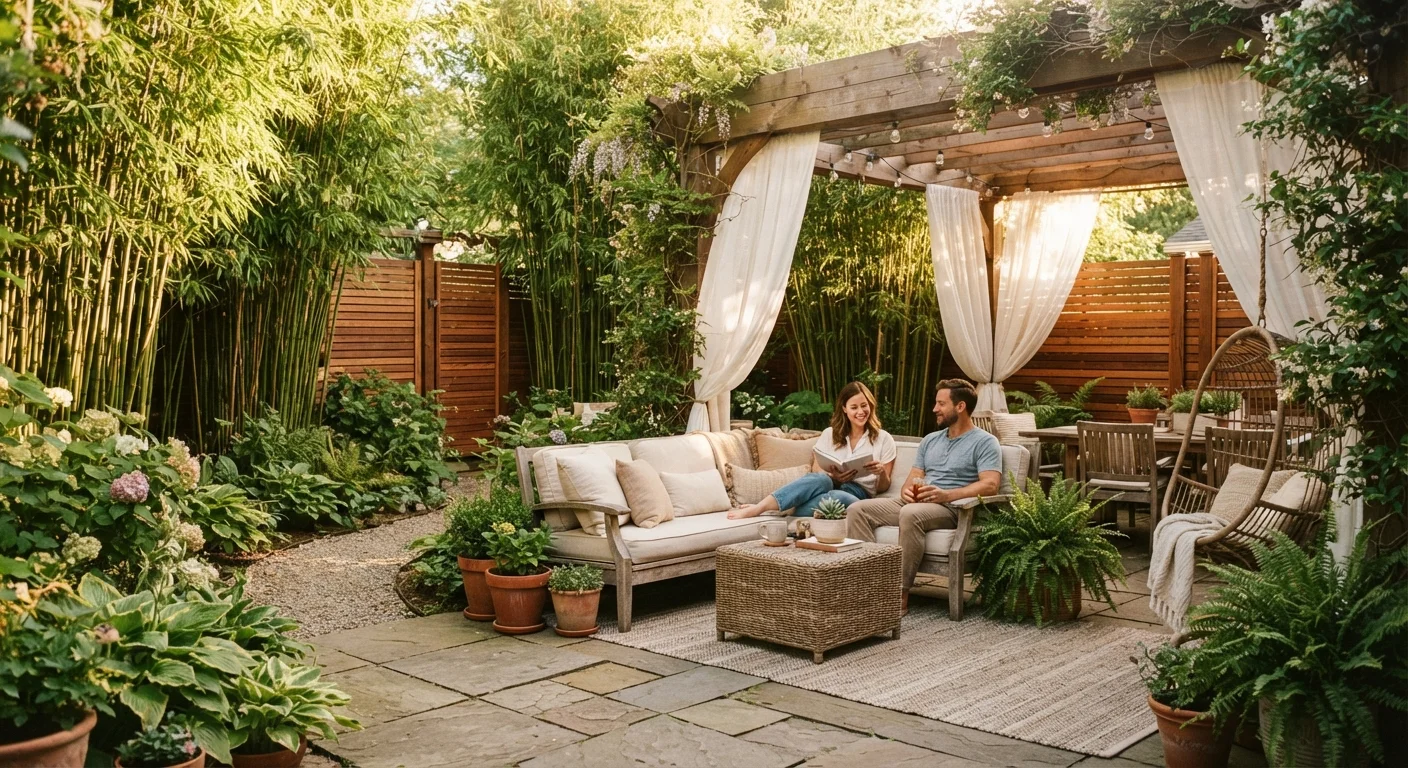
No single privacy solution suits every yard. Fences offer the most reliable, permanent screening but come with permitting hurdles and upfront costs. Plants create beautiful, living barriers at lower cost but demand time to mature. Panels hit a practical sweet spot for many homeowners, while curtains are ideal for covered patios where semi-privacy and ambiance matter most.
| Best for | Recommended |
|---|---|
| Homeowners wanting permanent, full-height privacy | Solid Wood or Composite Fence |
| Budget-conscious gardeners with time to wait | Living Hedge or Climbing Plants |
| Renters or those who prefer flexible, reconfigurable solutions | Modular Slatted Panels |
| Covered patios or pergolas needing soft, adjustable screening | Outdoor Curtains |
Why Privacy Screening Deserves Careful Thought
A lack of privacy is one of the most common reasons outdoor spaces go unused. Whether it's a neighbor's sightline, a busy sidewalk, or an elevated deck across the fence, that sense of being watched can make even a beautiful patio feel uncomfortable. The good news is that effective screening doesn't require a major renovation — but it does require choosing the right approach for your specific situation.
Before comparing options, consider three defining factors: permanence (how fixed or flexible you need the solution to be), installation complexity (whether you're doing it yourself or hiring a professional), and aesthetics (how the screen needs to look from both inside and outside the yard). Also check local regulations — many municipalities and HOAs limit fence height to 6 feet in rear yards and 4 feet in front yards, and some materials may be prohibited outright. For more ideas on making smaller yards feel open while still private, see our guide to compact yard design.
Fences: Maximum Privacy, Maximum Commitment
A solid fence — wood, vinyl, composite, or metal — remains the gold standard for privacy screening. A 6-foot board-on-board wood fence, for example, blocks virtually all sightlines and reduces noise meaningfully. Composite and vinyl options reduce long-term maintenance, though they typically cost more upfront and carry a different aesthetic.
The trade-offs are real. Fences are permanent structures that usually require a permit in most US jurisdictions, and installation almost always requires professional help for anything beyond a simple panel replacement. Concrete footings must go below the frost line in colder climates to prevent heaving — an important detail that DIYers sometimes overlook. Fences also do nothing to soften the visual mass they create, which can make smaller yards feel closed in rather than private.
Check Rules Before You Build or Plant
Fence height limits, setback requirements, and material restrictions vary by municipality, county, and HOA. Even planting a large hedge too close to a property line can create disputes. Contact your local building department and review any HOA covenants before committing to a permanent solution — non-compliance can result in costly removal orders.
If you're planning on a fence near a property line, a utility line, or an easement, consult your local building department and have your property surveyed first. Installing a fence even a few inches onto a neighbor's property can create legal disputes that are expensive to resolve.
Living Screens: Plants, Hedges, and Climbers
A well-chosen hedge or row of tall ornamental grasses can deliver privacy that no fence can match aesthetically. Evergreen shrubs such as arborvitae, Leyland cypress, or holly provide year-round screening. Deciduous options like viburnum or native elderberry offer three-season privacy and strong wildlife value. Bamboo — specifically clumping varieties, not running types — grows fast and creates a lush, tropical feel, though it requires containment planning from the start.
The main challenge with living screens is time. Even fast-growing arborvitae typically takes three to five years to reach full screening height. Climbers like clematis, climbing hydrangea, or Virginia creeper on a trellis can fill vertical space faster and work well on existing fences or freestanding frames. For a more dynamic approach, tall container plants — ornamental grasses, columnar junipers, or large tropical specimens — can be positioned strategically and moved seasonally. Our container gardening guide covers the soil and drainage details that keep large potted plants thriving.
Modular Panels: Speed and Flexibility
Slatted wood, bamboo reed, metal mesh, and composite panel systems have become increasingly practical for homeowners who want more than a curtain but less commitment than a fence. Many panel systems attach to existing fence posts or mount to freestanding frames, making them accessible for weekend DIY installation. Horizontal cedar slats, for instance, allow airflow while blocking direct sightlines — a meaningful advantage in hot climates where a solid barrier can trap heat on a patio.
Panels shine in rental situations or wherever permanent construction isn't possible. They're also easier to reconfigure if your furniture layout or screening needs change. The limitation is structural: freestanding panel frames need to be anchored carefully and may not withstand high-wind conditions without additional support. Always follow manufacturer guidance on anchoring, especially in regions with strong seasonal winds. Panels pair well with overhead shade structures — see our shade structure comparison for ideas on combining vertical and overhead coverage.
| Solid Fence | Living Hedge/Plants | Modular Panels | Outdoor Curtains | |
|---|---|---|---|---|
| Privacy Level | Very high | High (once mature) | Medium–high | Medium (partial) |
| Installation Complexity | High — often needs pro | Low–medium | Low–medium | Low |
| Permit Likely Required | Yes, in most areas | No | Sometimes | No |
| Time to Full Privacy | Immediate | 3–7 years | Immediate | Immediate |
| Maintenance | Low–medium | Medium–high | Low–medium | Medium (seasonal) |
| Flexibility/Portability | None — permanent | None once established | Moderate | High |
| Aesthetic Range | Structured, defined | Natural, organic | Modern to rustic | Soft, decorative |
Outdoor Curtains: Soft Privacy for Covered Spaces
Outdoor curtains work best on covered patios, pergolas, and screened porches where a track or rod can be mounted overhead. They don't block wind or noise like a solid barrier, but they create a sense of enclosure that is surprisingly effective, especially in the evening. UV-resistant, solution-dyed fabrics hold their color well in full sun and resist mildew when allowed to dry thoroughly between uses.
The practical limitations are worth acknowledging: curtains offer little privacy when wind billows them open, and they require seasonal storage in most US climates to prevent damage from winter moisture and ice. They're also most effective for partial screening — framing a seating area rather than securing a full boundary. That said, for outdoor entertaining spaces where ambiance matters as much as privacy, curtains add a layer of intimacy that panels and fences simply can't replicate. Pair them with a well-designed layout for best effect — our outdoor entertaining setup guide offers practical arrangement ideas. For seasonal care and storage, our seasonal patio preparation guide walks through what to address each time of year.
The content on this site is for informational purposes only and is not a substitute for professional advice. Always consult a qualified professional for guidance specific to your situation.