

The Problem With Most Accent Walls
Accent walls promise a lot - a jolt of personality, a focal point, a room that finally feels designed. But plenty of them land with a thud instead of a wow. The wall reads too dark, too random, or somehow disconnected from everything else in the room. The good news: these are predictable problems with fixable causes.
Understanding what typically goes wrong is the fastest path to getting it right. Whether you're debating a rich paint color or a patterned wallpaper, deciding between paint and wallpaper is only step one - wall selection and color relationships matter just as much.
Choosing a wall that isn't actually the focal point of the room.
Why it happens: People often accent the first wall they see when entering, or the largest wall available - neither of which is necessarily where the eye naturally lands.
Picking a color that has no relationship to the rest of the room.
Why it happens: Bold accent colors look striking in isolation - on a paint chip or in a photo - but without an echo elsewhere in the room, they read as arbitrary rather than intentional.
Using a pattern that's mismatched in scale to the room's size.
Why it happens: Oversized geometric wallpaper looks amazing in showroom photos, which are typically shot in large, airy spaces. In a standard bedroom or small living room, the same pattern can feel suffocating.
Neglecting lighting when evaluating the color or finish.
Why it happens: Paint swatches are typically viewed under neutral store lighting, but your wall will live under warm incandescent bulbs, cool LEDs, or shifting natural light - each of which changes how a color reads dramatically.
Leaving furniture arrangements that don't support the accent wall.
Why it happens: Furniture is often arranged for traffic flow or habit rather than to activate the room's design intention - meaning the accent wall ends up behind furniture no one faces.
How to Get the Balance Right
Once you've identified what's throwing your accent wall off, the fix is usually simpler than starting over. Most issues come down to three things: wall selection, color relationship, and furniture alignment.
60-30-10
Classic interior color distribution rule
Interior designers commonly reference the 60-30-10 rule: 60% dominant color, 30% secondary, 10% accent - helping accent walls stay proportional within a room's palette.
2-3 shades
Recommended contrast range for accent walls
Color theory guidelines generally suggest an accent wall reads best when it sits two to three shades deeper or richer than the room's primary wall color, maintaining contrast without visual jarring.
Start by stepping back and identifying your room's natural focal point - the element the eye moves to first when you walk in. That's almost always the right wall. A fireplace wall, the wall behind a bed's headboard, or the wall a sofa floats in front of are classic candidates. If you're unsure how to build or identify a focal point, this guide to creating room anchors walks through every option.
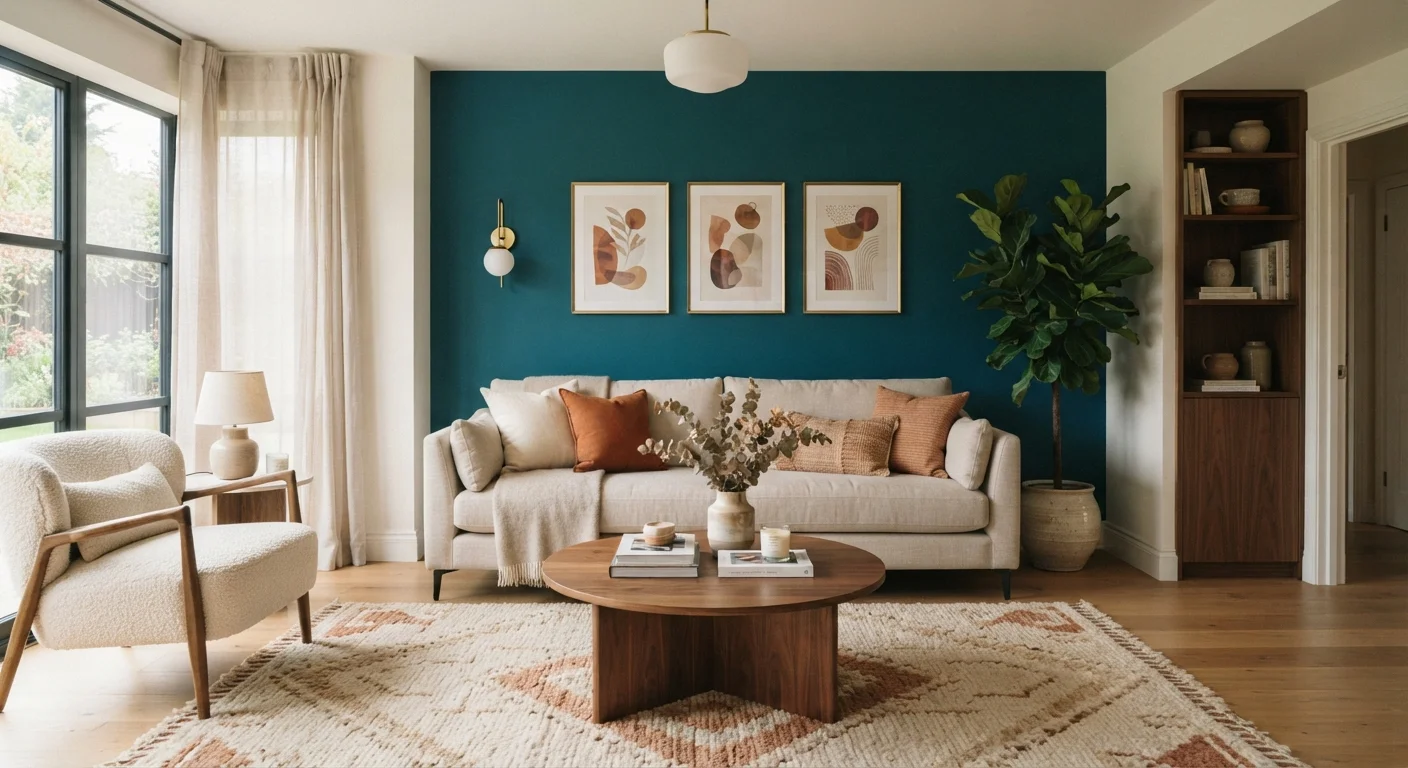
For color, pull from shades already present in your textiles, artwork, or flooring rather than introducing an entirely new hue. A deep terracotta wall works beautifully if warm rust tones already live in the room's throw pillows or rug - but feels jarring if everything else skews cool and gray. Test your chosen color at large scale (at least a 12-by-12-inch swatch painted on the actual wall) before committing.
If pattern is part of the plan, match the scale to the room. Smaller rooms tend to handle smaller-repeat patterns and vertical motifs best; larger rooms can carry bold, wide repeats without feeling chaotic. And always make sure your furniture is actually arranged toward the accent wall - if the sofa faces sideways or the bed is pushed to an adjacent wall, the accent wall loses its purpose entirely. For a confident overview of techniques from shiplap to peel-and-stick, Accent Walls Without the Overwhelm is a great next read.
The content on this site is for informational purposes only and is not a substitute for professional advice. Always consult a qualified professional for guidance specific to your situation.