

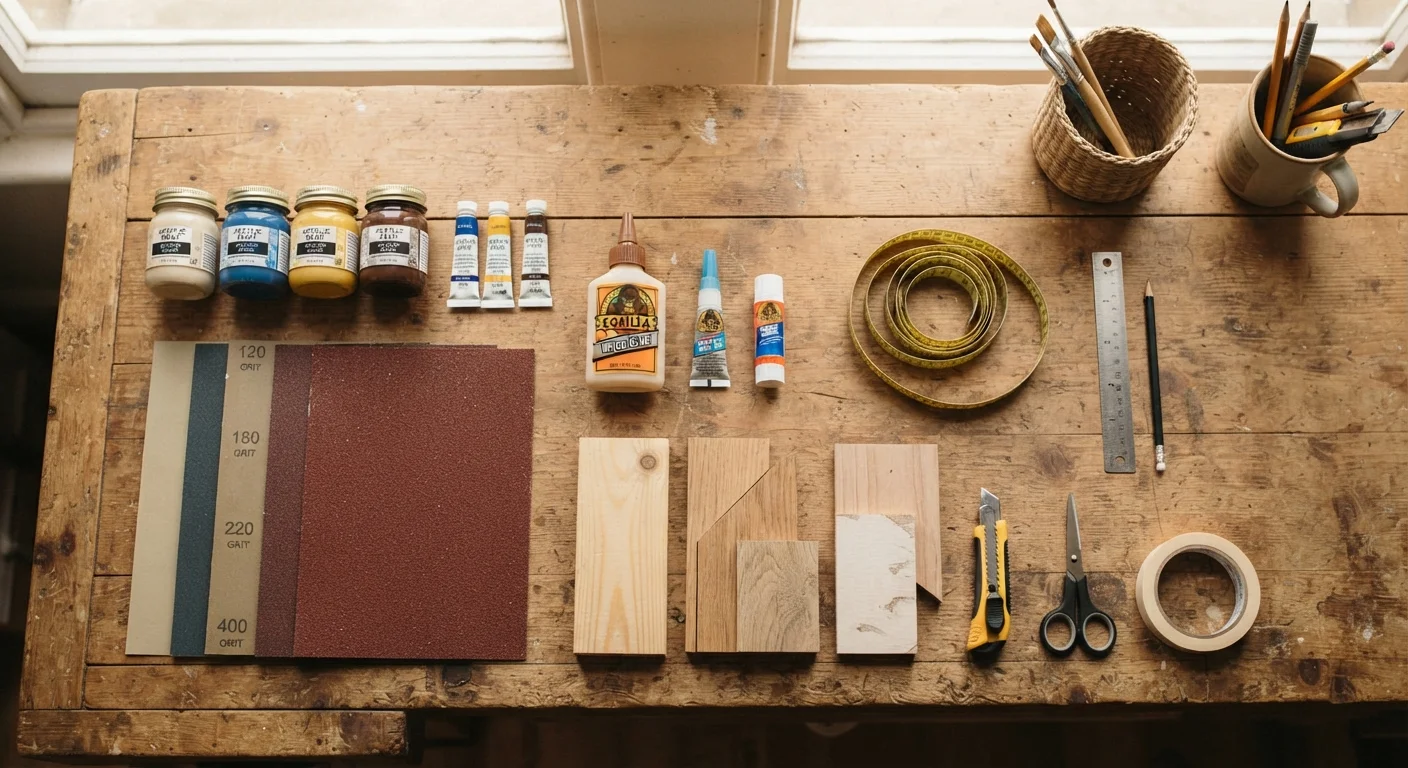
Why Material Vocabulary Matters
Ever stared at a project tutorial and hit a wall when the instructions say "apply a wash coat over the substrate" - and had no idea what that meant? You're not alone. Decor crafting draws from woodworking, painting, and textile traditions, each with its own shorthand. Getting fluent in that language helps you shop smarter, troubleshoot faster, and follow any tutorial with confidence.
This reference covers the four categories that appear most often in DIY decor projects: adhesives, substrates, finishes, and fasteners. Bookmark it and come back whenever a project description leaves you puzzled. For broader project planning from concept to completion, see our complete DIY home decor guide.
Substrate
The base material onto which paint, adhesive, or a finish is applied. Common decor substrates include MDF, plywood, canvas, and chipboard.
PVA Glue
Polyvinyl acetate - a water-based adhesive that dries clear and flexible. Widely used in decoupage, paper crafts, and as a sealer when diluted.
Primer
A preparatory coating applied before paint to seal the surface, block stains, and improve adhesion. Using primer reduces the number of paint coats needed.
Polyurethane
A clear, hard-wearing protective finish available in water-based and oil-based formulas. Applied over paint or stain to protect surfaces from scratches and moisture.
Wash Coat
Paint heavily diluted with water (or a specific medium) so the underlying texture or wood grain remains visible. Often used to create aged or limed effects.
Contact Cement
An adhesive applied to both surfaces before pressing them together. It bonds on contact, making repositioning impossible, and requires ventilation during use.
MDF
Medium-density fiberboard - a smooth, dense engineered wood panel made from compressed wood fibers. It takes paint well but must be sealed at edges to resist moisture.
Brad Nail
A thin, small-headed nail used for lightweight decorative joins and trim. Brad nails leave minimal surface marks and are typically driven with a brad nailer or hammer.
Pocket Screw
A screw driven at an angle through one board into another to create a face join. Pocket screws are a popular technique for building simple shelves and frames.
Decoupage Medium
A glue-and-sealer product used to adhere paper or fabric to surfaces and coat them for protection. Diluted PVA is a common DIY substitute.
Curing
The process by which an adhesive or finish reaches its full hardness and strength through a chemical reaction or evaporation. Cured differs from simply dry-to-touch.
VOC
Volatile Organic Compound - chemicals that evaporate at room temperature from paints, finishes, and adhesives. Lower-VOC products produce less harmful fumes during application.
Adhesives, Substrates, Finishes, and Fasteners Explained
These four material families show up in virtually every craft or decor build, from a simple canvas wall hanging to a painted side table.
Adhesives
PVA glue (polyvinyl acetate) is the white or yellow craft glue most people know from school. Diluted with water, it doubles as a decoupage medium and a sealant for paper projects. It dries clear and is paintable once cured. Contact cement bonds on contact - you coat both surfaces, let them tack, then press together. It's ideal for laminates and leather-look materials but requires good ventilation. Hot glue (thermoplastic adhesive) sets in seconds and works on porous surfaces; it's fast but not heat- or load-resistant, making it suited to decorative rather than structural joins.
Substrates
A substrate is simply the base material you're working on. MDF (medium-density fiberboard) takes paint beautifully and cuts cleanly, though it's heavy and sensitive to moisture - keep finished edges sealed. Plywood is stronger and more moisture-tolerant; the grade (A through D) tells you surface quality. Canvas, both stretched and raw, is the standard substrate for painted wall art. Chipboard (also called particleboard) is budget-friendly but less durable, best for lightweight decorative builds. For a deep look at how substrates compare, the building materials hub is a solid next stop.
Finishes
A finish protects and beautifies the surface. Primer seals porous substrates and improves paint adhesion - skipping it is a common beginner mistake. Chalk-style paint is thick, matte, and requires minimal prep, though unsealed it scuffs easily. Varnish and polyurethane add a hard, clear protective layer; water-based versions are lower in VOCs and dry faster. A wash is heavily diluted paint that lets the substrate texture show through - great for creating a weathered or limed-wood look. If you want to understand what finish specs actually mean before you buy, reading material data sheets breaks down the label language.
Fasteners
Brad nails are thin, small-headed nails used for lightweight trim and decorative joins. Wood screws grip more securely and are removable. Pocket screws are driven at an angle to join boards face-to-face - a technique central to simple shelf builds. D-ring hangers and sawtooth brackets are the two most common hardware options for hanging framed or panel artwork. If you're building organizers or storage pieces alongside decor, DIY organisers from start to finish covers joinery and anchoring in practical detail.
| Common decor substrates | MDF, plywood, canvas, chipboard |
| Fastest-setting adhesive | Hot glue (sets in seconds) |
| Low-VOC finish option | Water-based polyurethane |
| Best substrate for painted finishes | MDF (smooth, consistent surface) |
| Most versatile craft adhesive | PVA glue (bonds, seals, decoupage) |
| Typical wall-hanging hardware types | D-ring hangers, sawtooth brackets |
Using This Reference Alongside Your Toolkit
Material knowledge and tool knowledge go hand in hand. Once you know your substrate, you'll know which saw blade, drill bit, or adhesive to reach for. The starter toolkit audit can help you check whether your current supplies cover the basics. And if you're expanding into decor styling more broadly, pair this guide with the room styling vocabulary reference to round out your design vocabulary.
The more confidently you can name and select materials, the less time you'll spend second-guessing mid-project - and the more energy you can put into the fun part: making something beautiful.
The content on this site is for informational purposes only and is not a substitute for professional advice. Always consult a qualified professional for guidance specific to your situation.